
Is it better to shoot bigger, or more? Is there a better or only a difference? Is film always better than digital, never, sometimes, maybe only for the time being?
If you were shooting film decades ago, you would have had access to 110 and 8×10. The 8×10 would have had film available from no less than 5 manufacturers each offering multiple emulsion types in B&W and in color. You could have made choices for type of light. Indoor, outdoor, tungsten, strobe. Oh, that would have included multiple types of tungsten.
At one point a film supplier in Manhattan listed more than 80 film choices for 8×10. Truly a golden age, as long as you could decide, then work. The task was made easy only by knowing what you intended to do with the image. Sometimes that was the harder part.
Legibility vs. Detail
Which brings us to the central question of the photographer picking among technical options. I assume that you have the basic craft skill and so the choice becomes aesthetic and financial. I also assume that you want to own your tool. Most artists do, because of the feeling of commitment as well as the advantage of spontaneous action. In photography, in a large enough town, or with enough credit, you can always rent, either locally or by the internet.
What makes this image so effective?
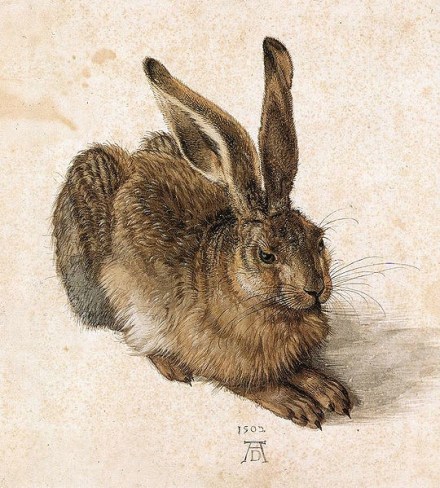
Is it the detail? Look closer. There is detail, but not as much as the rabbit had. Nor is there as much detail as would be captured with today’s best glass and chip. Yet the image is legible. More importantly it answers “if looks could feel” questions. This image captures the imagination of the viewer. The rabbit has both soft fur and coarse fur.
This could sell children’s clothing, furniture, even makeup. It, of course, wasn’t designed as an ad. it was meant by the artist to be complete, not edited.
It presents itself completely, legibility, with only enough detail to achieve the goal.
The Need Of ADs To Crop
This sheet shows the crops to photographs of Tony Ray-Jones. The original photographs were made by Ainslie Ellis in 1970.
These grease pencil marks are turning the square format into the verticals used by magazines. They turn them into portrait mode, used by magazines. 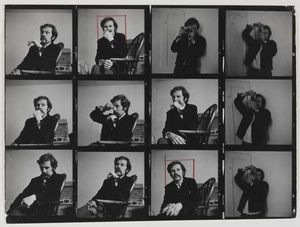 The natural order of cameras is landscape format. This is how our eyes are arraigned and it gives us our peripheral vision. The 120 square of Hasselblad and Rollei makes either published form possible. Different art directors or different purposes give different crops from the simple square. Since the 120 neg is so much bigger than the 135, it gave flexibility to the editor without giving up to grain.
// MORE TO COME —

You must be logged in to post a comment.