
a gathering of references over time about the big dinosaur. Abbreviations are re-used. Google has a tough time working on the past, even the recent past is pushed aside in favor of being current. Engineers think you are asking easy, surface questions. Color Corporation of America, in 2025, is a paint story. The CCA meant by dye transfer printers is what I mean on webionaire.
Some synchronicity in my life. CCA was Color Corporation of America, now, it is California College of Art — former work-home to Larry Sultan [1946-2009]. I knew both CCAs. A pamphlet of mine from SFAI days brought a student of Larry’s to my door to learn, revive dye imbibition printing.
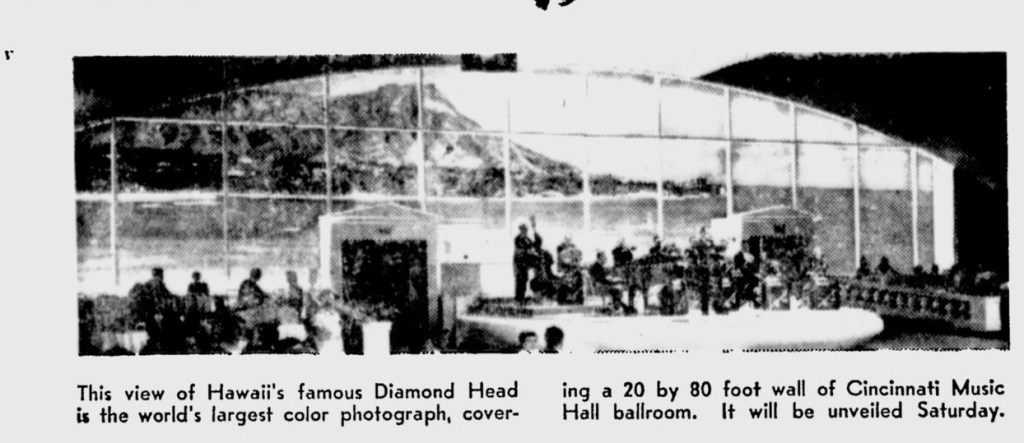
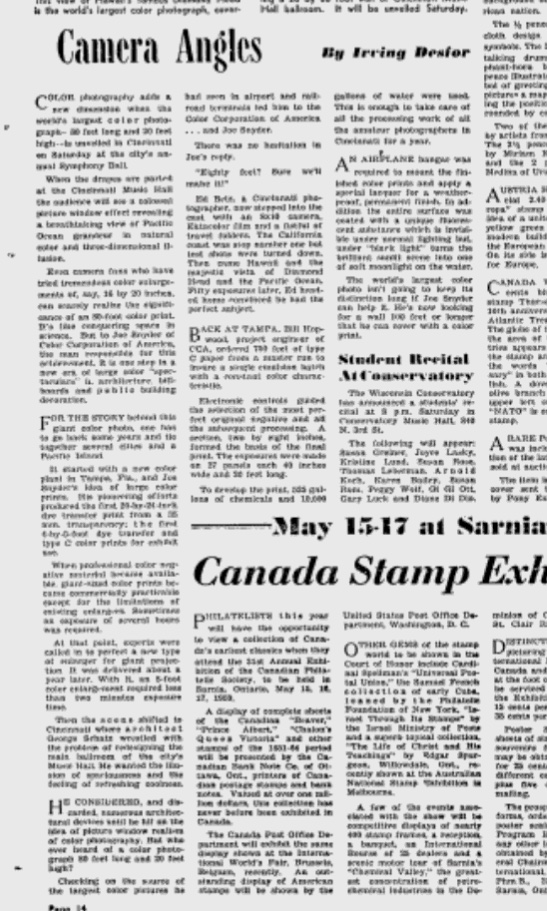
a piece about the largest photograph… and CCAs Tampa operation. Able to make Color Prints or Transparencies of any size.
[Cincinnati Music Hall]
Mr. Snyder, in 1959 , founded the Color Corporation of America in Tampa, Fla. He was active across several fields; was prepared to undertake almost any project.
Mr. Snyder attends a Color Conference in 1956. His interests are what he does as a lab.

… from small things… grew a big company.
Monolabs— it’s the way that every lab starts; just the one person. That one person may have been a photographer saving money on lab work by doing it themselves. The four shift labs are, like CCA, running multiple shifts throughout the week. They operate weekdays, while the monolabs run single, or as need short shifts. This mode makes them closer to functional knowledge as the “weekend” solo labs built and tended by affluent amateurs — the “dentist-artist.” They buy small amounts. Need different directions. Learn by magazine and workshops at an “art” location.
The large lab employees were trained in military schools, or trade schools; the main one being where Frank Tartaro taught, Germain School Of Photography .
RIT although not a “trade school” also spread dye transfer skills. RIT taught emulsion making in addition. The rubric on their grads was: They could make Tri-X, but couldn’t use it.
CCA’s clients ranged from individual artists — Laura Gilpin in 1964-1968. Mostly Type Cs, not dyes; Eliot Porter’s Dye Transfer portfolio in 1977 was made by CCA.
…. and
every mono lab thinks they know everything, Easy to understand why, since they have to do everything, and they, usually, think they know how; they think they know the best way, although they only know that one way, their way .
The Mom n Pop had to be better. You could aspire to become a Mom-n-Pop taking only great, interesting client work. Bet you didn’t achieve even this level of independence. Few do.
CCA: Color Corporation of America.
Tampa 610 S. Armenia Ave 33609
813 877 5353
306 East 45th New York 10017
212 582-4355 [Creative Color Inc]
in London John Piercy Ltd, Bryanston Street, London
Prinparencie, Day’n Nite Translucencies, Quality Color Prints and Color Transparencies for the Trade
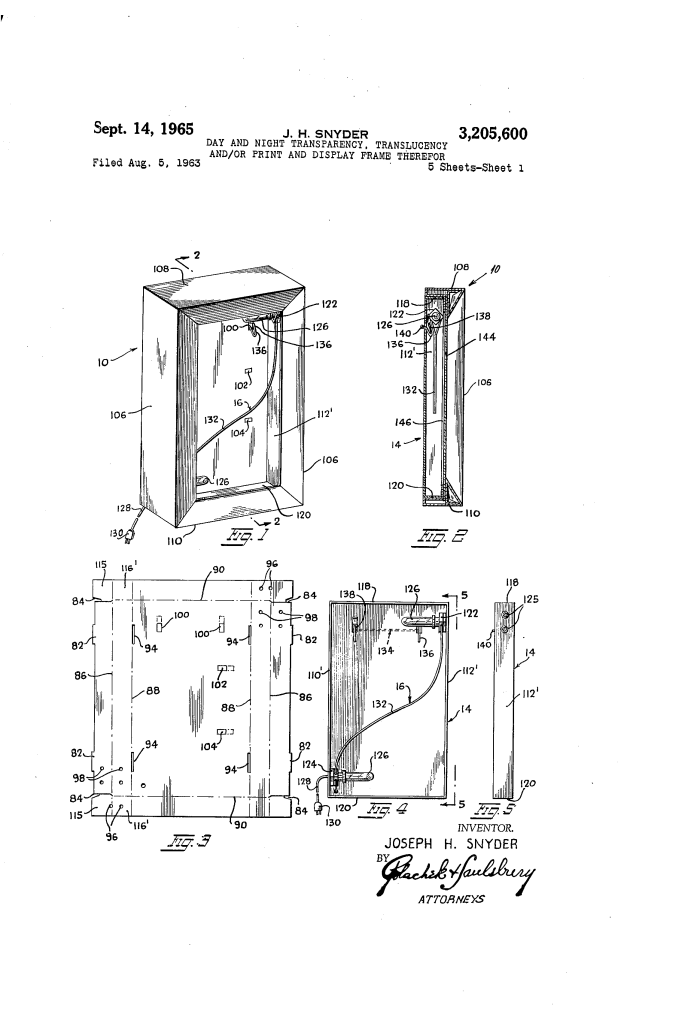
US Pat Issued [https://patents.google.com/patent/US3205600A/en]
— CVI (Guy Stricherz) was the opposite in scale. Many would say, have said, the opposite in ability, meaning that CCA, being large and profitable, wasn’t as good a lab as CVI and their like. CVI lives, surviving the Kodak stumbles. CCA didn’t.
— FROG PRINCE Haunt Rama and Tom Rankin. Bob Pace helped set up Frog Prince, Dye Transfer lab.
Haunt Rama -- Owner/ President · 1981 to 1996 · San Francisco, California
Fine Art Photographic Printmaking, Gallery
Richard Misrach, William Eggleston, Galen Rowell, Jim Marshall

Tom Rankin Dye Transfer Division of Frog Prince & Company, L.P 500 Sansome St, San Francisco, CA 94111

You must be logged in to post a comment.