Epilog: Borges

TipsC

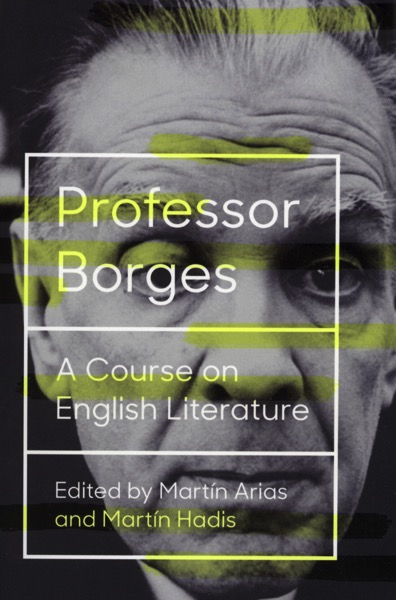
l believe that the phrase “obligatory reading” is a contradiction in terms; reading should not be obligatory. Should we ever speak of “obligatory pleasure”? What for? Pleasure is not obligatory, pleasure is something we seek. Obligatory happiness! We seek happiness as well. For twenty years, I have been a professor of English Literature in the School of Philosophy and Letters at the University of Buenos Aires, and I have always advised my students: If a book bores you, leave it; don’t read it because it is famous, don’t read it because it is modern, don’t read a book because it is old. If a book is tedious to you, leave it, even if that book is Paradise Lost-—which is not tedious to me—-or Don Quixote—-which also is not tedious to me. But if a book is tedious to you, don’t read it; that book was not written for you. Reading should be a form of happiness, so I would advise all possible readers of my last will and testament-which I do not plan to write–1 would advise them to read a lot, and not to get intimidated by writers’ reputations, to continue to look for personal happiness, personal enjoyment. It is the only way to read.
– LUIS BORGES

the winner is

the winner is — the girl with the implants and lypo.

time parkin’s test prove the best image quality (defined by his and Kin ) is scanned film.

sure enough, he sells scanning service. that’s the way to skin the cat.
oh, he also sells travel services in the form of workshops — in the trade called get aways. ( away from the dull life of wife and)

the most successful workshops are ones with big rocks, and small women, naked.

Chiarenza

(b. 1935-) Between 1963 and 1986, he was Chairman, Director of Graduate Studies, and Professor of Art History at Boston University. Ph.D. from Harvard in 1973. He is the keystone biographer of Aaron Siskind.

“His photographs, luminous, dark, coruscated with deep shadows, and alive with the play of light, are challenging and abstract, studies of blacks and whites in the ancient and honorable tradition of chiaroscuro. His intention is to push the photograph beyond the boundaries of the “real,” to investigate the realms of the imagination where space and surface intertwine and where the “real” is transformed into a wholly visual event. “

“Chiarenza is clear about his motivation: “I want the viewer of my work to sense the power, to feel the presence of the unknown. All photographs share this life force, this force of their own individuality. Somewhere between the making and the viewing of the picture, we experience this force, though our experience remains forever beyond satisfactory explanation.” 

Books:

https://www.lodima.org/shop/carl-chiarenza-solitudes

Little Brown & Company, Boston, 1982. 283 pages; 74 duo-toned b & w plates plus 198 text illustrations; 9.5 x 11.25 inches.

Chiarenza wrote the original text of this book as his PhD at Harvard University in the late 1960s, the first dissertation to be written about a living photographer.