
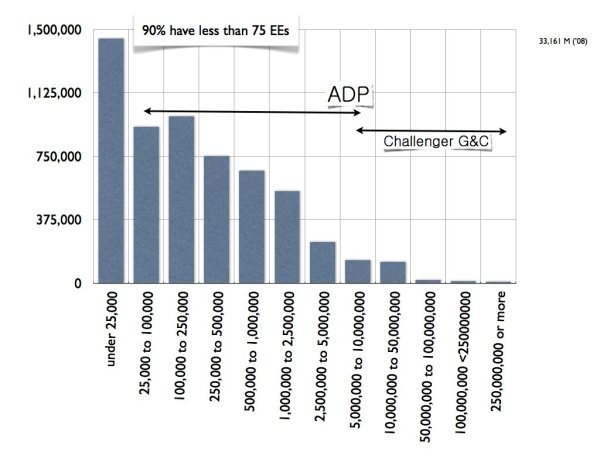
The jobs engine. Notice that nearly 25% of small business makes less than $25,000 per year. Given that the most recent census puts median income at $33,161 this means they likely have no employees. If we scope the IRS data, assuming the median income provided by the Census, it is correct to conclude that 90% of small businesses have less than 75 EEs. The generally talked about tax hikes would affect some of these companies, but not many.
In today’s headlines marketwatch reporters and analysts are confused, at least for the drama. I’ve marked out the clients, hence the source of the data from the two reporting firms.
Most small businesses employ very few people, less than 5. A very small engine to power a major economy of the world.

You must be logged in to post a comment.