
MAR 8,2024 UPDATE: The march shipments have arrived. Same film, or so it seems; same price. The allotments have increased. Two sample points:
- A: large seller– December product less than 2K rolls; this shipment over 2K rolls available
- B: small retail shop– December product 300 rolls; this, march shipment, 1K rolls available.
They may have worked on coating/drying procedures; the making of foundation supplies. They haven’t received much adverse comment, in fact, most of the onliners seem pleased.
the maskless returns. A new phase of color film — flashing back to the middle of last century.
Shooting the Moon — not a moon-shot, rather, it means aiming for something you don’t intend to hit; your reason could be a signal, gesture to investors, an effort at proving, or testing yourself. You do something to see how others react.
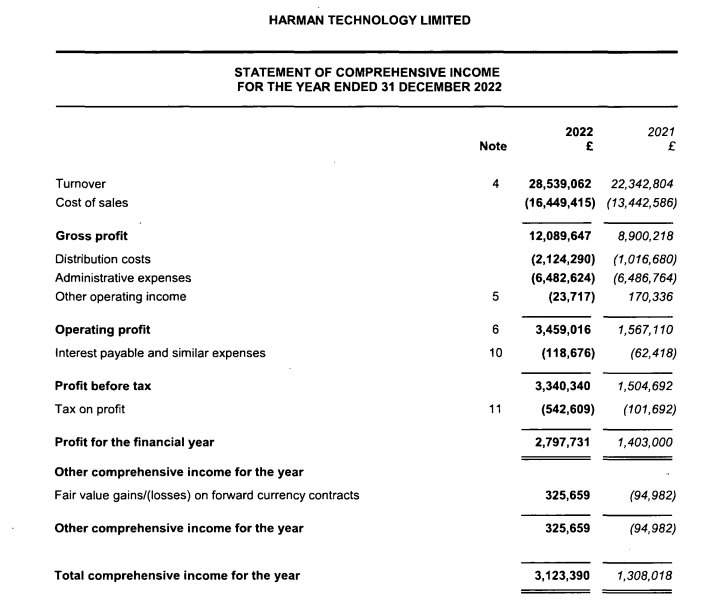
2022 Numbers. Not a great business.
Consider you are in a shrinking market, you may have maxed out your customer growth. Your standard item is a dominant in this shrinking market, even so, newer companies seem to have great multiples of growth in both top and bottom line. These folks are tapping into a younger group having more expendable funds. They don’t print in a darkroom. Your the dominant darkroom vendor, but this is to an aging population — a population with reducing need. They just don’t shoot, nor print as much as just 5 years ago. This isn’t the analog rebound group.
Analog rebound is among the 35mm 35 year old photographers. They may shoot film, but they send it to a lab to soup and scan. Some of them have process only, these are the ones with a camera-scan setup. Camera-scan has become a dominant imaging platform in just a decade. In 2013, talking about it was segregated on the Forum boards — it was ‘HYBRID’ — a bastard not suited for inheritance in the Church of Photography.
The December rumor holds that Harman will produce another Phoenix for shipment March, 2024. They can easily make film. Will they alter, by how much, a rev. 2? Will this remain a film-for-scanning.
Are they prepared to make a color paper if(when) FujiFilm drops *Archive. Three labs that produced large RA-4 prints in the US have closed their wide-format Poliettronica [https://webionaire.com/2022/06/26/ra-4-big-lab-printing/ ] lines; switching to ‘dry-lab’ printing for their display clients.
Sensitivity Isn’t Output
Spectral sensitivity curves depict the film’s “shooting” conditions. Its response to the colors depicted. The manufacturer tells you the color of the testing light used. The Spectral Dye-Density curves represent the absorption of the dyes formed after processing. These are used for adjusting the system used for making prints(or scans.) Sensitivity is used during camera setup and use. Dye-Density is used during output. Without this DD curve, you don’t know what the emulsion is expected to produce. Harman doesn’t publish this with “December 23” Phoenix.
What Next

CC:: colored coupler | UC:: uncolored coupler
DIR: Development Inhibitor Releasing compound. An example of a well regarded DIR is 1-phenyl-5-mecapto-tetrazole. This can be imagewise generated and eliminated from the coupling postion during dye formation. DIRs have been patented which enhance sharpness, reduce ‘graininness’, and, via interlayer interimage effects, produce color correction.
[color coupling and masking can be separated]
DIR compounds are disclosed in “Developer Inhibitor-Releasing (DIR) Couplers for Color Photography,” C. R. Barr, J. R. Thirtle and P. W. Vittum in Photographic
Terms:
- block dye: theoretical dye having equal absorption of light at each wavelength within a given continuous range of wavelengths and no absorption at all other wavelengths of interest. [Giorgianni]
- calibration: procedure of correcting for ay deviation from a standard. [Giorgianni]
- coupler: an organic compound which reacts with oxidized developing agent to form a dye.[Giorgianni]
- cross-talk: transfer of information from one color channel to another.[Giorgianni]
- interlayer effects: chemical reactions that take place among the various layers of a photographic medium. …used for color signal processing.[Giorgianni]

foundations of emulsion making.

You must be logged in to post a comment.