
adage: mix for 4, use for 3
NOTE- if you’re APUG, or Large Format Forum registered, you may not use this material. Please, leave this site now!
To make a set of mats, expose them and set aside the three mats in a safe-box. To develop, use the mixing directions, amounts as though you were souping 4 mats, but use that mixed developer in thirds. Take 1/3 and develop each mat in your developing tray. This assumes a very standardized procedure that has controlled balance and contrast. Clearly, if you are processing mats to different contrasts, then you cannot develop using the same mixed working solution.
Time is not a good adjustment to matrix contrast change. Tanning of the gelatin does not occur directly with development time. The oxidation of the tanning developer does not affect the matrix tanning as much as it would intuitively seem. The experienced darkroom tech coming to dye transfer cannot wholly bring their prior B&W experience to the matrix phase of dye transfer.
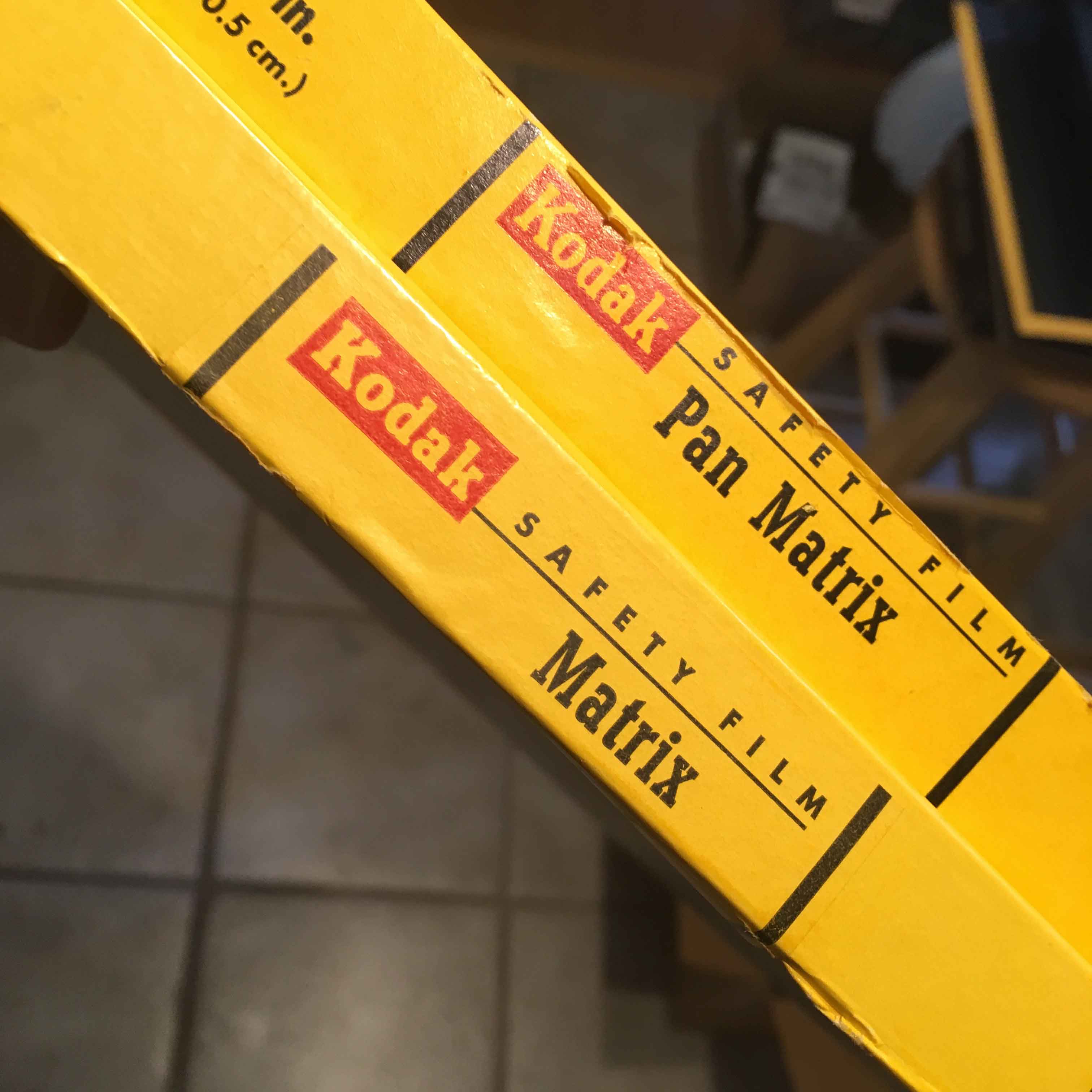
the matrix is the matrix — another world with other meanings
Sadly, none of this instruction will be useful to you these days, since none of the Kodak materials are useable. Any matrix film you could find is too old for proper dye transfers. They will have ‘age fog’ of the gelatin itself. Even if using the Efke film (sponsored by Jim Browning)it is so old that I wouldn’t use it as a reference to dye transfer from the age when fresh supplies were available in great quantity.
Even the most recent incarnation of Matrix films (Gecko, and Del Rio), which were being made when this post was originally made (2014), are out of production(2018 was the last date).
some links to formulas: Tanning Developers …& … PRIVATE page

You must be logged in to post a comment.