Film Note: F76+ , DDX

During the cloistered portion of the year, and because I try to buy from more than one vendor, and because I made a mistake, I bought 2 bottles of Clayton F76+ developer from Freestyle.
with a new developer I stick to comfortable shooting. Yes, I do use makers instruction, but F76+ doesn’t list many combinations on its direction label. In these cases I look for similar combinations of film developer. Using that information I build my own best starting times, by basing similar groups of film time as this one. I am assuming that developer activity is gerneraly constant, or at least consistent.

With one-shot this is safe, but if I were using a repenish developer, then this isn’t safe, since film leaves chemicals behind in the developer; not just exhaustion products, but film byproducts. The emulsion and developer blend. We used to ripen film developers by using flim stubs, those leaders and such that are cut from the film, and usually discarded. In the old labs we kept them to ripen developer. Mix developer, throw in a big box of leaders, let stand, remove and discard the film tails. Recall, old timey shooters went through a brick of film in just a few days, sometimes just hours.

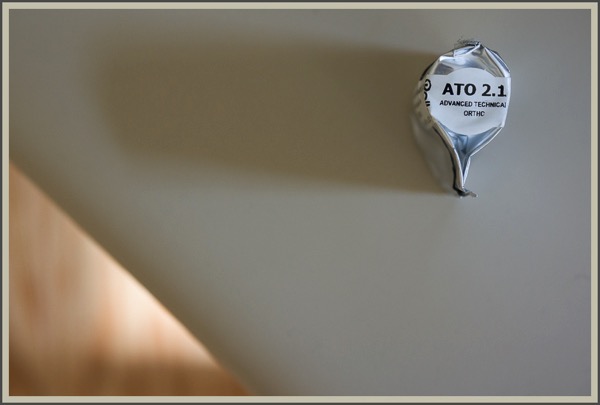
I had a few rolls of Rollei ATO that were more than 6 months old. Film isn’t for storing. So I decided to run it through the F76+. I have also been using Delta3200 and putting it through DDX, and F76+. The D3200 results showed DDX (1+4) as more powerful than F76+ (1+9)

MORE LATER
Digital7086prankser

what is the best color film

What type of camera, or will you decide that after picking up your film?
What do you want the film for; your purpose, or use?

Film is an intermediate — a step along the way to something else. Color negative provides greater versatility than transparency film, but transparencies can be viewed and evaluated easier than negatives. With negatives you can make prints, easily. Prints are the designed goal of color negatives. Slides scan easily, so a film to digital process could be an easy pathway to follow.

I prefer using color negatives. Always have … back when film was the mainly, there were more choices than time to decide. Now, the choices are very limited.

Current Roll Films

220 Film

  • Kodak Portra 160 Color –
  • Kodak Professional Portra 400 Color Negative

120 Film

  • Kodak Ektar 100
  • Kodak Portra 160
  • Kodak Professional Portra 400
  • Kodak Portra-800
  • Fujifilm Pro 400H / Fujicolor

Kodak has pulled from the transparency (chrome / slide) business. Fuji color has more films available for transparency shooting, but they do have the one negative film 400H. They are, also, the main (only) maker of color paper.

I shoot Kodak Portra 400, in 120 and 220. It is easy to maintain consistency with this simplification of process. I could have chosen Portra 160, since it’s available in 120 & 220, but I prefer shooting at base of 400 speed. I enjoy the latitude in exposure; it also makes switching to BW quicker, since I shoot Tri-X, also at 400 base.

Notice that my choices aren’t based upon sharpness, grain, nor any other XZW, it is based upon inclusion in my artistic process. I go out, either to the street, or the studio, and shoot — then soup; — If the grain is too much, or too little; if the negative is too soft, or sharp, I adjust, either by re-shooting, or altering in post procedures. In that way, I spend more time making pictures for what they look like to me/

bees dance to live –but first they hunt.