
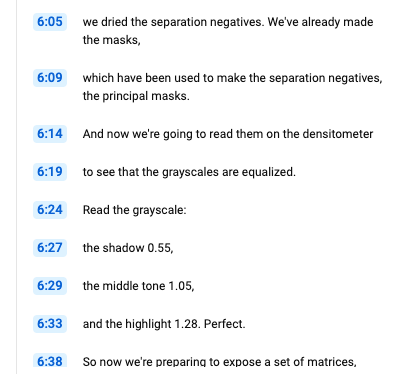
It was called Dye Transfer, because the dye transfers (from Mat to Blank). Often, the name is the answer. Rollup is the step with results you see. The assembly is a mechanical stage, the hand stage of the process. While making a masks, separtions cannot be sloppy, they can be made a by-the-numbers procedure. Each stage multiple changes can be made. This was intimidating and exciting. Most found it too much to venture into. Lacking confidence is worse than lacking knowledge.


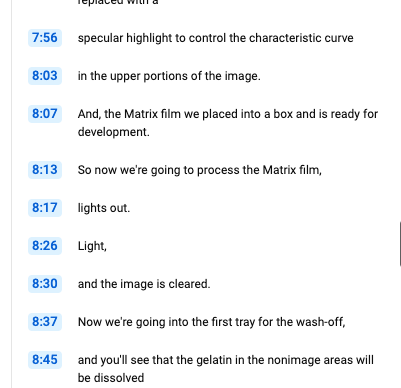
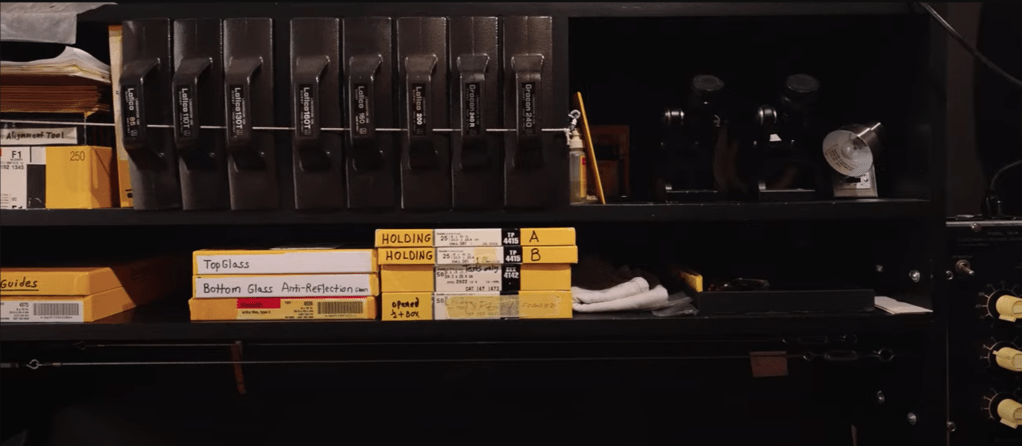
The show, as I review it, consists of three sections. These are: immersion and mounting the original, exposure steps, briefly covered, the camera moves over a couple important pieces of exposing equipment from the past; without prior knowledge, they are probably not noticed.
Note: they have a KM tri-level and a filtermatic. FM introduced 1961ish. K&M was across the bay from CCA, Tampa.
Irene Malli born 1964, and Guy Stricherz (b. 1948 – d. March 29, 2025 )
The mask is used during exposure of the separation, or the mask is used while exposing the separation to the mat. A mask+sep sandwich. This was occasioned when an original was small, restricting the binding of the mask and original before separating. Masks are, essentially, automatic dodging — most labs, and all published instruction I have found on the internet, rely upon “silver” masks, that is, colorless, neutral masks. They are most often made to filtered light, so they select the image color range you choose to control.
[Only those people of Blue Pizza, have been instructed about making non-silver masks.]
The portion of the video I would emphasize watching is the rollup segments. This comes at the 13min point. This is a key to master skill of dye printer. The prior stages are following instructions, rollup is experience based. Irene shows process mastery.
— laydown, position, clearing the blank … watch roller clearing, use. Notice gloves on, off sections. Watch it again… Wiping is an essential skill… how she lifts (corners).. we aren’t shown the pickup (probably with a scrap of mat, what I use.) She cleans the SLAB without gloves, preventing stained surface.
If there is a secret, it is their transfer times: (these aren’t secrets, times are within range of anyone else’s.)
- Magenta transfer time is 8 mins
- Cyan transfer time is 6 mins
- Yellow transfer time is 3 mins
Pre-maskers baked the scale into the sep, so the mat stage was more automatic.This prebake allowed easier making of multiple mats. Most labs never needed many sets of mats, since a well managed rollup method allowed making many (50) prints. There were few labs that had to make more than 50 prints in an order cycle. (only three that I knew)


worlds ago… there was Phoho … Soho.. and the Dye Road. most of the dye labs were near Germain. I was.
[this is a current screen off goog maps. the end point addresses are FTL and CVI
Frank Tartaro taught at Germain, the basecamp, jump off point for many of the better dye transfer printers.
The New York days: (CVI, 23 Prince St. NYC NY 10012 // 212-226-3399). Some of the other labs: Frank Tartaro, Frenchy’s. Someone who made extremely complex dye-rollups was Nino Mondhe (Buttenhoff 2 Wakendorfii Germany 011-49-4535-6867); Chicago dye was Edward Van Baerle.

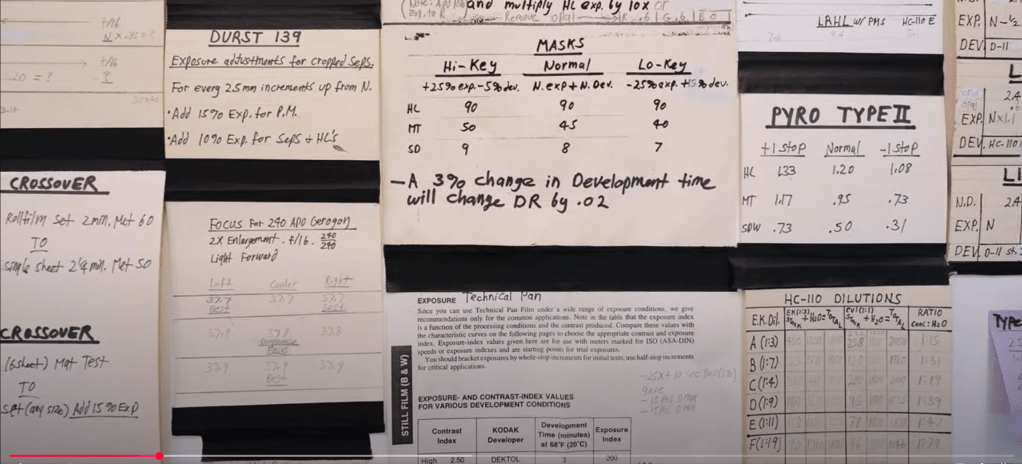
Reminder: These ref values are for Kodak Products. Not Efke. Not OIC.

You must be logged in to post a comment.