
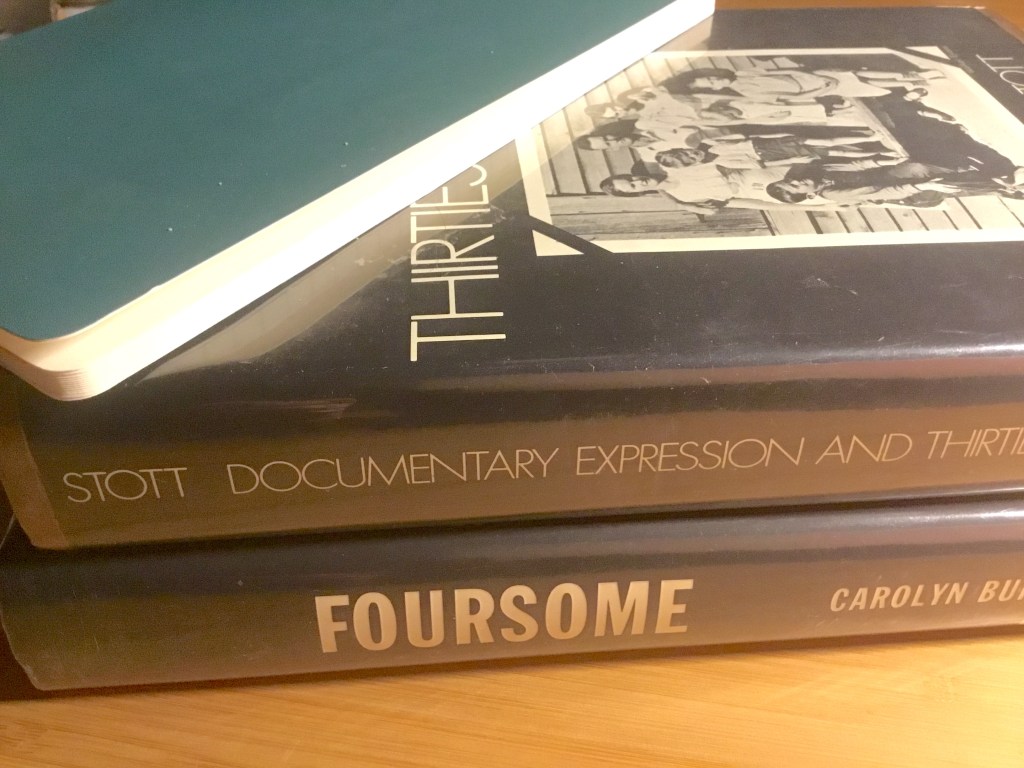
Two books after reading the Chauncy book. The Stott book is satisfying. It took me to places and situations that encouraged further readings. “Foursome” provided a view of people I had wanted to like, since I like their work. Instead, I’m glad I didn’t know them. At least the “them” of this book.
The work isn’t the life, it is the life after death. The artist, even life-artists are never the artwork. We do not become fully merged. In many cases that is best, or so it seems.
Is it possible that people hate art because they hate artists? That they don’t understand them; maybe they want to be them, but can’t. Perhaps, the art-haters do so to suppress their impulses to move across the floor, pass thru life differently. In watching those who fail, I’ve discovered a core set of failure points. It is far easier to fail, the ways are so widely shared, so easily shared that we have more failures — those passed by. Many creatives are cowards — at least timid.
The first failure, as well as the lasting, strongest defense of the long term anti-artist is simply that they don’t trust words. They form them, sometimes that is all they do — these are words without the driver of thought — without the strength of self awareness. Many of those people don’t trust words, as well, these days, they don’t trust pictures.

- The Last Years of Walker Evans ISBN: 0-500-54210-4
- Walker Evans: A Biography ISBN-13 : 978-0618056729
- Walker’s Way ISBN: 1576873625
- Walker Evans, James Mellow. ISBN 046509077X
My work is closer to Strand, yet my life, my way, my acceptance is Evans.

You must be logged in to post a comment.