
Amidol is the developer of kings, or so it would seem reading the stained pages of olden lore. It was the developer used by Edward Weston. It is the chemical that stains the fingernails of its users, like nicotine stains the fingers of that machinist you watched grind your flat head 8. [ stained finger http://wp.me/p6UdTM-4n ]
Amidol is also toxic. Use gloves when working with it. Use dust mask when mixing it.
Again: Amidol is toxic and expensive — in working solution the life is only hours…it stains quickly. Stains need hydrochloric acid for cleanup.
Advice: this isn’t for the casual worker. unless you’ve a reason for amidol developer, stick to dektol, or if you need exotics to brag about on the barstool, use ansco 130..
Why – your reward is a print that has neutral silvery blacks. You can also lower contrast of fixed grade papers radically. You can achieve more than 2 grades of paper change with chloride papers. [ chloride papers http://wp.me/p6UdTM-1MR ]
My preferred contact paper is Adox “Lupex.” I use the spoon formula from the attached sheet of formulas.
For those interested, Lupex, Azo, and Lodima are all virtually identical.– ron, [PE] 2016
Buy the kit — Photographers Formulary sells 3 different kits measured and ready for mixing. (price as of: August 2017)
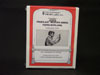
- Weston’s Amidol / $24.95
- Formulary Amidol paper developer / $24.95 NB: see Ansco 113 above
- Lodima Formula / $16.95
Each of the above is for 1 liter. To mix you will need a 1 liter brown bottle (glass). Additionally, you need a 10 ml and a 100 ml graduate (cylinder).
Mixing
Mix the stock solution without the amidol. This stock stores well. The lodima version stores several months without the amidol.
Just prior to use, add the amidol. It will go into the stock solution at room temperature. Formulary kits contain pre-measure packets of each of the ingredients, even the amidol. Each of the kits has different packets. The single liter kit has 2 packets, each to be mixed into a portion of the stock solution.
Using
Development time can range from 1 to 10 minutes in dilutions from full working to 1:10 dilutions. Lodima developer with lodima paper is noticeably warm when exposed enough to develop completely in 1 minute. Formulary Amidol (ansco 113 above) develops fully in 3 minutes.
Controls
Potassium bromide can decrease paper speed and increase contrast. To find the point of sufficient restrainer begin with 5ml of 10% solution per liter of tray(working) solution. Using a 5 min dev time, if no fog is visible, use that value. Increase the restrainer amount in these small increments until no sign of fog at 5 min dev time for an unexposed swatch of paper.
Soft contrast results will be achieved with higher dilutions of stock to water.
My own process finds me frequently having 2 trays mixed to different dilutions.
If your development time is longer than 4 minutes, begin development without safelights. After about 2 1/2 minutes in the developer, turn on the safelight. The lodima paper has a higher chance of fog than does the Lupex. I work under red lights only.
Reference Formulas (above table)
- Weston’s Amidol
- Peckham Amidol
- Lootens
- Fein’s Amidol
- Agfa/Ansco 113
- Michael A. Smith’s Amidol
- Dassonville D-2
- Defender 61-D
- Kodak D-51
- Ilford ID-22
- Amidol Teaspoon Formula


You must be logged in to post a comment.