Dispute Among Debutantes

The dispute being at the beginning was what made it matter; would the answer make it art.

PH or HP? High heels or Low heels at the dance.

Peter Henry Emerson (13 May 1856 – 12 May 1936) and Henry Peach Robinson (9 July 1830, 21 February 1901) were early photographers with divergent approaches to photography. At least they argued about it. Emerson, a writer who used photography to make records of birds, set the standard. He also came in after Robinson.

Emerson trained as a physician; Robinson as a painter. Emerson believed that the camera was the key to photography being distinct, therefore of value. He thought the camera was capable of science – that people in pictures should be wearing their own natural clothes. He also championed the mimicry of the ‘human eye’ – he taught that the camera lens must be made to reproduce human vision: sharp in the middle; blurring to the outer edge. Somehow, he missed the circular, upside down, etc. parts of human vision. But he was a doctor, not a philosopher.

Which picture is the ‘fake’ photograph?

The one on the left is a ‘pitcher portrait’ “Confessions” by Emerson – It is the real photograph. The one on the right, “Day’s Work Is Done” by Robinson is a multiple print, so qualifies as a fake, drawing the ire of Emerson.

Even in 1970, student photographers considered the distinctions stilted, anachronistic, irrelevant to their artistic principals or image considerations. They are both attempts at story telling. The story being told is generic, well established emotionally without device. The frames are used similarly, the tone ranges vary, but not enough to be claimed as superior presentations of story or fact.

For those who know painting of the time you understand some of the relationships, as well as the morals being promoted by the photographers. These weren’t their invention, not even their discovery; they were following the same paths, but using different steps. And like so many people striving to lead to the same place, they argued about the better way. They couldn’t see how much alike they were.

They danced to the same music — one on the ‘stage’ of the camera; the other on the stage of the darkroom. One made a negative, the other made prints from many negatives. As if one shot a single camera one take, the other multiple camera spliced movie. Among aesthetically accomplished photographers both approaches are handled easily.

It is unlikely that either of these images would be shown as new work without expecting some smiles, grins or even laughter. Cast, and costumed differently you may get a show; but not an argument.


“The Human eye is not even centered, the magnitude of the corneal eccentricity appears to be quite irregular and adventitious, and so on.” — Helmholz
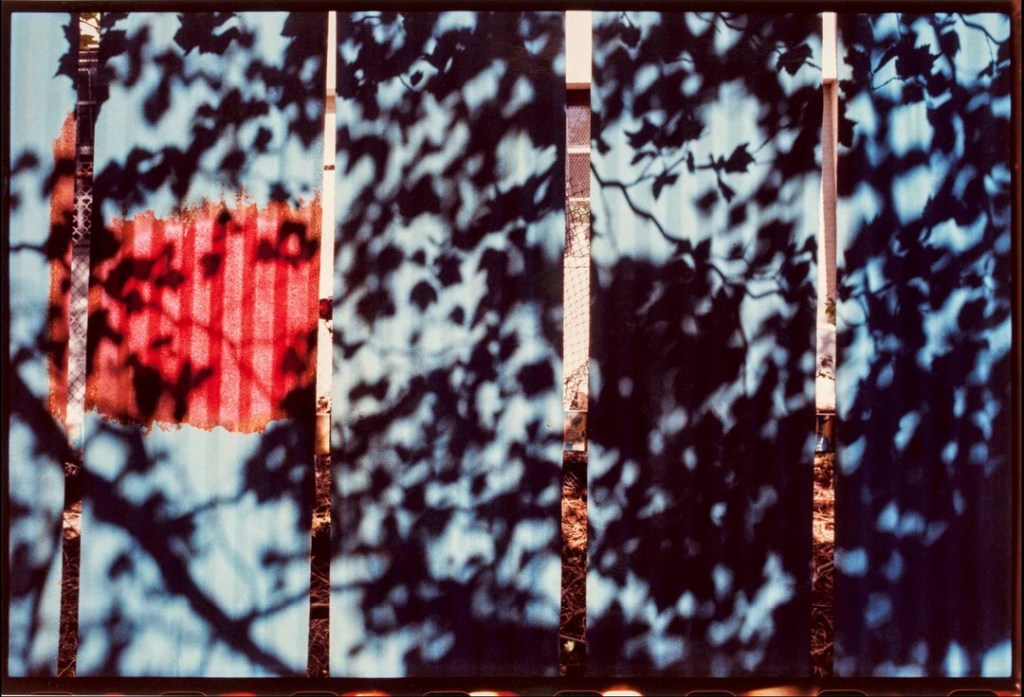
 

Phil Who

The net is called democratic – everyone participates, hypothetically, with equal input and value. In a propertied, unequal society that cannot last. Distinctions happen. Differences will occur, then accrue. An eddy becomes a puddle which becomes a pond. Upon that pond frontage land will be sold. The For Sale signs arrive. The net was never democratic, just unsettled. An arc isn’t enough of a story. 

A change in media provides a jump ball, a reboot. Shoots after the fire, masons amidst the rubble. The first onto the mound aren’t the ones that will find the best salvage. That comes later, after the digging is easier.

Before silver turned gold, when Ansel was king, photographers gathered in small groups, usually around a school. The called themselves ‘workshops’ ‘foundations’ ‘works’ ‘communities’ and they produced ‘dialogues’ ‘studies’ providing ‘residencies’ ‘internships’ — those that survived did so because of the efforts of very few people. Phil Block was one of those people. He and Tom made a place where photographers could work, show, exchange, and stay awhile.

They provided Mike and Larry a virtual home for some of their work. The Billboards, for a short time spread across Central and Upstate New York. Names were used by most artists; always has been important in a checkbook and grants way. The railroads standardized time, the University Appreciation courses standardized on names, even naming styles and periods… good to have a noun as answer. A Proper answer.

Both Mike and Larry sought name/fame. That was and is the only pathway to pay, either through school or gallery. Ralph Gibson visited the institute (SFAI) with boxes of his books for sale. self publishers have to be self promoters I traded prints for books. I made prints,not money.

da Net Effect

Crossings are not easy. Filling out a blank page isn’t easy. Most people have difficulty with multiple choice so never attempt to fill a blank page. It is easier to link than think.

The people who wrote a little,and were able to publicize that, to link themselves to followers have gained the ARC of the online world. In less than 8 years we have acquired a new set of standard leaders. They now offer critiques, for dollars; set publishers standards ,for dollars. They are the turnstile at the bridge. And they got there because they claimed it. Just as Phil and Tom did. The difference between eras is that now, the online personality factory does it for their own gain; their own brand; their name.

Tom and Phil are just two of about a dozen people who built organizations and shared them readily. You didn’t have to pay them anything. Maybe that is why in this age you don’t know them.

Current celebrity art leaders didn’t build the road, nor the tools, they merely used them. Their website was built using free tools and borrowed ideas. They sought brand name and contribute more to the cult of celebrity than to that of creativity.

Gaining name is a goal: a person becoming a personality. being a branded property. They, as art leaders would say they are different than Paris or Donald. They may be but in what aesthetic sense? Their goal was financial success; theirs.

Were We Were

At the beginning, that wasn’t  the story told around our campfire. Everyone got warm or no one did. Those who wanted fame the most, got it – what little good fame has done, it has been for them.

Phil went on to ICP where he became Uncle Phil. Thanks for the camera Phil.


a Block.