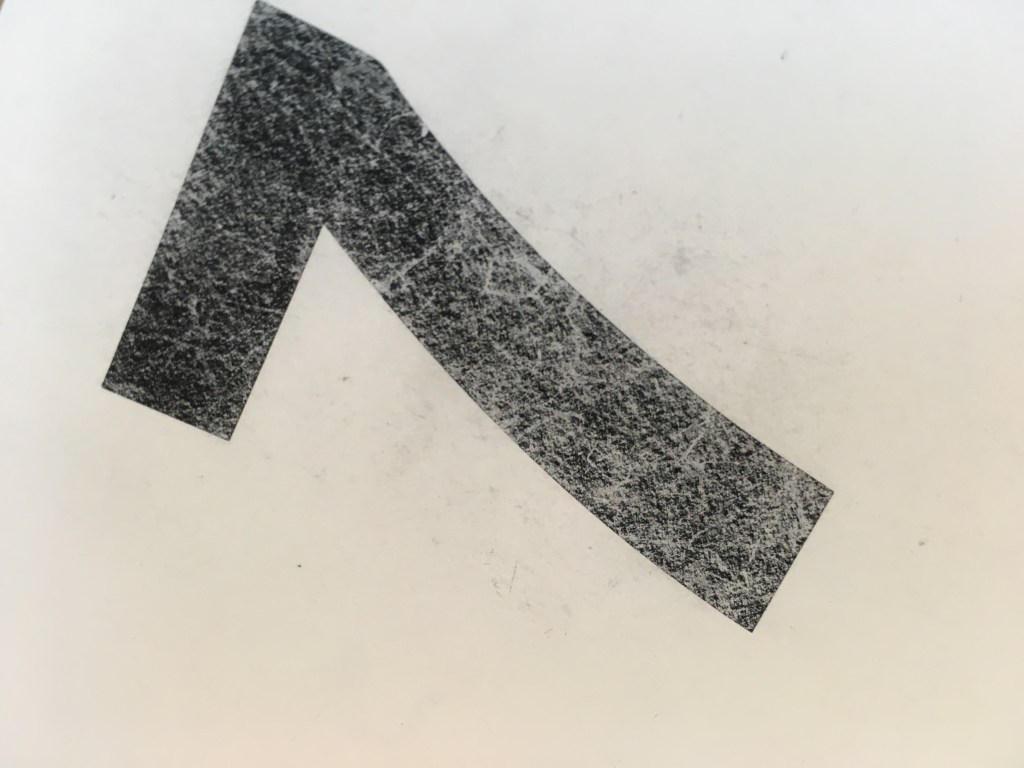
numbers happen

3.14. it is always a PI day celebration. Like all symbols, empty unless used.

pieranch

3.14159265359

other numbers: 01.10.01

On this yesterday in 1781, the seventh planet of the solar system, Uranus, was discovered by astronomer William Herschel.

or one that follows me:

… and dogs playing poker . The dogs, in this case, are the mistaken Xwits, opening files and folders, trying to figure out what “it all” means .. The worst of programmers write programs without domain knowledge .. that’s what is happening with Elon’s crew .. Smart enough to gain root but not smart enough to know what’s at stake ..Without knowing the path.

A thought experiment: How many millions of dollars do you think are paid by social security administration to those over 95; how about over 105 .. how much do you think the annual payment is for someone on SSA; someone who retired 35 years ago .. do you think it’s $2000 a year ? more, or less.. so, someone being paid $2000 a year, how many “someones” does it take to defraud the government by millions and millions … How many untaxed millionaires …

https://www.bumc.bu.edu/centenarian/statistics/

They, the valley dogs, arrived based on several assumptions. One being{ government is evil, another being, government employees and bureaucrats are lazy, incompetent ,stupid, and evil .. Finally, that they, the volunteer geniuses are saviors, saviors of the world; they, being smart, genius even ,creative beyond anyone’s expectation; that they will set it right, by first smashing it up …

None of their assumptions are correct.. none of their experiences are authentic. They’ve all been protected by a life of Glamping . They are each involved because of one thing: profit and proximity to someone who is profitable. A numbers game.

Their mistake is thinking profit is a prophet. Profit is excess capital; cultural fat. Money uncirculated. Retained earnings isn’t muscle, it is fat.

Between Threads

Reading to read again builds a muscle. Memory among others, even distant, is an extension of time.

Essays by Lydia Davis is a ready source of ways toward an open table awaiting stacks from around the house. Today she directed me toward a book I rarely read. I promise to read.

Lydia writing about lists and order: “You may have the elements you want in a list, within a sentence, but in an order that is arbitrary or a bit jumbled. The reader receives the content that you have offered, but doesn’t receive it in the best possible order …” She proceeds to suggest Tufte’s “Artful Sentences” and a Jefferson sentence.

Immediately pulled out Tufte… added it to a table by a chair with readings about AI. Bam. What you have is a reference set instead of a compelling sentence. I am easily distracted by interesting people. May be the bird-eye mind reaction.

… Lydia Davis calls to Virginia Tufte…

Okay. Today, I will flip through it. I begin, but stop, since on the floor I find a text on cognition. It is stuffed with stickies, unfinished notepapers. Better writing will have to wait. Instead, a collection of references from the book on the floor …

References of a time: Brain. Cognition.

  • Bechtel, W., and Graham, G. (1998). A Companion to Cognitive Science. Oxford, England:
  • Blackwell. (Encyclopedia-style entries on all the important topics, with a useful historical introduction by Bechtel, Abrahamsen, and Graham.)
  • Boden, M. (1990). The Philosophy of Artificial Intelligence. Oxford, England: Oxford University Press. (Seminal papers by Turing, Searle, Newell and Simon, and Marr, with some newer contributions by Dennett, Dreyfus and Dreyfus, P.M. Churchland, and others.)
  • Boden, M. (1996). The Philosophy of Artificial Life. Oxford, England: Oxford University Press. (Nice introductory essay by Langton, and a useful window on some early debates in this area.)
  • Haugeland, J. (1997). Mind Design II. Cambridge, MA: MIT Press. (Fantastic collection, including a fine introduction by Haugeland; seminal papers by Turing, Dennett, Newell and Simon, Minsky, Dreyfus, and Searle; a comprehensive introduction to connectionism in papers by Rumelhart, Smolensky, Churchland, Rosenberg, and Clark, seminal critiques by Fodor and Pylyshyn, Ramsey, Stich, and Garon; and a hint of new frontiers from Brooks and Van Gelder. Quite indispensable.)
  • Lycan, W. (1990). Mind and Cognition: A Reader. Cambridge, MA: Blackwell. (Great value-a large and well-chosen collection concentrating on the earlier debates over functionalism, instrumentalism, eliminativism, and the language of thought, with a useful section on consciousness and qualia.)
  • MacDonald, C., and MacDonald, G. (1995). Connectionism: Debates on Psychological Explanation. Oxford, England: Blackwell. (A comprehensive sampling of the debates between connectionism and classicism, with contributions by Smolensky, Fodor and Pylyshyn (and replies by each), Ramsey et al., Stich and Warfield, and many others.)
  • Braddon-Mitchel, D., and Jackson, F. (1996). Philosophy of Mind and Cognition. Oxford, England: Blackwell. (Excellent introductory text covering the more traditionally philosophical territory of identity theory, functionalism, and debates about content.
  • Kim, J. (1996). Philosophy of Mind. Boulder, CO: Westview. ( text, covering behaviorism, identity theory, machine functionalism, and debates about consciousness and content.)

Don’t be distracted by AI things. Read until nine-eyes dies.