imagine you can travel back to the 1940s. You will be an early producer of matrix emulsions. You cannot take equipment with you, although you may take your curent knowledge, as well as being able to lookup patents issued before 2000.
Most importantly: you know it is possible, even limited to the engineering, mechanical, and chemical systems of the 40s, 50s. Always an advantage second movers have — certainty.
If I say “film” how far does that word take you — where? if you are an Internet generation film might only take you to Kodak and Hollywood.. your search might also only take you to saran wrap.
however if you know of more than one film maker and you don’t run that word on or hyphenated you may know of Ilford, Dupont, Ansco, Agfa, Defender or more. If those names are in your dictionary then you’ll understand the time travel exercise and you’ll understand the notion of film being discussed.
How does the emulsion become — what is included in the kettle, how is it mixed, how does it become a coating on the base, why doesn’t it fall off upon drying… many more questions will sprout — but they were all answered robustly even by 1940.
Every bit of knowledge needed to make a matrix film was common trade knowledge by 1941 — panchromatic films remained closely guarded insights until 1950.
There were enough solutions to the problems that engineering and industrial chemists were selecting choices for cost-market reasons.
why don’t you gather a group of three travelers around a studio table to plot your journey — I won’t be going. Safe travels.
Clarkson ME, Vickerstaff T (1948) Brightness and hue of present-day dyes in relation to colour photography. Phot J 88b:26Google Scholar
Drew JT, Meyer SA (2008) Color management: a comprehensive guide for graphic designers. RotoVision SA, SwitzerlandGoogle Scholar
Foley JD, van Dam A, Feiner SK, Hughes JF, Phillips RL (1997) Introduction to computer graphics. Addison-Wesley, ReadingzbMATHGoogle Scholar
Gatter M (2004) Getting it right in print: digital pre-press for graphic designers. Laurence-King Publishing, LondonGoogle Scholar
Hunt RWG (2006) The reproduction of colour, 6th edn. Wiley, ChichesterGoogle Scholar
Maloney LT (1986) Evaluation of linear models of surface spectral reflectance with small numbers of parameters. J Opt Soc Am A 3(10):1673–1683CrossRefGoogle Scholar
Sharma G (2002) Digital color imaging handbook. CRC Press, Boca RatonCrossRefGoogle Scholar
Westland S, Ripamonti C (2004) Computational colour science using MATLAB. Wiley, ChichesterCrossRefGoogle Scholar
Color vision is based upon the responses of three classes of cones in the retina, each of which has broadband sensitivity but maximum sensitivity at different wavelengths. A consequence of this is that color reproduction is trichromatic – the use of three primaries allows a wide range of colors to be reproduced. Color-mixing behavior can be broadly classified as either additive or subtractive. The optimum primaries of the subtractive color system are cyan, magenta, and yellow. The use of cyan, magenta, and yellow subtractive primaries allows a surprisingly large – albeit limited – gamut of colors to be reproduced. In practical printing systems, black is also used so that CMYK is ubiquitous in printing. Extended gamuts can be achieved using more than three or four primaries and systems based on six or more primaries are becoming quite common. https://link.springer.com/referenceworkentry/10.1007%2F978-3-319-14346-0_13
1Chandler, A. R., “Beauty and Human Nature” (New York: Appleton-Century-Crofts, 1934).
collected from the daily dilly. some haven’t had time to pickle, others to gel.
AI means Automatic Inflation.. and that AIn’t smart
me..webionaire
In his 2019 book Alchemy, Sutherland coined the term “doorman fallacy”. The doorman fallacy refers to the error of reducing a person’s job to its most basic function and replacing it with a cost-effective automation while disregarding the broader, not directly visible, value they provide.
two valleys: one was The Weirton steelland.. sounded like Rearden to the russkey [her preferred place ] to: chugboat –the additions to Dektol aren’t intended to convert it into Ansco-130, rather, they are meant as ‘tunings’ toward printing characteristics.. tone separation [Hi, Sh] as well as curve with extended developer time; all while maintaining tray life. This worked in the days of Dupont Velour, Agfa Brovira, Portriga … baking is adapting to the nature. Dance with floor as well as the music.
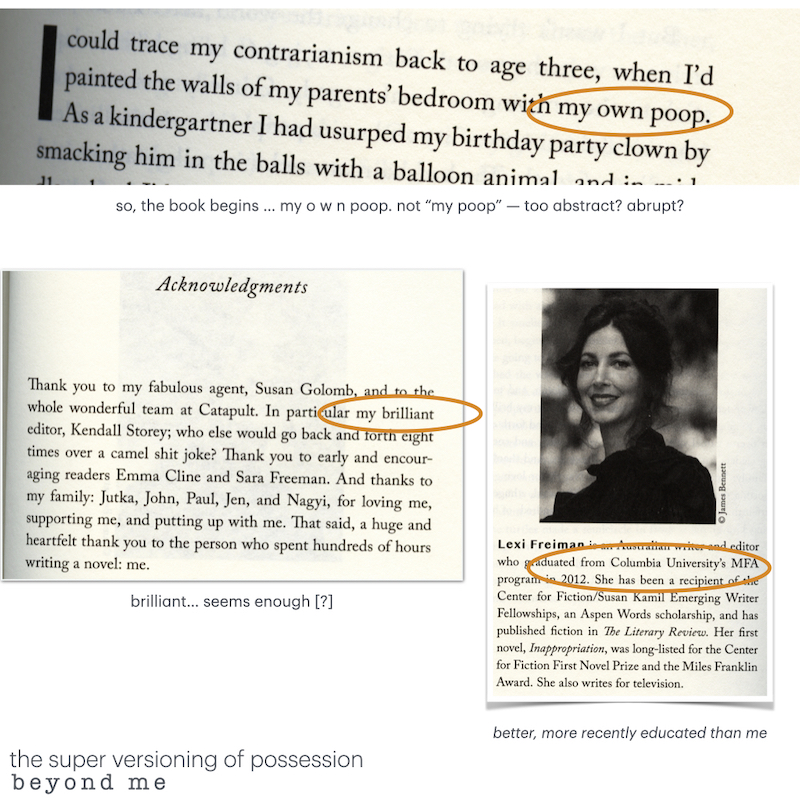
Ayn and Rearden… speak-spell got it wrong: thinking the phrase was: “your own steel” since, of course phrase counts upon the internet uses OWN with increasing frequency. Ayn, for childhood reading all through adulthood. Comfort to those midland successes dreaming of salvation by the Knight Watchman
the file of OWN– a word that has become stuck to my shoe.
PICTURES by other means
Introducing Un-0: Generating Images with Coupled Oscillators ” Why oscillators? In the brain, rhythmic activity and synchronization are pervasive, and have long been hypothesized to do computational work like binding distributed features into coherent percepts, gating communication between regions, and organizing the timing of spikes (Gray et al., 1989; Buzsáki, 2006; Fries, 2015). Coupled oscillators are among the simplest mathematical models of that kind of behavior, which makes them a natural primitive to study for neuro-inspired models of computation (Winfree, 1967; Kuramoto, 1975; Ermentrout, 1996; Ermentrout et al., 2010). [https://unconv.ai/blog/introducing-un-0-generating-images-with-coupled-oscillators/ ]
From Sandhill Valley. JUNE 24, 2026 Om Malik, 1966-2026 Om Malik passed away on June 24, 2026, at Stanford Hospital after a long health journey with his heart. He was surrounded by family and friends.
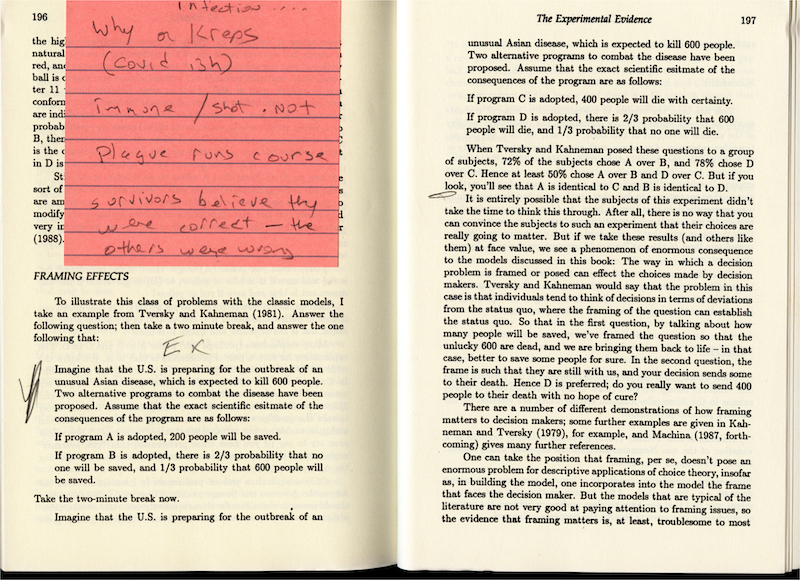
Knowing is Knowing is Knowing
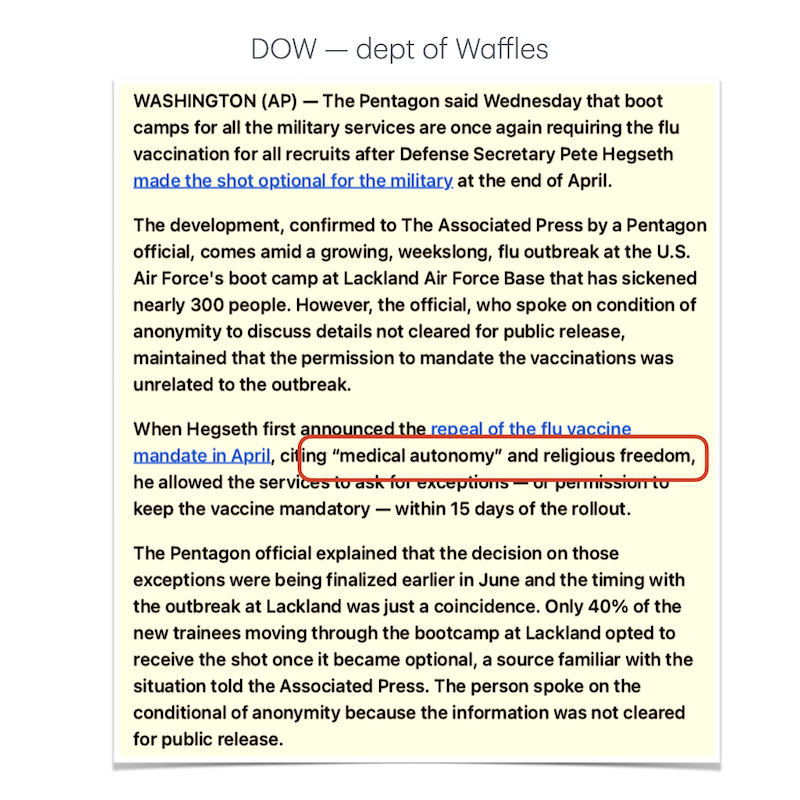
Hagsouth Waffles —
US5~ here, who walked thru two lines of medics providing us “medical autonomy,” giving free shots… but then, 1965 was a time we didn’t have catering cards… we had signs outside mess halls at Ft. Bragg ” edible garbage” .. so it went, in the time before Contract Killers took-over.
sometime I’ll tell about powdered milk and powdered eggs… with water from rainstorms.. cooking over flares… only if the night was foggy.. sadly, not a tattoo parlor in site, certainly not onsite.
“Since the pandemic, affordability has become a key issue in U.S. politics, and energy prices are the current face of affordability,” Cassino told Newsweek. “In our polling, voters support anything to bring down their energy bills, but banning data centers is pretty much the most popular option.”


You must be logged in to post a comment.