
does it take for an expert to hold your attention.
When you overhear someone on a riddle-me- this, advice for the lost hobbyist forum, how much salt does it take to turn bullshit into stew.
A question was asked about contrast reduction masking making for RA-4 color negatives. They were told that their first thoughts were flawed. They were told this by someone that many, even the mods, consider an expert among them. How did he become that expert. Who gave him that mantle. Simple: there and them. They need to be expert; they satisfy this by believing in each others expertise.
Sometimes, some give very good, well reasoned answers — even correct ones. By correct I mean I would be able to get that to work as stated.
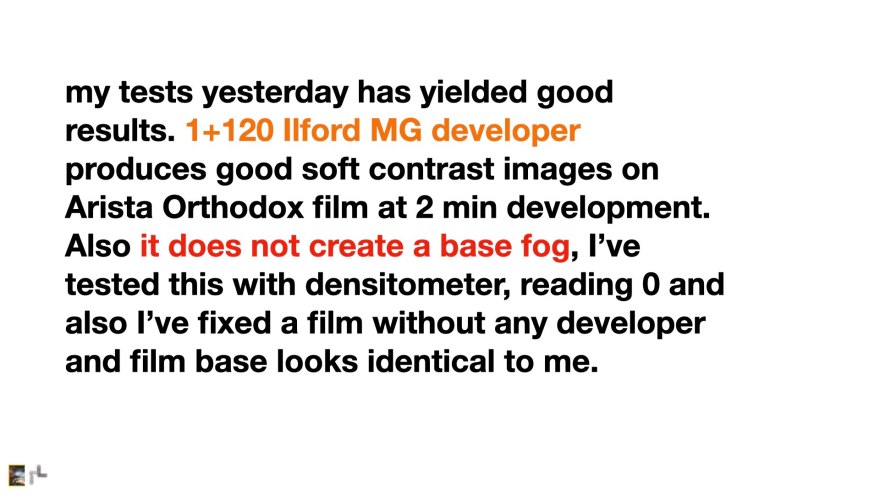
the person did what they should have done — try it.
it worked better than the Forumatti said was possible.
// hc 110, 1995 .. diluted for how many efforts. How much film as masks could someone run using a bottle of HC-110? I leave it as an exercise with these notes:
- masks are best run singly in trays — one-shot
- 250 ml solution per mask
- HC-110 is exhausted at 5ml per 8×10 sheet of Kodak film
- mask making is at great dilution — D or F
Adage from commercial labs: Mix for 4, use 3 .
The adage means use more developer than you calculate needing; this assures even thorough development.
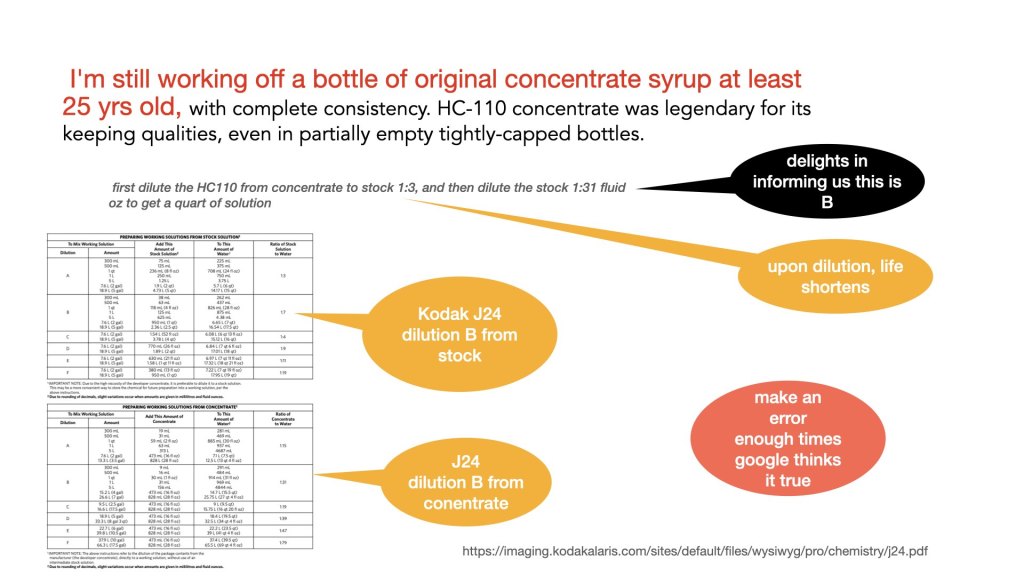
an expert using 25 year old bottle of concentrate– proof that it stores well — not proof of it being used much.

How many prints does an expert printer make? In this case, not many. His expertise certainly didn’t come from working with this material. Neither the HC-110 for masking, nor the Fujiflex printing.
What does the expert say it takes? How much film? (see: p2.)
rolls of Fujiflex are long enough to make 50 finish prints (30×40).
Making a print a month doesn’t make a productive printer — this is much like the low-use developer expert.
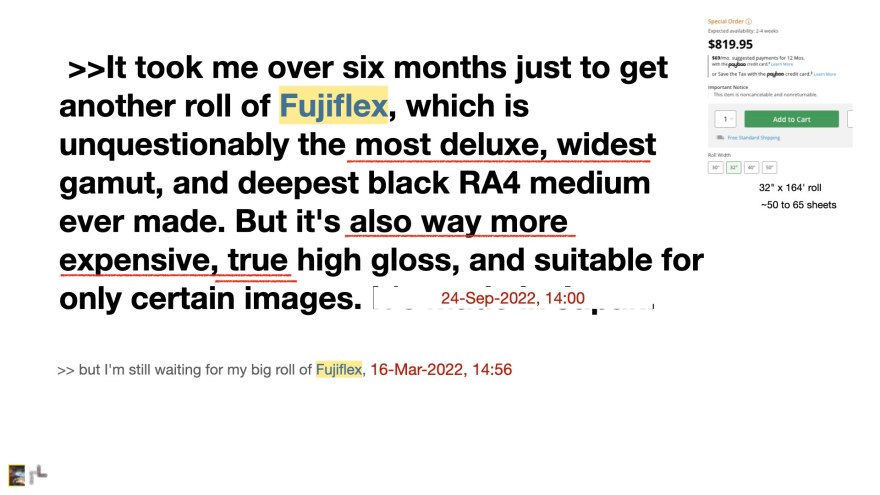
Not much film; not many prints — say hello to the modern, online, snobby hobby expert.


You must be logged in to post a comment.