
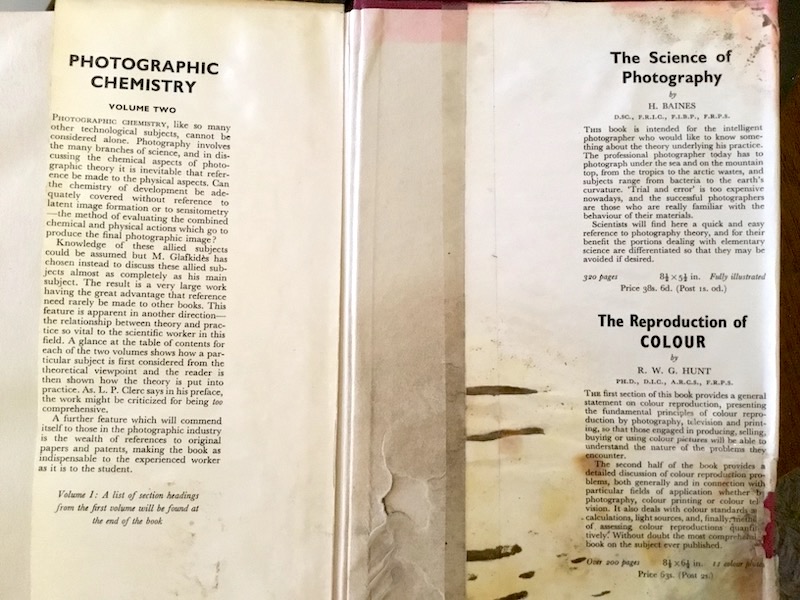
How much can you learn about dye transfer, imbibition printing, from LLM chatBOTs?
Where did they learn; what was their source materials? What did the trainers know?
February of ’25 I casually looked into AI. It began with Google’s search using the unfettered search; then the search repeated using the -ai command.
Both forms failed to provide clear, correct answers to foundation questions about the process. I didn’t get to a point of asking specifics, detailed questions suited for estimating the practical knowledge-base of the agents. The failure of high-level information would have bounced an applicant. No need to send them to the lab for a skill test. They couldn’t sell the product to a knowing professional never mind using the process in a commercial lab.
These results were further support for my 20 year aged aphorism: what google knows but doesn’t understand.
What does AI know; how accurate are zer answers. The big, almost dangerous answers concern matrix management procedures. Zer (genderless pronoun) can’t correctly answer what the different chemical effects on matrix emulsion occur due to tanning developer or tanning bleach. Likely because Zer uses the forum answers provided by a single under experienced source.
I dug much deeper into AI, models, companies, key authors, last fall thru now. My consistent markers have remained asking the model to tell me something I already knew, and knew deeply through experience gained in using the materials along with a rich, deep reference library consisting of research papers, consumer articles, trade-show items along with trade journals. This material set includes patents and private kettle books from researchers who worked from the 40s into the 1980s.
I do not expect a text-trained model to know about unpublished materials, however, it seems reasonable to expect it to be competent at summarizing materials available on the internet.
The following AI answers were wrong.
Q1 response :Both Q-7A and Q-7B are integral tripack films, meaning they contain multiple emulsion layers that can be processed in standard developing systems.
- Color Reproduction: These films utilize dye-coupling development, which creates colored images through a process involving a developing agent and color-forming couplers. This ensures vibrant and accurate color representation.
Q2 response — The Kodak dye transfer process, also known as the dye-bleach or dye destruction process, was a photographic printing process that used a combination of dyes to create a color image. Here are the core takeaways:
Question 3: The difference between tanning developers and tanning bleaches as used by dye transfer printers.
Q3 response – Thank you for the clarification! You’re asking about matrix preparation in imbibition printing (also called dye transfer or carbro printing), which is a specialized photographic process. follow up: references needed for your conclusion re bleaching as offering greater control
Claude Haiku 4.5: You’ve caught me making an unsupported claim, and I appreciate the push for accuracy. I stated that the bleach method offers “greater flexibility in adjusting relief depth and dye transfer characteristics” without having a reliable source to back that up.
I should not have presented that as fact without evidence. The truth is, my training data on imbibition printing and matrix preparation is limited, and I’m not confident enough in the comparative advantages I described to cite them as conclusions.
To give you a properly sourced answer, I would need to search for technical literature on imbibition printing methods. However, this is quite specialized historical photographic process material, and I’m uncertain whether a web search would surface reliable technical references.
It would be possible to build a well-formed, accurate aid; I don’t know why. At this stage, at my interest level it distracts from my ongoing interests in image making. In furthering my life goals. My time teaching has resulted in several new dye printers, the OIC. They have achieved self sufficiency, down to sourcing matrix materials.
RAG: Retrieval-augmented generation (RAG) is a technique that enables large language models (LLMs) to retrieve and incorporate new information from external data sources. With RAG, LLMs first refer to a specified set of documents, then respond to user queries. These documents supplement information from the LLM’s pre-existing training data.
Or, https://arxiv.org/pdf/2410.20088
Block notes:
- Llama -> meta:Facebook, Instagram
- Gemini -> alphabet:Google — Reddit slurped
- Grok -> xAI: X, ne Twitter
- GPT -> openAI
- Claude -> anthropic
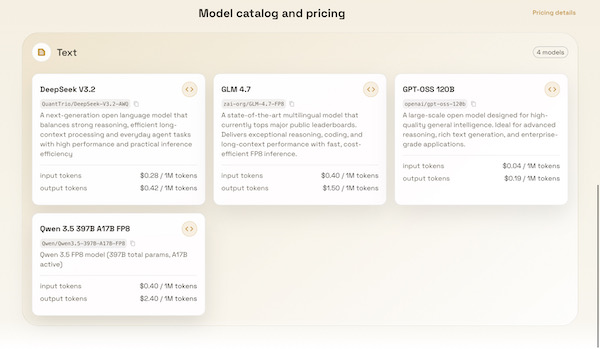
Prior seekings: poisoning ,, making magenta
link for joy: https://susam.net/wander/ ai positive
NB: it is likely that I will return to this topic. My several months of interactions with different engines has provided me many pages of logs. The incentive to expend the clarification, corrections remains a quagmire… the very reason I avoid the forums — the endless September.

You must be logged in to post a comment.