quickbread answer — the how has to do with the printing more than with the taking. Film does matter, but paper matters more; is the print. The color negative is part of a process. That process of negative+positive has been broken most of this century. We don’t have a single research and manufacturing firm making aligned negatives and positives. No film made is made as perfect match to color paper. C-41 doesn’t match RA-4. We have industrial mismatch. Most, naïvely thinking that Color science has come to the rescue –all roads leading to the same place , when really all roads just lead to someplace .
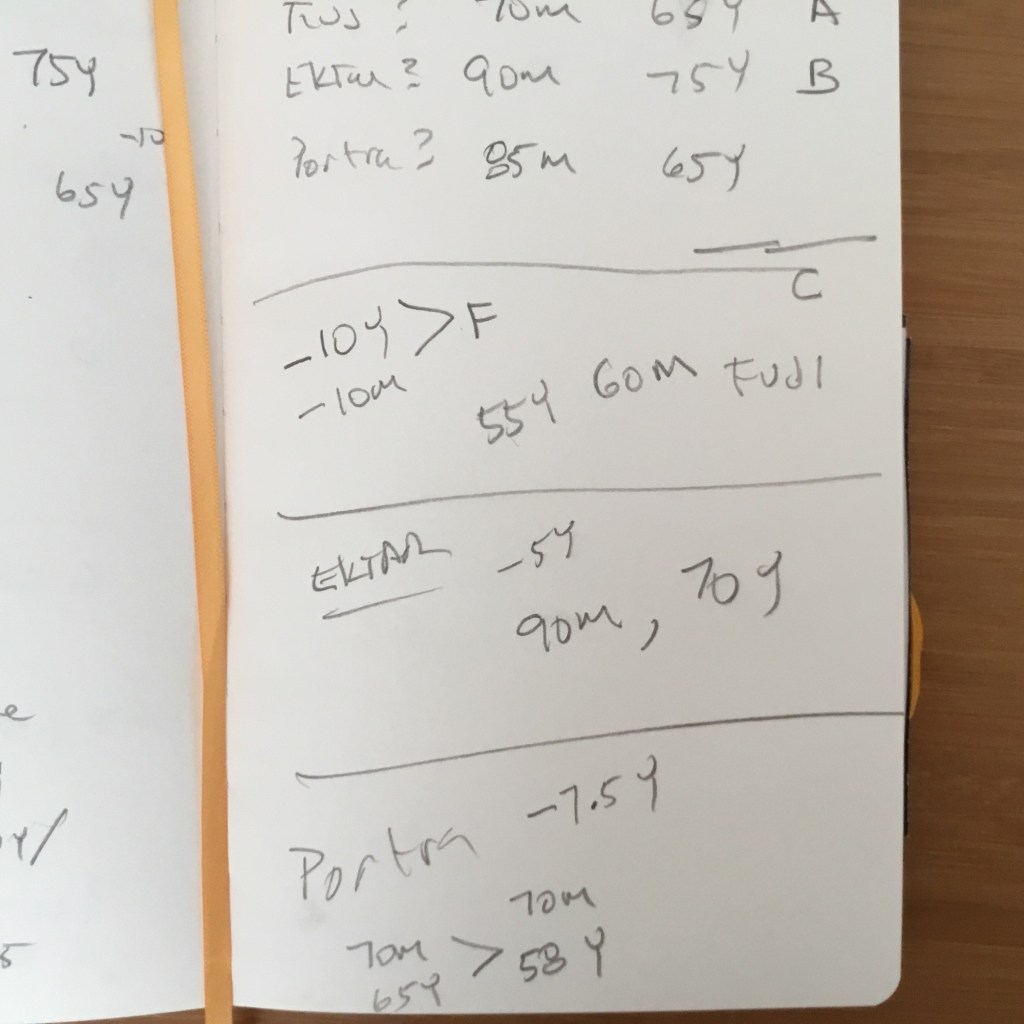
So, the print is the resultant. And, we have only one maker, Fujifilm. Control of print values means understanding Crystal Archive’s renders.
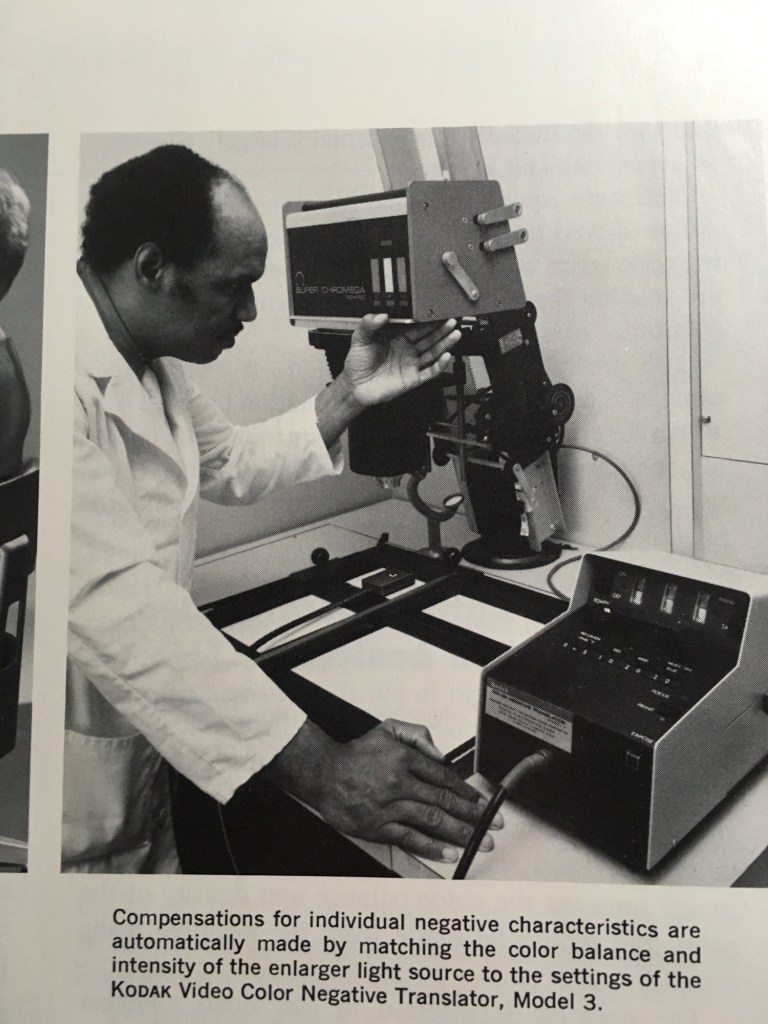
Alter Chemistry is one pathway. Another is mask the color-negative.
Likely you, if new to darkroom, won’t understand the above sentence. So, the main, boldline is: do what you know, but learn more. Do more.
One must from time to time attempt things that are beyond one’s capacity.”-– Pierre-Auguste Renoir
the first of the month; time to check electronics in the studio and the lab.
in or out? when you put the camera, meter, whatsit away, what is your cleanup and storage protocol? Perhaps you haven’t considered the question. When you’re done, do you leave stuff in the bag or on a shelf.
In my commercial world, the process of ending one thing was prep for the next.
In the age of the professional studio every assignment had a set up and a teardown time. cameras along with all equipment were cleaned at shoots end; repairs needed were noted.. before a shoot the equipment was checked; this included batteries for those portable electric items. items which were stored a long time while being assumed always at the ready were checked monthly; batteries being swapped out, freshly charged ones being put into service. For Equipment cage operations someone in charge of the cage followed the procedure with every equipment check-in and check-out. Schools of journalism instilled the discipline in their students which likely spread throughout that industry.
I keep batteries out of infrequently used darkroom equipment, but do keep batteries in the actively used cameras. Lightmeters are not stored more than a week with batteries enclosed. When the meter is being stored, it is stored with its battery put into a bag-box with a tag marked with dates. If the meter is going out pn location it is tested with vtvm. Field kits always include tested spares.
It is also a time to prune, to dead-head equipment. If it isn’t being used, since I’m not a collector, and it is a dust collector, I consider passing it along.
Emergency in the gun-belt states. Most of the US experiences competitive power failures. So the Free Markup has devised the house-batt. I keep batteries in flashlights; along side these are 8-hour candles. And so it goes.
There remains the ground of difference between being awake and being aware
when you awake do you look for what’s right, or what’s failed overnight.
growth or gloom .
upon first viewing, do you look for what’s best in the photograph, or what’s the worst . do you teach by pointing out their errors — or, … can you complete the line
can you get past the photograph . can you get past the subject of the photograph.. can you get past the limit you set yourself..
American Photographs — Weston to Beaumong Newhall, “I want the Walker Evans book. He is certainly one of our finest. When I see a photograph reproduced that I like, I usuallly find it is by Walker Evans.” — september 23, 1938.



You must be logged in to post a comment.