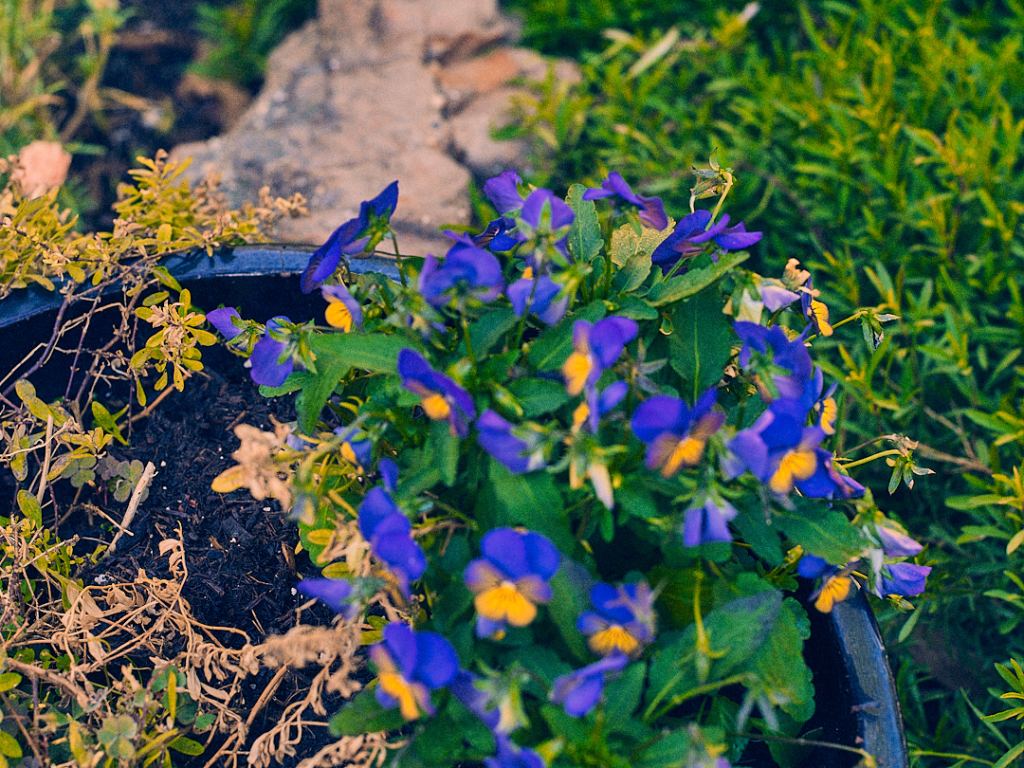
One Picture More

Making across picture manners. consider this a continuation of my recent “Picture Post” .. the images in that, with this additional, are from the same situation, bounded by the same initial consideration. My prompt was the same. In that PP, I consider only the first points of making a picture. Often, that is enough. The first place is the last place.

Subjects have powers — these come from their prior treatment, by the naive consumer, the amateur producer and the needs of the driven “by any other means.”

conceptual work has no shadow; is without dimension.
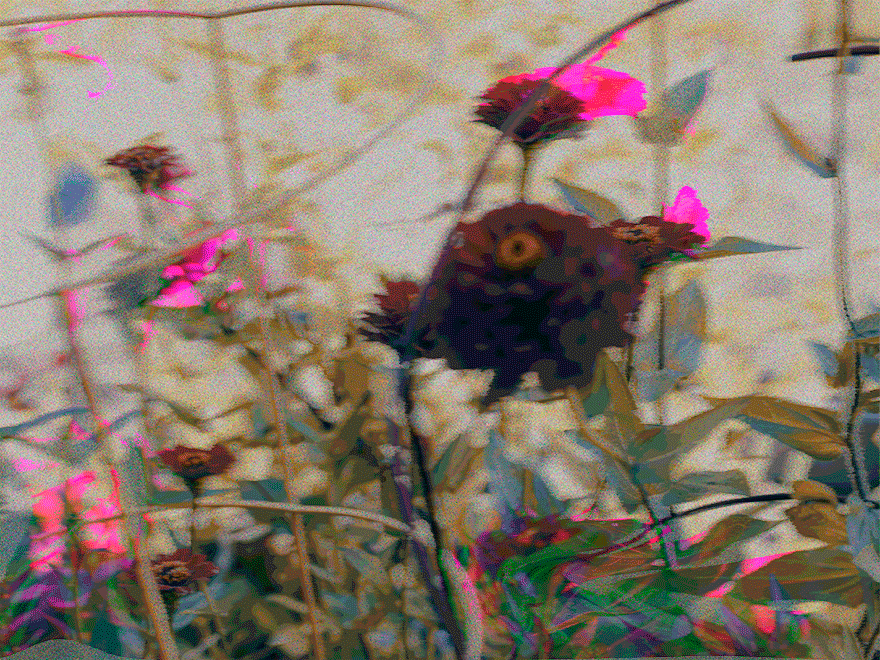
These are two variations on simple structural relations. This [oct22,23] is a first rendering. Rather than make added posts, I will add to this post.

[this method has become my revised mode of postings … add to existing. ]

I won’t be writing about the “how” they are done… I am reminded of a conversation with John Orentlicher: my position on answering didn’t go well for my time at EXS. [To John Orentlicher ( or liquor) because it makes it more powerful to me and I have no interest in translating them; spending my life as a translator of rather than an author of. My first react comment to him was: That’s a question I’d expect of a student, not the head of the department. — I didn’t make tenure track… and so it goes.]

Added Monday Oct 24–> heading along the edges

Picture Post: Oct ‘23.1

gardens of color tasks.

notes .. as thanks for stopping by:

beware photrio gibberish such as: processes like …. acid-mordanted dye transfer printing … which was written by a Pella Window salesman

>>An imbibition matrix is a gelatin relief obtained either by dichromate sensitization, tanning development, tanning bleaching, or by softening with hydrogen peroxide.
>>The gelatin relief, dyed with a soluble dye and still wet, placed in contact with another gelatin layer transfers part of its dye quickly forming an image.
>>The gelatin forming the relief is generally hardened. This hardening increases the firmness of the latter which enables the two films to be readily separated after transfer and gives sharper images. It reduces the swelling of the gelatin. 
>>The amount of dye absorbed is greater at the surface than deeper down, but the maximum concentration is reached slightly below the surface. The amount of dye absorbed by the gelatin increases with the concentration of the bath. Normally the curve as a function of this concentration reaches a maximum and above a critical point it is useless to increase the concentration, as the basic groups of the gelatin become saturated.
>> The transfer layer can be made of soft gelatin or of gelatin containing a mordant which can increase the rate of dye diffusion: alumina, cuprous thiocyanate, lead or copper ferrocyanide, etc.
If the thickness of the transfer layer is equal to that of the matrix, and if the gelatins are of the same type, transfer of dye stops when the dye concentration in the matrix has dropped to 50%.

>> The transfer paper, a fixed photographic paper, has a plain gelatin layer which is impregnated with a mordant using the following solution: [see other posts on webionaire ] -- Notice it isn't "acid-mordanted"

>> Substitute for Kodak paper conditioner: Sodium acetate in distilled water. Kodak, after closing their process down, published their last used formulas in a CIS. They also held a “call-in” for some labs, during which they answered questions about the final process: notes were distributed among a few of us.