wavelengths of RGB that most color photographic papers respond to best are the wavelengths that are passed by Kodak Wratten filters
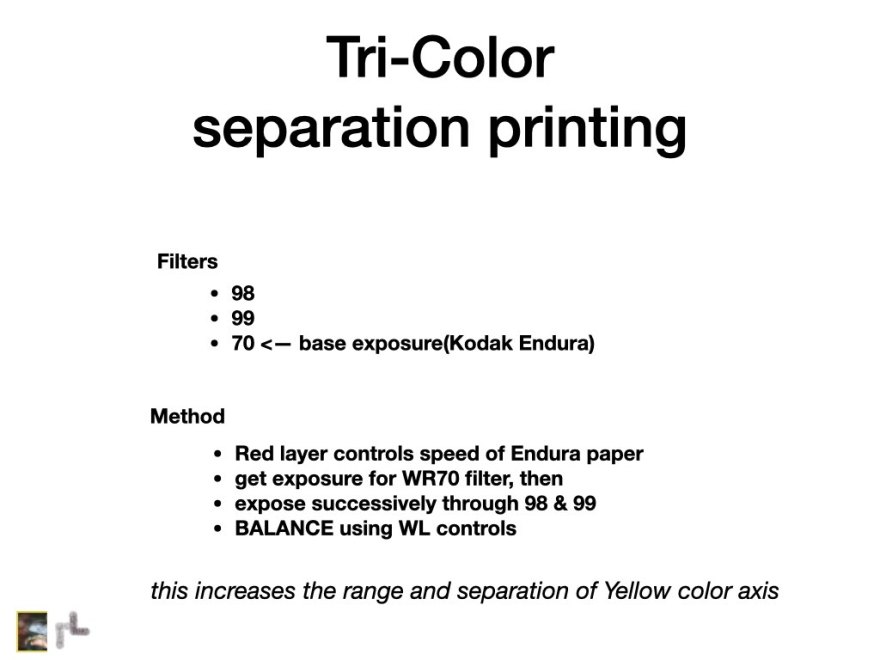
Tricolor Separation Printing
The original color printers, as well as the recommended printing method for Type “C” papers, used the additive filters. Three exposures were made using WR98,WR99 and WR70 (alternatively 29) filters. Kodak and Fuji have since improved color separation between the Type C (RA4) color layers. Additive printing was essential to take out the ‘pumpkin’ yellows. The tricolor method kept the yellows clearer.
use the WR70 as the base exposure. The Red layer of the paper is the speed determining layer.
The Reproduction of Color, Hunt 5th Ed. p.177-192.
The Color Gamut Obtainable by the Combination of Subtractive Color Dyes. Optimum Absorption Bands as Defined by NonlinearOptimizationTechnique, J.ImagingScience, 30,9–12; by N. Ohta.
Brightness and Hue of Present Day Dyes in Relation to Colour Photography, by ME Clarkson and T. Vickerstaf, PhotoJ.88b,26(1948).
Learning means adjusting to what you don’t know. Changing questions into your answers. I am going to start you off with a set of reference materials, along with some cautions.
Google isn’t always your best friend. A goog search will take you to a forum dedicated to “large format,” seemingly full of knowledgeable, capable photographers. Beware: you probably don’t know enough to be able to pick between and among their suggestions.
My suggested references for your self-study:
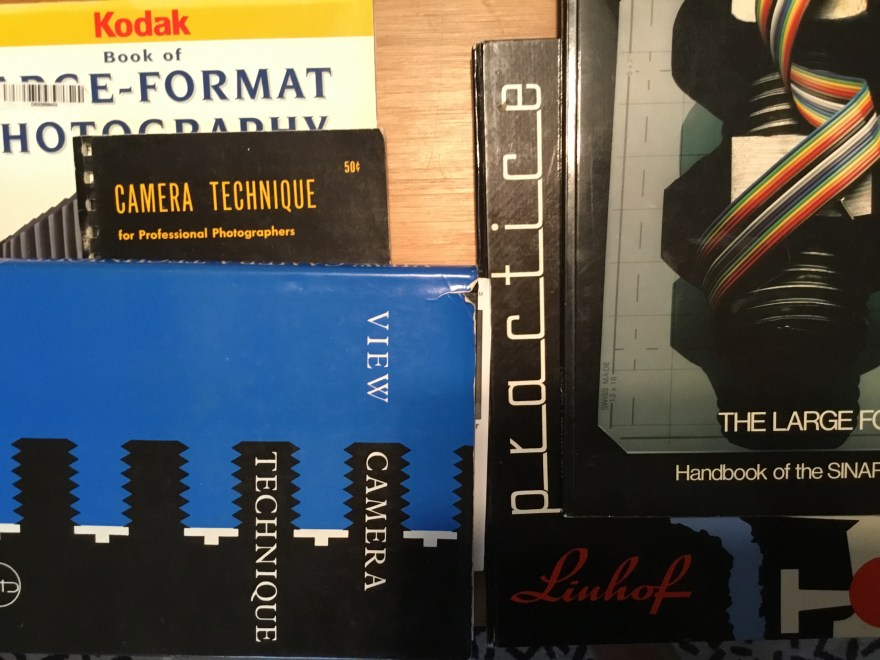
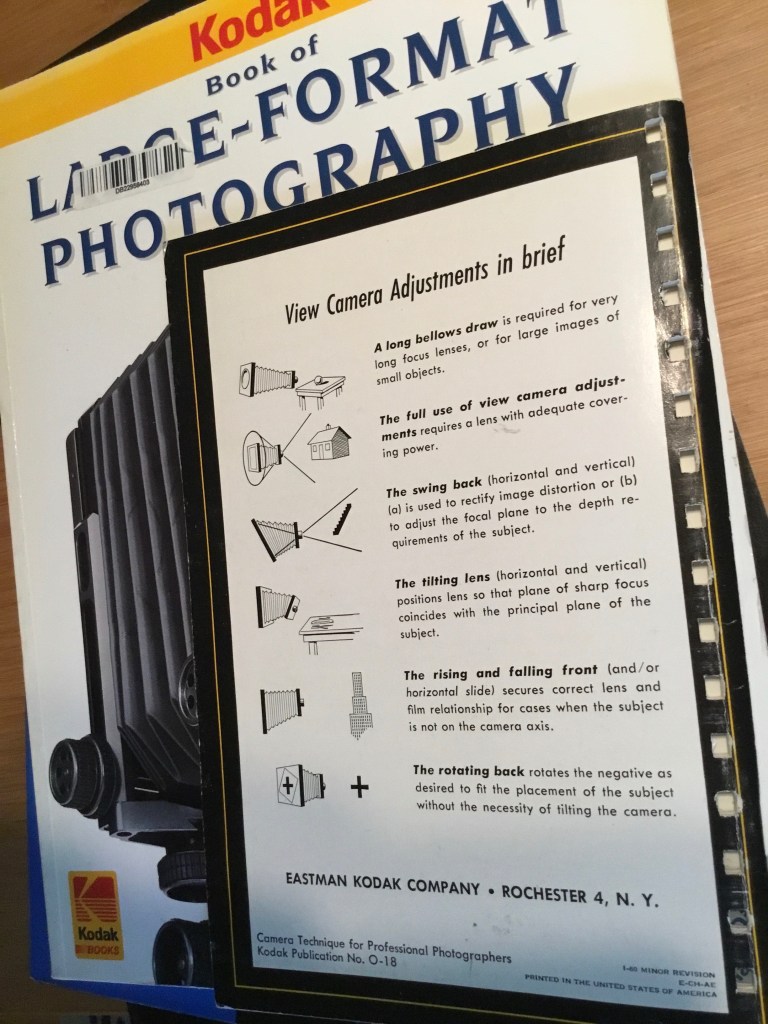
The best general reference is the original Kodak Publication, or the updated. Get them both, if you can.
Camera technique for Professional Photographers, Kodak Publication No. O-18
Large-Format Photography, Eastman Kodak Compan Publication O-18e. ISBN 0-87985-771-4
The other texts provide a general vantage point, which assumes you are a student in trade school intending to become a commercial photographer… Or, specifics about the two main camera systems that ruled the commercial studio of 1965-1995. Linhof, and Sinar.
The Large Format: Handbook of the Sinar System Koch, Carl
Linhof Practice Linhof Precision Camera Works
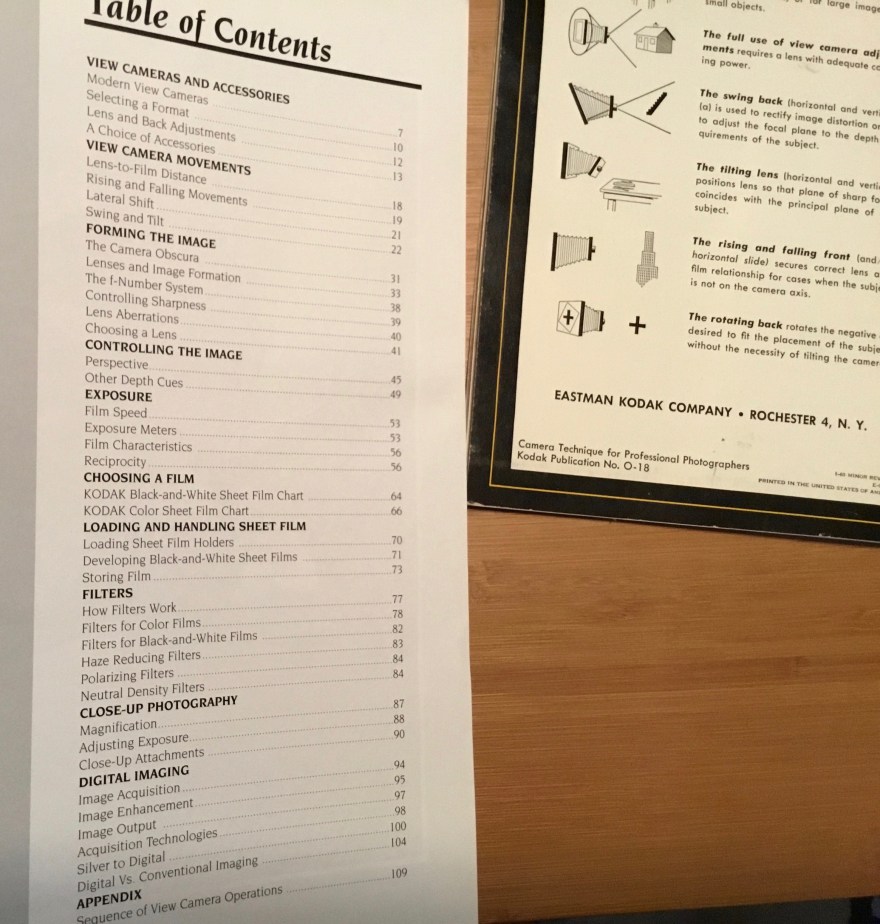
View Camera Technique, Leslie Stroebel is a standard text from RIT and similar colleges. It powered many courses during the explosion of photography at colleges. Not the fine art schools that smelled of paint and plaster, but almost everywhere else. The contents provide a topic guide, even if you don’t get the book. As said before, I don’t recommend it for this century’s photographer. (I also avoid any Ansel Adams book.)
— Characteristics
— focusing and movements
— lenses
— bellows
— films & filters
— exposure & meters
— control of density
— view camera types
— evolution of the view camera
— applications of view camera
My course outline went something like this:
the Lens
— covering power
— image distortions/alterations
lens for
— wide angle effect
— small object/ close focus
— portraiture
— compression/ seperation
the Location
the Procedure
— camera adjustments
— swing back
— tilt lens
— rise and falling front
Vertical lines
Horizontal lines
Depth of field
— all about shape rather than texture… focus over feature


You must be logged in to post a comment.