What is Lith

making silver blush

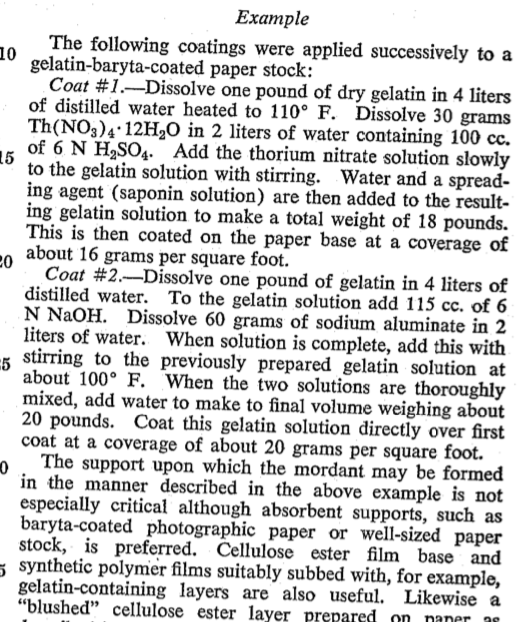
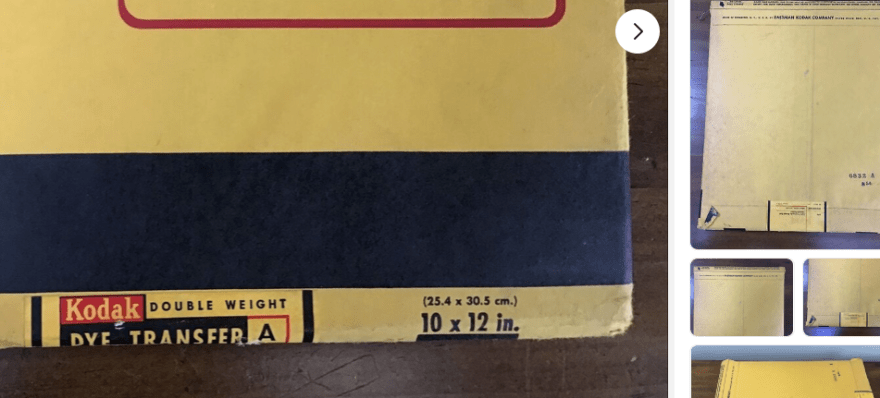
Lith is an altered darkroom procedure. Lith printing is done by using a high contrast, very active, easily exhausted developer, originally formulated to process film, as a paper developer. At one time (’60-’72) Kodak made a lith paper for use in confirming the dot and size of litho film – the stuff used for halftone lithography – notice the name.

As photography moved from the commercial to the fine art as a means of income; as it became a studio practice in colleges, artists took on prior products and processes in the practice of an artist. They retrieved, re-purposed commercial conceits for esthetic effect.

Counter Culture

Kodalith paper and  developer satisfied the need an urge for a printer affect for a printmaking aesthetic. It produces a high contrast image that is warm tone, having an altered tone response that is counter to the Adams-Westen F.64 look and feel.

Warm is old timey… sepia suggests authentic & old. Making an image that holds that aura while achieving an altered printed tone range seemed new. This satisfied counterculture drive for alternative ways of seeing portraying and subverting standardized commercial response

What Does Lith

lithNotes.001
making silver blush

Look Like

This is where the roads part. One trail leads to glorious sunburst, as the other emphasizes modest color shift with abrupt tone contrasts. Kodalith paper was warm tone that would turn yellow if the developing time was extended. This extended development was usually to overcome too little exposure, and/or exhausted developer.

The rows in the graphic are:

  1. papers no longer in production.. Brovira, Cykora, Kodalith paper
  2. current (2017) warmtone papers: Ilford MG warmtone / Foma Fomatone / Slavich Bromoportrait
  3. current (2017) coldtone papers: Slavich, Foma Fomabrom, Adox Lupex (contact chloride paper)

What Does It Solve

To weekend zoners it is novelty – a reason to “do it in the dark,” or “keep film alive.” These are the red-light workers acting on such advice as: Lith printing can breathe a whole new life into an everyday image — 

Lith printing was revived and is championed by several onliners and book pushers. This monetizable interest comes from the weekenders reaching retirement age; discovering need for awakening tired original negatives, they proceeded to alter the soup of their print.

These photographers are the same ones disparaging digital photographers’ making push-button plugin pictures. Neither technology makes meaningful, nor meaningless images. The lack of visual understanding is the shortcoming each actor is unaware of in their struggle to realize meaning.

I use lith to enrich the shades of grey available with current papers. Altering the underlying tonal quality providing a small variation of skadesics, thereby increasing the  visible shades without reducing contrast. Simple: I get bigger mid tones.

What Do I Need

Just the standard darkroom conditions. I’ve posted specifics in the following referenced links (this site). Use a paper such as Foma Fomatone & Moersch Lith Developer. You must use a stop bath — water bath will just frustrate you with likely staining. My standard fixer is Ilford Hypam 1+9.

easy bake starting point:

  • 120 neg in Beseler 45MCRX
  • lens wide open
  • 16 second exposure
  • Moersch Lith: 30,30,800 for 7 minutes development
  • when it looks good ::: snatch into citric stop bath (NO INDICATOR DYE)
  • flip print over, pull from stop, quickly into fixer
  • fix for standard (read paper instructions) time (5-8 minutes)
  • wash


References

blog posts on lith

infectiuos development can be tapered to none by adding sodium sulfite solution to the mixed lith developer. mix the sulfite at 5gms/liter.

Easy Amidol

Amidol is the developer of kings, or so it would seem reading the stained pages of olden lore. It was the developer used by Edward Weston. It is the chemical that stains the fingernails of its users, like nicotine stains the fingers of that machinist you watched grind your flat head 8. [ stained finger  http://wp.me/p6UdTM-4n ]

Amidol is also toxic. Use gloves when working with it. Use dust mask when mixing it.

Again: Amidol is toxic and expensive —  in working solution the life is only hours…it stains quickly. Stains need hydrochloric acid for cleanup.

Advice: this isn’t for the casual worker. unless you’ve a reason for amidol developer, stick to dektol, or if you need exotics to brag about on the barstool, use ansco 130..

Why – your reward is a print that has neutral silvery blacks. You can also lower contrast of fixed grade papers radically. You can achieve more than 2 grades of paper change with chloride papers. [ chloride papers http://wp.me/p6UdTM-1MR

My preferred contact paper is Adox “Lupex.” I use the spoon formula from the attached sheet of formulas.

For those interested, Lupex, Azo, and Lodima are all virtually identical.– ron, [PE] 2016

Buy the kit — Photographers Formulary sells 3 different kits measured and ready for mixing. (price as of: August 2017)

Dry2520paper2520dev2520kit2520thumb__18009.1394205582.220.290.jpg.jpg
  • Weston’s Amidol / $24.95
  • Formulary Amidol paper developer / $24.95 NB: see Ansco 113 above
  • Lodima Formula / $16.95

Each of the above is for 1 liter. To mix you will need a 1 liter brown bottle (glass). Additionally, you need a 10 ml and a 100 ml graduate (cylinder).

Mixing

Mix the stock solution without the amidol. This stock stores well. The lodima version stores several months without the amidol.

Just prior to use, add the amidol. It will go into the stock solution at room temperature. Formulary kits contain pre-measure packets of each of the ingredients, even the amidol. Each of the kits has different packets. The single liter kit has 2 packets, each to be mixed into a portion of the stock solution.

Using

Development time can range from 1 to 10 minutes in dilutions from full working to 1:10 dilutions. Lodima developer with lodima paper is noticeably warm when exposed enough to develop completely in 1 minute. Formulary Amidol (ansco 113 above) develops fully in 3 minutes.

Controls

Potassium bromide can decrease paper speed and increase contrast. To find the point of sufficient restrainer begin with 5ml of 10% solution per liter of tray(working) solution. Using a 5 min dev time, if no fog is visible, use that value. Increase the restrainer amount in these small increments until no sign of fog at 5 min dev time for an unexposed swatch of paper.

Soft contrast results will be achieved with higher dilutions of stock to water.

My own process finds me frequently having 2 trays mixed to different dilutions.

If your development time is longer than 4 minutes, begin development without safelights. After about 2 1/2 minutes in the developer, turn on the safelight. The lodima paper has a higher chance of fog than does the Lupex. I work under red lights only.

Reference Formulas (above table)

  • Weston’s Amidol
  • Peckham Amidol
  • Lootens
  • Fein’s Amidol
  • Agfa/Ansco 113
  • Michael A. Smith’s Amidol
  • Dassonville D-2
  • Defender 61-D
  • Kodak D-51
  • Ilford ID-22
  • Amidol Teaspoon Formula