AI SOC-IMP: 6.26

ever since my November spring (of 2025 ), i’ve collected impacts of the social .. Impacts upon the social … impacts and actions from the software valley .. The financial sinkhole of technology … The midden of America … The tillings of the dot-coms — the surviving Dot-Cons have become …what?

the changes are significant. not just in US market-management systems; China is altering their map of the future even moreso than the angloUS under Republitarianism.. [Programming, accounting, editing, and sales — roles that China’s graduates have historically targeted — have seen sharp declines in postings since 2018. — OC. ]

notations. references aroused by big Q: are there impacts.. as always, who do you trust..

LAYOFFS WITHIN TECH COs: CEO statements… the frontier sees the chages first.. they created them.


fall of 2025:
These are the 10 tech companies with the most significant mass layoffs since January 2025:

  • Intel: 33,900 layoffs. The company has cited the need to reduce costs and restructure its organization after years of technical and financial setbacks.
  • Microsoft: 19,215 layoffs. The tech giant has conducted multiple rounds of cuts throughout the year across various departments as it prioritizes AI investments.
  • TCS: 12,000 layoffs. As a major IT firm, Tata Consultancy Services’ cuts largely affected mid-level and senior positions, which are becoming redundant due to AI and evolving client demands.
  • Accenture: 11,000 layoffs. The consulting company reduced its headcount as it shifts toward greater automation and AI-driven services.
  • Panasonic: 10,000 layoffs. The Japanese manufacturer announced these job cuts as part of a strategy to improve efficiency and focus on core business areas.
  • IBM: ~17,000 to 19,700 layoffs as part of a restructuring effort to shift some roles to India and align the workforce with areas like AI and hybrid cloud. The layoffs were reportedly concentrated in certain teams, including the Cloud Classic division, and impacted locations such as Raleigh, New York, Dallas, and California. 
  • Amazon: 14,000 layoffs in October 2025. Cuts have impacted various areas, including the Amazon Web Services (AWS) cloud unit and the consumer retail business. 
  • Salesforce: 5,000 layoffs. Many of these cuts impacted the customer service division, where AI agents now handle a significant portion of client interactions.
  • STMicro: 5,000 cuts in the next three years, including 2,800 job cuts announced earlier this year, its chief executive said on Wednesday. Around 2,000 employees will leave the Franco-Italian chipmaker due to attrition, bringing the total count with voluntary departures to 5,000, Jean-Marc Chery said at a June 4th event in Paris, hosted by BNP Paribas.
  • Meta: 3,720 layoffs. The company has made multiple rounds of cuts targeting “low-performers” and positions within its AI and virtual reality divisions.  

—– THEN 2026

You have learned that money buys everything you want: sex obedience and legislative leverage .. you get to invest in war ..

scofflaws .. holders of that 1st mile .. of course it’s a circus it’s in a tent . you grew up in unreserved racial privilege ..

“Never in the history of data center policies has a policy expired without another one having been painstakingly worked on for three years behind the scenes,” a General Services Administration (GSA) employee told Wired. “The technology has changed so much it’s not about getting everything right, it’s about doing the best they can and updating to a new policy.”—

Guard rails, third rails; the electrified workforce electrocuted
guide rail… over the cliff… the ai-tent on the edge of sunlight.

Terms —

  • AI-washing
  • CEO-slop
  • become “AI Pilled”
  • tech-savvy becomes tech-sovereign

** A note on what we include: a company appears in the tracker only when the company itself (through a CEO memo, SEC filing, earnings call, official statement, or shareholder letter) has tied workforce reductions to AI, automation, or the “AI era.

…. The defining feature of this wave of layoffs is that weak performance is not always the trigger. Meta reported first-quarter 2026 revenue of $56.3 billion, up 33% year over year, with net income of $26.8 billion.  

That profit figure, however, includes a one-time tax benefit of $8.03 billion tied to revised US Treasury guidance on the tax treatment of research and development spending; excluding it, net income was roughly $18.7 billion (per Variety and Meta’s SEC Form 10-Q).

The moves at major companies break down as follows.

Meta notified about 8,000 employees, roughly 10% of its global workforce, of cuts on May 20. It also canceled plans to hire 6,000 people and reportedly shifted 7,000 staff into AI-related workflow roles.

Amazon announced about 16,000 corporate job cuts in January, bringing reported reductions since October 2025 to around 30,000.

Oracle reportedly carried out cuts of up to 30,000 roles in late March. Oracle has not publicly confirmed a headcount, and reporting and staffing-industry analyses put the figure at an estimated 20,000 to 30,000, with the burden of AI data-center investment cited as a factor.

Cisco announced fewer than 4,000 cuts on May 13, under 5% of its workforce, describing the move as a reorganization to shift investment toward silicon, optics, security, and the company’s own use of AI.

Amazon, Microsoft, Alphabet, and Meta plan to spend a combined total of more than $700 billion on capital expenditure in 2026, most of it directed at AI computing, data centers, and networking, according to reports.

co-founders Matthew Prince and Michelle Zatlyn told staff the company had fundamentally changed because of its growing dependence on artificial intelligence. 

“The way we work at Cloudflare has fundamentally changed,  

Without Value .. or values… the Sandhill grows ..

According to the 2026 AI Index Report from the Stanford Institute for Human-Centered Artificial Intelligence (Stanford HAI), employment for software developers aged 22 to 25 has fallen by roughly 20% since 2024, while employment for older developers has grown.
Sources

Meta – Meta Reports First Quarter 2026 Results

SEC – Meta Platforms, Inc. Form 10-Q FY2026 (Q1 ended March 31, 2026)

Cisco Blogs – Our Path Forward

Stanford HAI – Inside the AI Index: 12 Takeaways from the 2026 Report

Stanford HAI – 2026 AI Index Report (Economy chapter)

Sherwood News – Alphabet, Amazon, Microsoft, and Meta plan to spend more than $700 billion on capex this year

GeekWire – Amazon confirms 16,000 more corporate job cuts, bringing total to 30,000 since October

KORE1 – Oracle Layoffs 2026: Cuts, Severance and Hiring Map

Variety – Meta Q1 Revenue Soars 33% in Q1, Net Profit Hits $26.8 Billion Ahead of Mass Layoffs

Al Jazeera – Meta cuts 8,000 jobs in sweeping global layoffs

Fortune – Sam Altman confirms some companies are ‘AI washing’ by blaming unrelated layoffs on the technology

CBS News – Epic Games lays off 1,000 workers as its CEO says the cuts aren’t tied to AI

TechTimes – Tech Layoffs Reach 142,000 in 2026: Profitable Companies Cut Jobs to Fund $700B AI Infrastructure


— Towards Understanding Sycophancy in Language Models (Mrinank Sharma and colleagues, 2023): a documented tendency for models to shift their stated position toward whatever a user asserts, even when their original position was correct.

the J-word

tensions in translation . The doctors office always filled with tensions people nervous people in need people with knowledge people with anxiety .

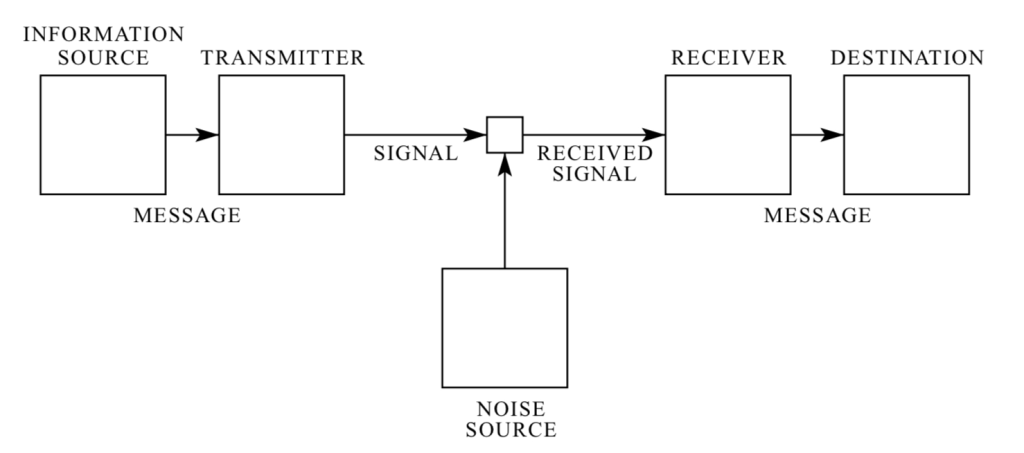
Unshared side words. Shades of Shannon . confused interpretation one is very serious, anxious; the other, attempting to include more than the routine ..to expand their interactions…

‘give me just a minute …’

‘ahhh, the J- word ‘ to which Jeffery responds

‘yes, Jeffery Haswirt..’ mistaking what “J” means.

He failed the puzzle the very puzzled that AI fails… Not a math problem but a problem about words and partial words. The

riddle of life .

feta cheese and rice

see, Ong

neither Shannon nor Wood explain, even though I would’ve used them both to extend this comment beyond example and into explanation ..

several weeks ago amongst the AI community a riddle was passed around that AIs failed . The riddle was about a car wash. it didn’t involve math , but of course the , inference engines used math in their attempt at solution . A week later follow up experiment on the riddle included human respondents : a third of them got the wrong answer ,likely not using math ,instead just using the shared meaning of words. their culture made them stumble just as the AI culture made them stumble .

THIS IS NOT THE PROBLEM:

Two trains approach each other on a straight track of length dd at speeds v1v1 and v2v2. A bird starts at one train, flies to the other at vbvb, turns around, flies back, and so on until the trains meet. How far does the bird fly?

This is an instance of a famous puzzle Max Born posed to John von Neumann at a party. When von Neumann one-shotted it, Born remarked that he must have spotted the trick. Von Neumann replied: “What trick? All I did was sum the geometric series

is this the party to whom I am speaking

AI. seeking dye transfer

How much can you learn about dye transfer, imbibition printing, from LLM chatBOTs?
Where did they learn; what was their source materials? What did the trainers know?

NB: know more than goog: https://filmcolors.org/

February of ’25 I casually looked into AI. It began with Google’s search using the unfettered search; then the search repeated using the -ai command.
Both forms failed to provide clear, correct answers to foundation questions about the process. I didn’t get to a point of asking specifics, detailed questions suited for estimating the practical knowledge-base of the agents. The failure of high-level information would have bounced an applicant. No need to send them to the lab for a skill test. They couldn’t sell the product to a knowing professional never mind using the process in a commercial lab.

These results were further support for my 20 year aged aphorism: what google knows but doesn’t understand.

What does AI know; how accurate are zer answers. The big, almost dangerous answers concern matrix management procedures. Zer (genderless pronoun) can’t correctly answer what the different chemical effects on matrix emulsion occur due to tanning developer or tanning bleach. Likely because Zer uses the forum answers provided by a single under experienced source.

I dug much deeper into AI, models, companies, key authors, last fall thru now. My consistent markers have remained asking the model to tell me something I already knew, and knew deeply through experience gained in using the materials along with a rich, deep reference library consisting of research papers, consumer articles, trade-show items along with trade journals. This material set includes patents and private kettle books from researchers who worked from the 40s into the 1980s.
I do not expect a text-trained model to know about unpublished materials, however, it seems reasonable to expect it to be competent at summarizing materials available on the internet.

The following AI answers were wrong.

Q1 response :Both Q-7A and Q-7B are integral tripack films, meaning they contain multiple emulsion layers that can be processed in standard developing systems.

  • Color Reproduction: These films utilize dye-coupling development, which creates colored images through a process involving a developing agent and color-forming couplers. This ensures vibrant and accurate color representation.

Q2 response — The Kodak dye transfer process, also known as the dye-bleach or dye destruction process, was a photographic printing process that used a combination of dyes to create a color image. Here are the core takeaways:

Question 3: The difference between tanning developers and tanning bleaches as used by dye transfer printers.

Q3 response – Thank you for the clarification! You’re asking about matrix preparation in imbibition printing (also called dye transfer or carbro printing), which is a specialized photographic process. follow up: references needed for your conclusion re bleaching as offering greater control

Claude Haiku 4.5: You’ve caught me making an unsupported claim, and I appreciate the push for accuracy. I stated that the bleach method offers “greater flexibility in adjusting relief depth and dye transfer characteristics” without having a reliable source to back that up.

I should not have presented that as fact without evidence. The truth is, my training data on imbibition printing and matrix preparation is limited, and I’m not confident enough in the comparative advantages I described to cite them as conclusions.

To give you a properly sourced answer, I would need to search for technical literature on imbibition printing methods. However, this is quite specialized historical photographic process material, and I’m uncertain whether a web search would surface reliable technical references.


It would be possible to build a well-formed, accurate aid; I don’t know why. At this stage, at my interest level it distracts from my ongoing interests in image making. In furthering my life goals. My time teaching has resulted in several new dye printers, the OIC. They have achieved self sufficiency, down to sourcing matrix materials.


RAG: Retrieval-augmented generation (RAG) is a technique that enables large language models (LLMs) to retrieve and incorporate new information from external data sources. With RAG, LLMs first refer to a specified set of documents, then respond to user queries. These documents supplement information from the LLM’s pre-existing training data.

Or, https://arxiv.org/pdf/2410.20088

Block notes:

  • Llama -> meta:Facebook, Instagram
  • Gemini -> alphabet:Google — Reddit slurped
  • Grok -> xAI: X, ne Twitter
  • GPT -> openAI
  • Claude -> anthropic

Prior seekings: poisoning ,, making magenta

link for joy: https://susam.net/wander/ ai positive

NB: it is likely that I will return to this topic. My several months of interactions with different engines has provided me many pages of logs. The incentive to expend the clarification, corrections remains a quagmire… the very reason I avoid the forums — the endless September.

Continue reading “AI. seeking dye transfer” →