Variable Contrast Developer

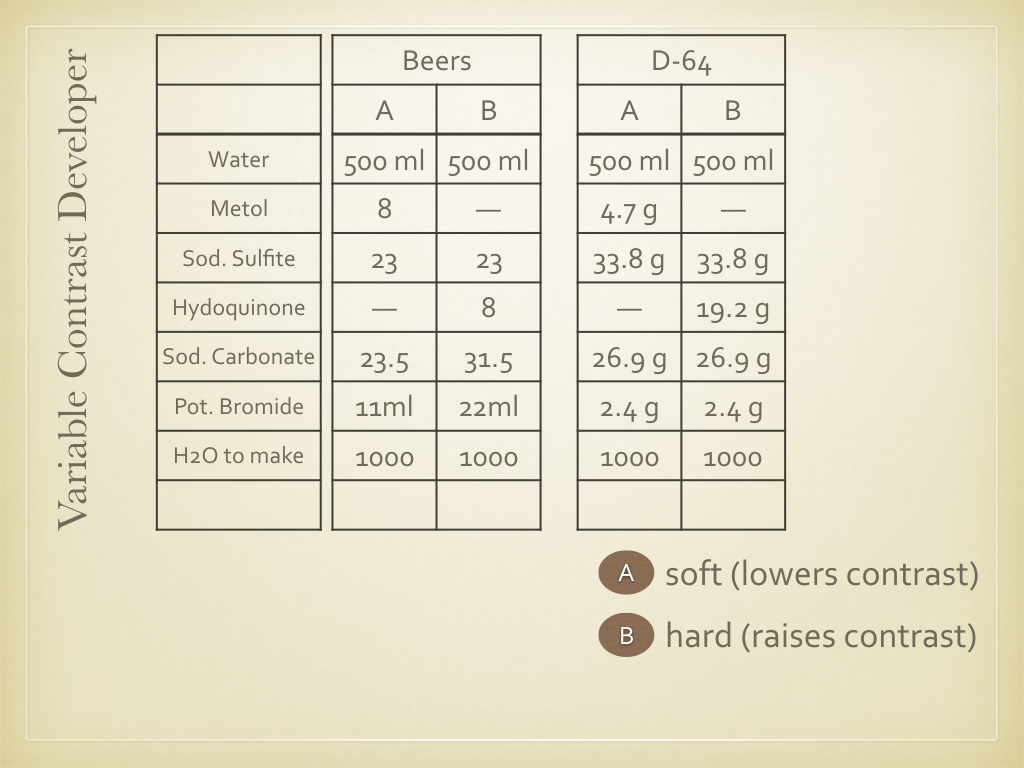
Dr. Beers is the widely known version of variable contrast developer, but in the 40’s and up to around 1955, D-64 was likely the choice. This was the time that Dupont Velour Black was a significant paper in commercial and industrial photography studios. Ansco Cykora also benefitted from D-64. These graded papers had uneven steps of contrast along with vary different exposure factors; this made changing contrast under production constraints a problem in need of a solution. D-64 was that solution. And the multi tray developing system. (using more than one developer at a time: one ‘hard’ & one ‘soft’)
formulas.002
Beers & D-64 Formulas

Dr Beers (Dr. Roland F. Beers) Developer

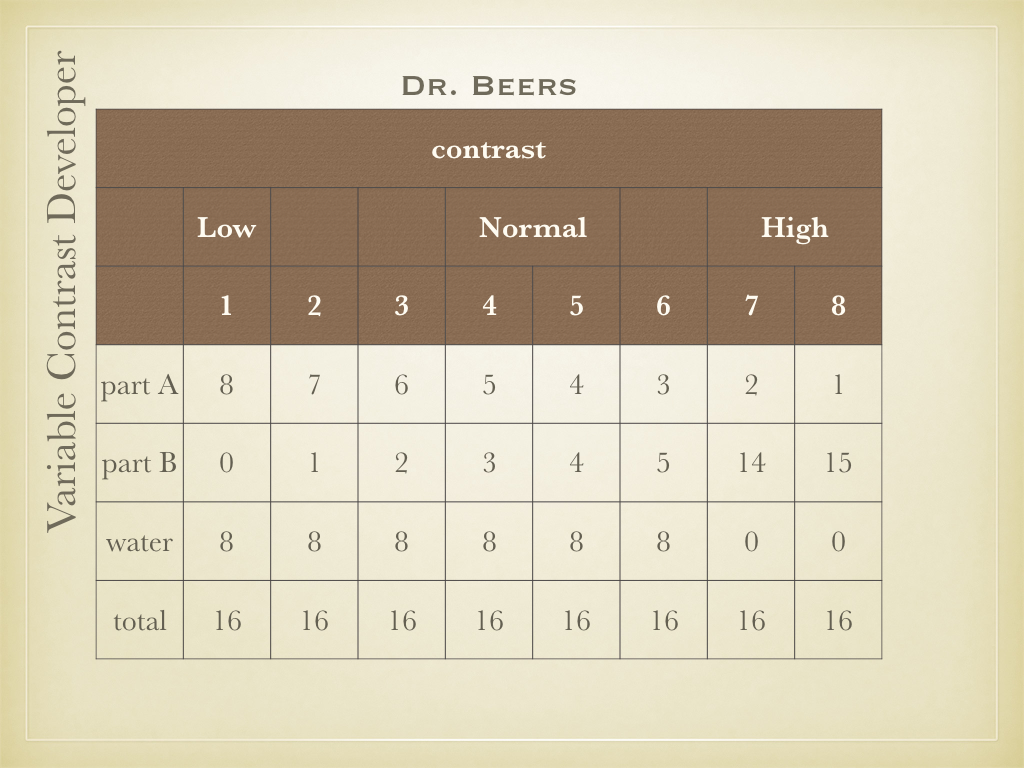
In the Beers formula I have used Sodium Carbonate rather than his original Potassium Carbonate. This has been a standard practice since 1963 when I learned the formula. It produces slightly more neutral prints — did on DuPont and Agfa papers; does now on Slavich, Adox, Foma papers. I don’t use Beers as a developer for Ilford papers, instead, I use 2 tray developing using developers from Moersch, LPD, or Dektol.
formulas.003
Dr. Beers Variable Contrast Developer

Kodak D-64

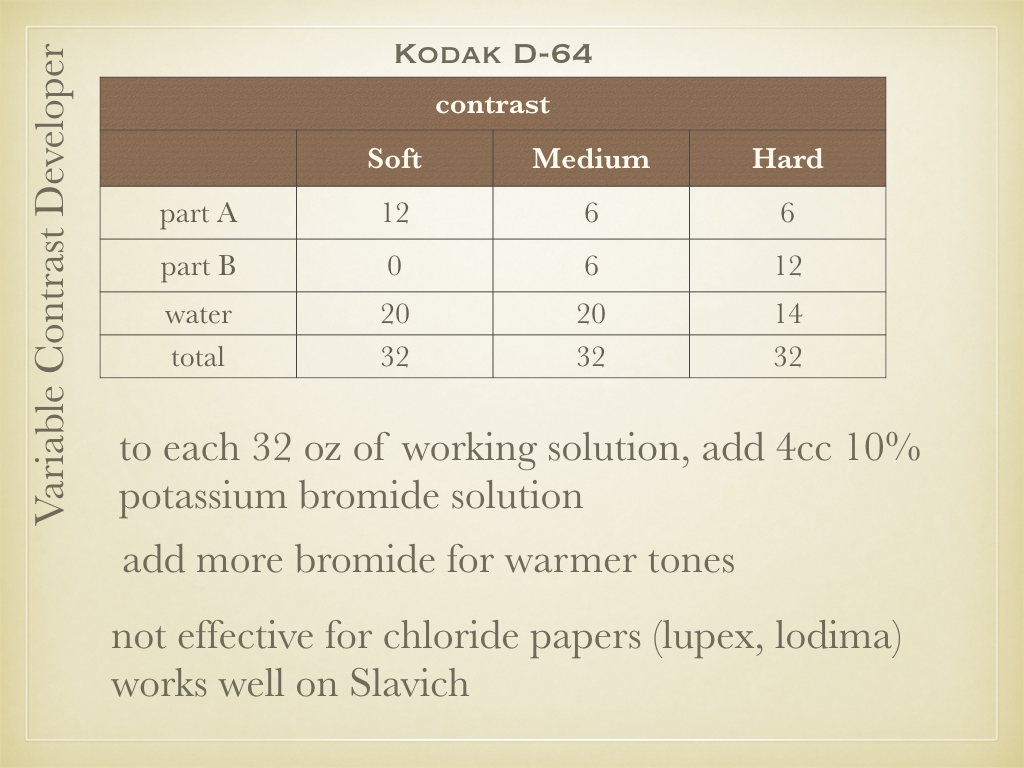
I use D-64 for film positives and internegatives as part of my repro process pipeline. Film, ortho copy and litho films are single graded (none) — their contrast is dependent upon the developer and where the exposure places them on the native response curve of the film.

I also use D-64 ‘soft’ for solarization of paper. This includes ALL papers that I use, even Ilford, my most frequently used paper.
formulas.004
Kodak D-64

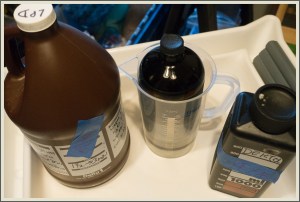
To make a 10% bromide solution, add 100.0 grams of potassium bromide to water to make 1.0 liter.
Into Darkness

A series about the darkroom. Geared for getting to a place of process, and procedure. This begins with few assumptions about your skill. I do assume your interest in the darkroom as part of a studio practice.

The first parts will be about the print, not the negative. There, ruined the mystery: we start at the end.

First,  we will get wet, but will use protection. This can get messy. This will stain.

I won’t give a full course in this set of posts. Too hard to do over the phone, and I don’t know who will ever use these notes. They are taken from some of my scraps of courses I taught at Syracuse University. You have the advantage of easy availability of other sources of knowledge. Cheap and easy – like locker room advice on acne, or jock itch.

What we will do:

  • Mix chemistry for B&W
  • Choose papers
  • Make some prints

Easy, simple. What took a morning of lab day, back in EXS. Every freshman knew how to develop and print film within the first week. Some took easily to it. Most stumbled and recovered. Others never understood the process – usually faltering over the mechanics. Those are the students who needed the digital age. Too bad they were learning at its birth (1975). I hope they have returned to photography now that the mechanical barriers have been removed. Photography is now accessible.

Coming

photo paper
Paper Trails

wet work

Chloride Papers

NOTE- if you’re APUG or Large Format Forum registered, you may not use this material. Please, leave this site now!

Chloride papers are lower in sensitivity than are bromide papers, but they are faster to develop. Silver chloride papers usually are fully developed in 60-75 seconds, while typical bromide enlarging papers develop to the same level in 120-140 seconds.

Chloride papers are ‘contact’ speed. They are used under a bright light, not an enlarger, with a negative in contact with the paper. The final image size is the size of the negative, which, probably, means you are working with a large format film.

Current chloride papers are the revived Azo styled “Lodima” and the newly introduced Adox “Lupex.”

current chloride papersAdox announced Lupex with a very considerate offer of free shipping, so I bought a sample pack, and then a box of 8×10. I like the paper. The shipping from Germany to Texas takes 10 days — be patient. Lodima shipment takes only 4 days.
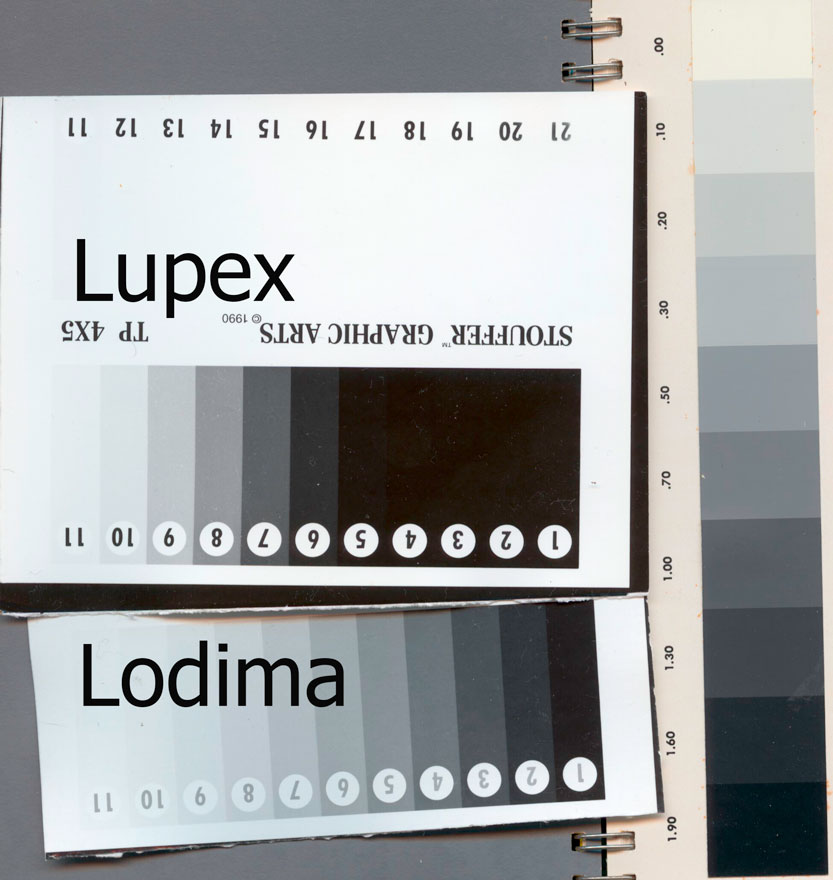
I have seen posts (apug) that Lupex is slower (not much) and warmer than Lodima. That isn’t what I see.

Lupex. Lodima Scan

Lupex v Lodima
Lupex & Lodima: 25 seconds exposure

both papers exposed to same light, for same time. Both papers were developed in the same developer at the same time. To compare color of emulsion, I’ve scanned the papers against a Kodak grey card.

Lupex Fomabrom Scan

Lupex compared to Fomabrom & Fomatone paper

Foma makes 2 papers which provide distinct differences between warm and neutral images. Lupex is closer to the Fomabrom 111.

Exposure Setup

contact light
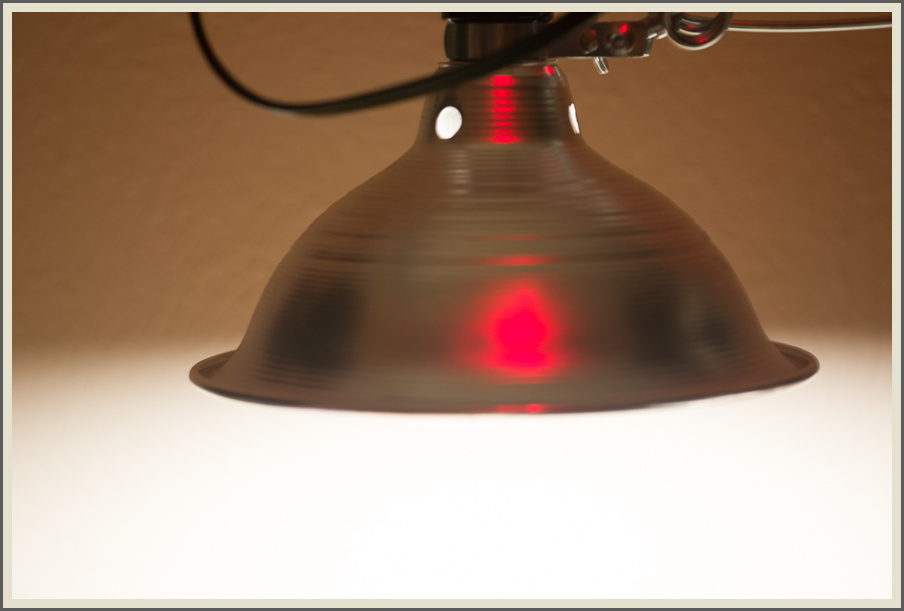
Soft LED white light in darkroom

Exposure is set using a Gossen lightmeter in diffusion mode. The ASA is set to 320. The lamp is raised to a point where the EV is 10. With the lamp at that height, exposure is 25 seconds for the Stouffer TP 4×5 wedge.

Developer

I use different developers, depending upon the image requirement. Many current users follow the Amidol road (spell lodima).. my preferred formula is in my ‘formulary’ section; also Lupex responds well to variable contrast developers, even more so using the 2 tray method.

More recently, I’ve souped both in Lith developers — they each offer brilliant color ranges in both Fotospeed and Moersch developers. I will probably use Lupex and Moersch later for more than just verification and idea generation.

Notes: See Easy Amidol for developer notes

Resources for making emulsions:

https://www.processreversal.org/public/workshops/handmade_baltimore/HandmadeEmulsionResources.pdf

Kodak Publication AJ-12, “Making a Photographic Emulsion.” https://unblinkingeye.com/Articles/Emulsion/emulsion.html

EJ WAll

The Light Farm: http://thelightfarm.com/Map/ContactPaperDev/ContactPaperPart3.htm

1996, Kodak: Process for making high chloride tabular grain emulsion using multiple stream addition of iodide. Patent