Chloride Papers

NOTE- if you’re APUG or Large Format Forum registered, you may not use this material. Please, leave this site now!

Chloride papers are lower in sensitivity than are bromide papers, but they are faster to develop. Silver chloride papers usually are fully developed in 60-75 seconds, while typical bromide enlarging papers develop to the same level in 120-140 seconds.

Chloride papers are ‘contact’ speed. They are used under a bright light, not an enlarger, with a negative in contact with the paper. The final image size is the size of the negative, which, probably, means you are working with a large format film.

Current chloride papers are the revived Azo styled “Lodima” and the newly introduced Adox “Lupex.”

current chloride papersAdox announced Lupex with a very considerate offer of free shipping, so I bought a sample pack, and then a box of 8×10. I like the paper. The shipping from Germany to Texas takes 10 days — be patient. Lodima shipment takes only 4 days.

I have seen posts (apug) that Lupex is slower (not much) and warmer than Lodima. That isn’t what I see.

Lupex. Lodima Scan
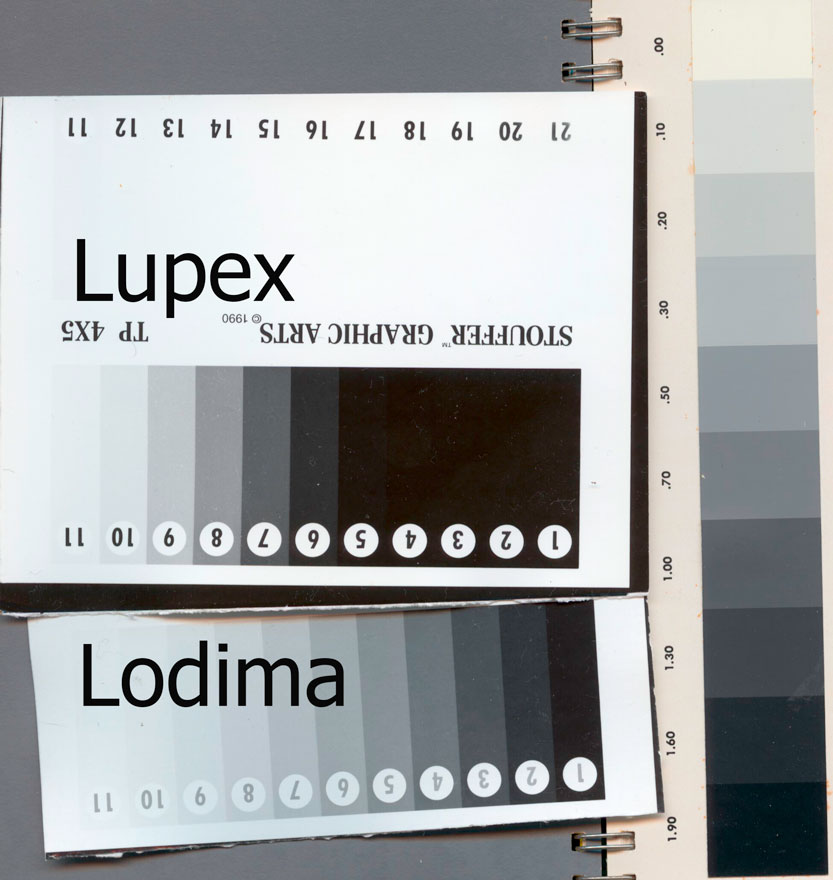
Lupex v Lodima
Lupex & Lodima: 25 seconds exposure

both papers exposed to same light, for same time. Both papers were developed in the same developer at the same time. To compare color of emulsion, I’ve scanned the papers against a Kodak grey card.

Lupex Fomabrom Scan

Lupex compared to Fomabrom & Fomatone paper

Foma makes 2 papers which provide distinct differences between warm and neutral images. Lupex is closer to the Fomabrom 111.

Exposure Setup
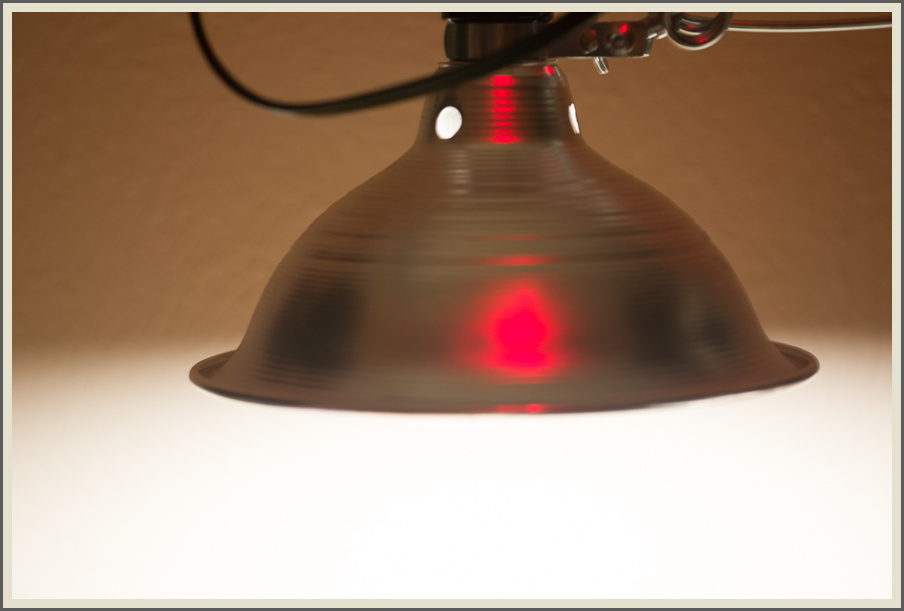
contact light
Soft LED white light in darkroom

Exposure is set using a Gossen lightmeter in diffusion mode. The ASA is set to 320. The lamp is raised to a point where the EV is 10. With the lamp at that height, exposure is 25 seconds for the Stouffer TP 4×5 wedge.

Developer

I use different developers, depending upon the image requirement. Many current users follow the Amidol road (spell lodima).. my preferred formula is in my ‘formulary’ section; also Lupex responds well to variable contrast developers, even more so using the 2 tray method.

More recently, I’ve souped both in Lith developers — they each offer brilliant color ranges in both Fotospeed and Moersch developers. I will probably use Lupex and Moersch later for more than just verification and idea generation.

Notes: See Easy Amidol for developer notes

Resources for making emulsions:

https://www.processreversal.org/public/workshops/handmade_baltimore/HandmadeEmulsionResources.pdf

Kodak Publication AJ-12, “Making a Photographic Emulsion.” https://unblinkingeye.com/Articles/Emulsion/emulsion.html

EJ WAll

The Light Farm: http://thelightfarm.com/Map/ContactPaperDev/ContactPaperPart3.htm

1996, Kodak: Process for making high chloride tabular grain emulsion using multiple stream addition of iodide. Patent
You Can't Learn Dye Transfer

UPdate 2024: The OIC group has set aside some of the final OIC sponsored matrix film for teaching. Since the members aren’t making new mats, members returning to cinema, painting, direct digital work, they won’t have need for new mats. The company that coated ceased wide-long coating in 2018, so there can’t be anymore ortho (or pan*) coated. The firm retain a 5″ research coater, however, the wide short-run pilot coater was scrapped. Computer and software were mothballed as archive matters.

— secret dye school https://webionaire.com/2025/05/03/another-write-off/


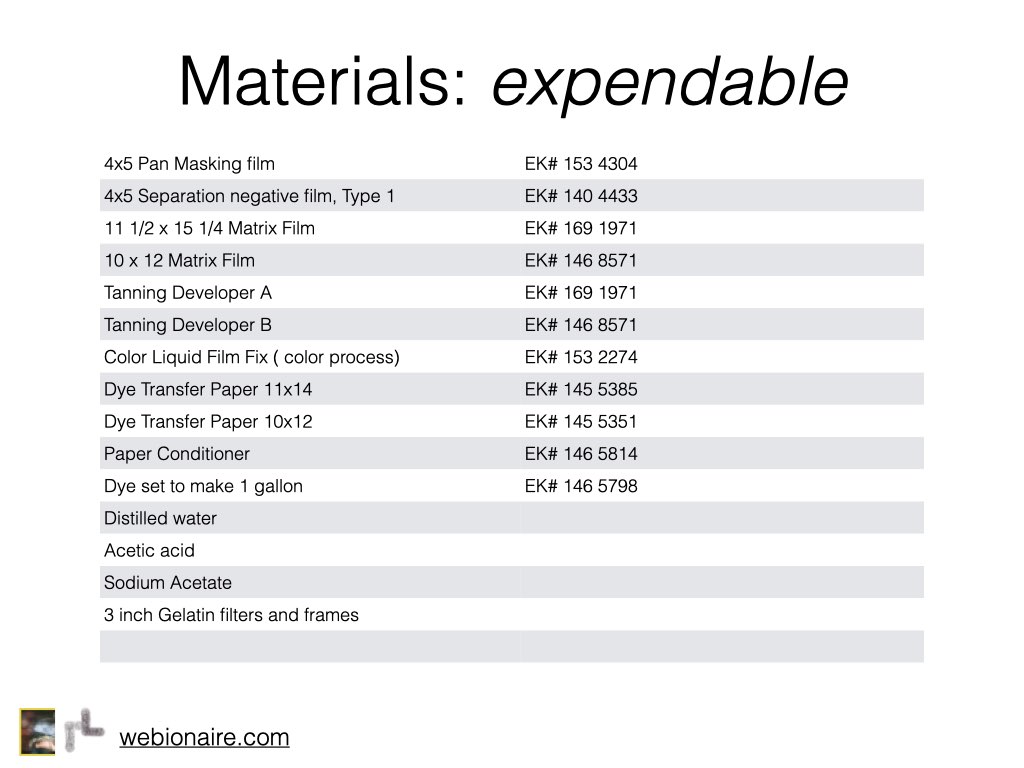
from Day One handout. The list of items needed to make dye transfers.

what is so hard about

Kodak E-80

The one with this cover:

kodak dye transfer
Kodak E-80

Kodak supplied this for free, or upon request. And it is incomplete, at least insofar as teaching someone how to make a print is concerned. I don’t know why it became such an empty publication, but it did. There isn’t enough information in this publication to guide you to a completed print. It is the often referenced publication, but, I wonder, have any of the people directing you to E-80 used it as their course pack? Or, are they quickly spouting what everyone else posts as answer — “Kodak had a booklet that I used when I….”

Using google will find 2 sites hosting this version of the Kodak publication. Don’t bother with it if you are serious about learning the process as it was practiced at its height. The publication isn’t so much wrong in error, but is by omission. Massive omission. When I was shown a printout of it, I thought there must be pages missing, since it seemed to end abruptly. After further checking, confirming the contents etc.. it was a complete printout- so I read it. Doing. No one, even if they had in date supplies, would meet with success at re-creating the lost procedures that were once the dye transfer process.

the Current State of Dye Transfer

There are no in date supplies for sale. There are, to my knowledge, less than 10 people working with current date materials. Of course, there are several working with out of date supplies. Matrix film made by Kodak, Efke, DTC. Most of these people can be found on the yahoo group hosted by Jim Browning.  If you want to browse the group, I’d suggest going to the original posts, collecting what materials will be immediately useful. Stop when you enter the 2005-06 frame. The more recent stuff is of little significance.

Current (2015) Commercial Printers

Dye Transfer International (see link) offers printing. As I understand, they have their emulsion made custom. They also have paper and dyes customized for their current procedures which are based upon exposing to laser. Bettina Haneke is the principal contact at DTI.

That Is It

No other printing services need new clients. Those people printing are printing with out dated materials, and print, essentially reprint, for existing portfolios.

James Browning (see link) may be able to print for you. I’m listing him more so you can track him down yourself. If you go to the link, you will be able to download a better set of instructions for making dye transfer than the Kodak E-80.

There are estate printers; some going so far as having emulsion coated.

 Learning Dye Transfer Now

means learning a new material and supply set. It also means that you are one of a very small group having access to those new emulsions. Learning to use, now, means learning to make, or how to form buying groups.

update: 2020. Yahoo group has closed. A new moderator migrated the old list to groups.io … The 500+ members paired down to 80. It suffers from the same problem as the old group. Mostly hangers on; folks who never printed trying to fool those who did, only to gain stories of the past. A small group of people making prints has started a new group. It is open only to experienced, active printers.

Some of my pathway ..