Gottfried Jäger (*1937) Jäger has been part of some of the most iconic computer art exhibitions of the 1960s, such as New Tendencies (1969) in Zagreb, Experiments in Art and Technology (1968) at the Brooklyn Museum
Just estimating from the number of YouTube subscribers, the generative/network image makers and curators are no threat to the Film Experience broadcasters. Two different approaches to film, PersonA & PersonB have more than 13,000 subscribers with more than 100 likes on their most recent posts. On the other hand, one of the above Digital posts has only 2 likes and less than 200 views as of this post.
And meanwhile, the industrial base of chemical photography is noticeably fragile. It is said by a German participant in the industry, says that their chemistry sales support the R&D into their emulsion+ business. Without profitable developer sales, there is no development within the business.
ai is generative grown up
made better by becoming a better student

human computer interaction
machine man interface
made to become credible; to understand conversation, the emotion part.. science being told art is communication of emotion.

art became their teacher.
the turing test. beyond counting and classifying images, to finding them, to making them

hci human computer imagery
my own travels among ideas isn’t a clean map, more like my deskside stack of colored notes made on impulse. Keeping myself involved with some unknown ghost. My linking line above is my reminder of what to do in this post.
I wrote about JJR. Just a notice of her show in Philadelphia. A show that I will not see, yet wanted to remember for some possible future [thing]. She does what I don’t, in an area that I knew.
People. Place. Time. What imaging things, including cameras, share. Beyond “light,” something all visual arts consider, are the subject becoming the object. Much of photography is about people, place; so much so that software programs default to these categories. How much does place mean to a people; how much do people mean to a place. Those interactions always trigger me. As I look at pictures made by other skilled artists, I’m hoping to find some part of that response.
It is common for photographers to think a long journey is needed. Much of the time this is a long journey for more take-out — they can’t find nourishment where they are. What makes them think the food is better at another roadway. Probably because they are midway on a journey; a journey using someone else’s map.
Judith Joy Ross hasn’t travelled a great distance. She lives within easy drive of her birthplace. She is fortunate to have been to MoMA. Szarkowski included her work in New Photography exhibition at MoMA(1985)
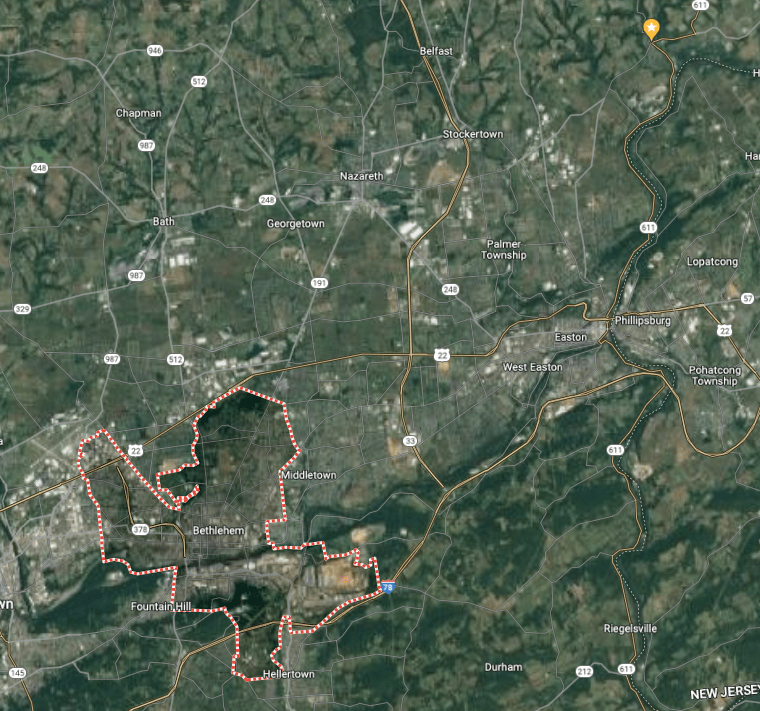
Judith Ross and Larry Fink live within a half-hours drive, in a section of Pennsylvania that changes little. Larry Fink is better known for his Street Work, stuff from a different place; a place that makes distinct time marks upon people. They dress for their part in the culture. Wall street during Vietnam looks the part.
Judith Joy Ross born 1946. Moore College of Art and Design 1964. Masters from Institute of Design 1970. 1984, shows Szarkowski portfolio. In 1985, takes part in New Photography exhibition at MoMA. 1993, the SFMOMA presents personal exhibition of hers.
Looking at the Ross portrait, by Lois Connor, on SFMOMA webpage took me to Connor’s info. Lois Conner received her BFA in photography from the PrattInstitute. At Yale University, where she received her MFA in 1981. She credits Phillippe Halsman, her The New School teacher.
Bringing me to this 1961 Halsman on the “Creation of Photographic Ideas,” six rules:
the rule of the direct approach
the rule of the unusual technique
the rule of the added unusual feature
the rule of the missing feature
the rule of compounded features
the rule of the literal or ideographic method
In his first rule, Halsman explains that being straightforward and plain creates a strong photograph.
I do take many trips; many that don’t get me to a rest place.
If you live broadly and are curious about it all, you understand what it is about us that draws us together. It’s that kind of picture that I really like to make. —Larry Fink
It’s such an intense pleasure to photograph strangers because, in that moment, you can see them in such an intimate way. It’s kind of crazy, but I love some of those people even though I have never seen them again. —Judith Joy Ross
Judith Joy Ross, April 24–August 6, Philadelphia Museum.
“The Philadelphia Museum of Art is the only US venue for the retrospective exhibition of work by Judith Joy Ross, which opens April 24. The museum is showing some 200 of Ross’s gorgeous and unassuming portraits of ordinary people: students, soldiers, voters, members of Congress, children at a Pennsylvania park during summer vacation. Ross has focused much of her work in and around eastern Pennsylvania, where she was born and still lives, making portraits that reveal a deep, if brief, connection between photographer and subject.”
“Judith Joy Ross has, as an artist, no formula. She starts over again each time—the riskiest way to do it. She has a style, of course, but it is austere. It cannot, if she panics, be used to take the place of content.”
—American photographer Robert Adams
extended conversation with Judith Joy Ross
More about her: The American documentary photographer, Gregory Halpern, recently called her “the greatest portrait photographer to have ever worked in the medium”. Alys Tomlinson, an acclaimed young British photographer, who acknowledges her as an influence, says: “I don’t understand why she isn’t more well known. Maybe it’s because she is drawn to people that you might well pass on the street and not notice. She elevates them with her camera. Her portraits are not neutral. There is an empathy on her side. A deep connection. She makes you look closely at her subjects, and think about them.” Interestingly Ross tells me that she seldom photographs rich people and “only sometimes” poor people. “I’m looking,” she says, “for people like me.”




You must be logged in to post a comment.