
— Although The video is not mine... it is worth my time, perhaps yours also. What does it consider?
YouTube (YT) is a key supplier of opinions. It is the Hot Media. It is widely dispersed, with sense, nonsense. Its basis is advertising, so like water in a desert it may nourish, it may also poison. YT channels stratify the field. Entry layers gaining greater advertising hits. This is like the threaded online boards, except they are in decline, with YT continuous increasing attention. Even in the time after TikTok and pulse viewing.
I wouldn’t link to a poison. I don’t know this person, not even his work, other than what is shown in the video. His imagery isn’t my reason for directing you to his video.
one video about roadtrip… my response after the video. My response is here, rather than on YT, so I can better remember my shorthand. YT responses are better for a short statement sent into the bucket. Please watch the YT version.
The nature of film is the image is not seen immediately. Polaroid was in every commercial studio as part of the solution to this boundary. Polaroid along with messenger service and a quick turn lab within a few blocks was the method of New York photography. Why we dominated. We had the community, the infrastructure nourished its own. Manhattan was home to Madison Avenue, the source of work and seemingly unlimited funds to maintain this intense group of photographers.
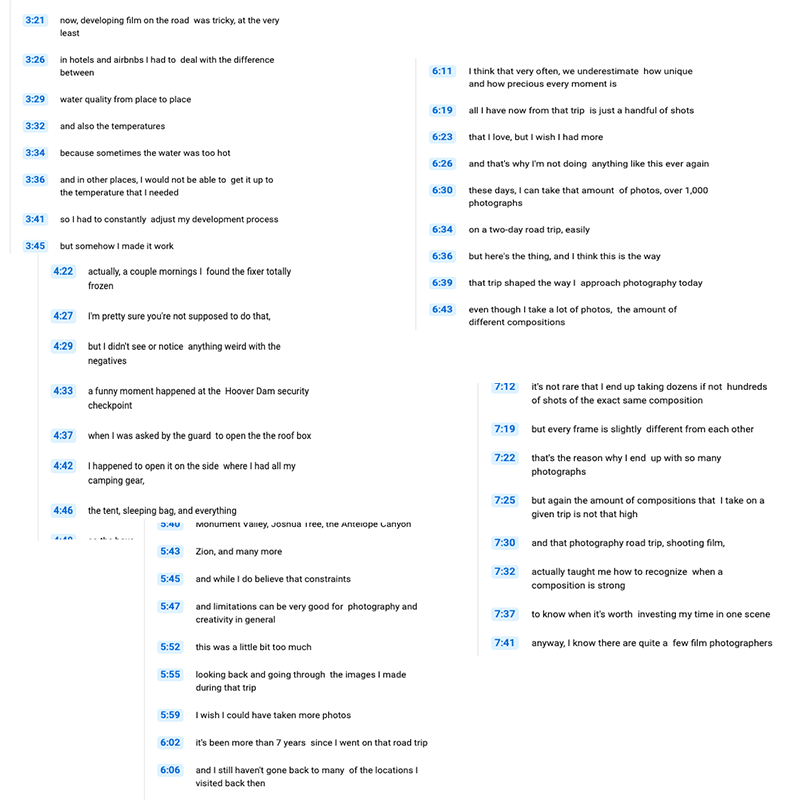
- Travel with chemicals -[else] keep them concentrated. Process one-shot.
- Pickup distilled water at gas/rest stops. Also, ice for temperature control of process.
- learned to stay, shoot enough to “distil” the composition.
This equipment he takes surprises me: a scanner. His reasoning is to verify that his camera and process are producing useful results. This is a hybrid thinking solution. I carry duplicate cameras. For bellows based cameras, carry electrical tape, or “bellows” patch (scuba glue).
I suspect he is now a digital first photographer, since it seems he was using film as input to scanner. He liked the camera, had fun with film. So it goes.
Travel opens the world. The road trip is a standard of photographers. Even studio photographers make road trips (Avedon) , just rarely is that considered their prime work.
–> other bit about travel to tripod spots.


You must be logged in to post a comment.