
stripping film prompted… Imagine it is 1970, photography, the red-light chemical version, was used for almost all communication efforts; it was the key to commercial exchanges. Ads, blurbs, packages, trade-shows, every salesman or marketer used something from the darkroom artisans. Printers were made by package printers as well as hand printers. A photograph was cheaper to produce in small runs than offset, even small press.
Making up the gang prints was done by a compositer using stripping-film, or cut-n-butt methods. The need was so great, while whe work was so low pay and difficult, there was always an ad in the papers of larger towns, (Chicago, Seattle, New York…) for “Strippers: No Experience Necessary.” Often bringing in women straight off the bus from Kansas. Not what they expected.

The graphics arts called ti stripping, in dye transfer it was compositing. As agencies, and the entertainment industry considered this a basic skill. The comp would be retouched by another group of specialists.
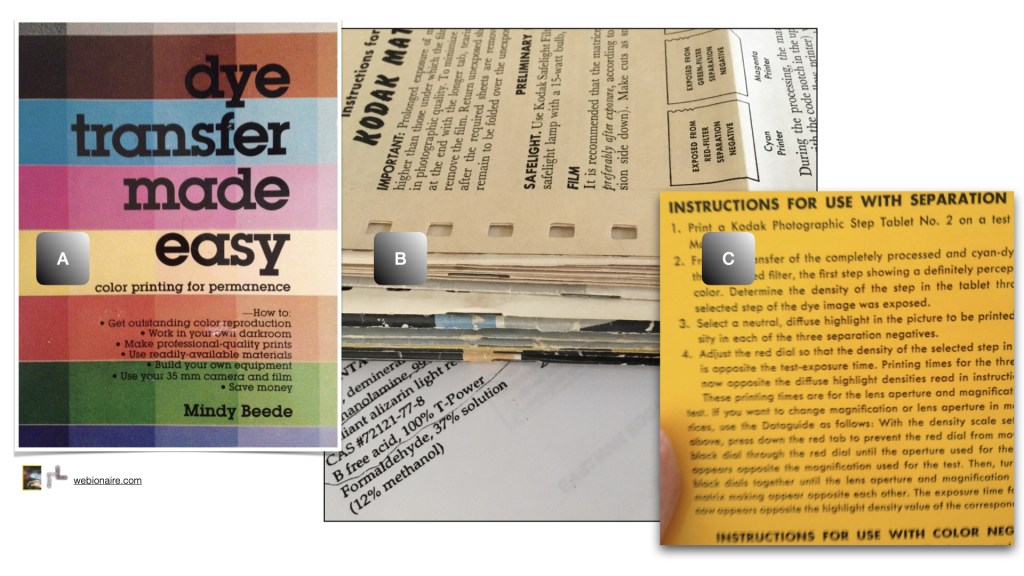
Kodak Flexichrome was a stripping matrix emulsion.

You must be logged in to post a comment.