Don't Do That

don’t do what?

according to the combined internet forum intelligence, you must not ever, no way, no how, get an inkjet print wet.
After spending enough hours with the netjobs, I thought it might be better to test their advice, again. This is a print that had been tossed into the soapy dishwater. I did the same experiment a few days ago, and wanted to test again, this time with different paper, same epson ink.

inkject in soap suds

The soap suds run right off the print, as if it were an RC color print from last century. I dried it in the sun, yep it has drying marks from the dirty dishwater it was in for about 5 minutes before saving it from “certain destruction.”

don’t do what?

don’t believe the nattering neybobs of the large forums

Roll your own, don’t suck the pipe from a stranger.
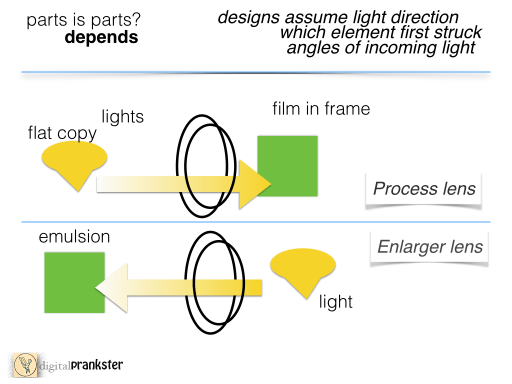
A Lens is a Lens, Right?

PranksterNotes lens
Just because it mounts, and it covers a sheet of film, doesn’t mean it was designed and optimized for enlarger use. Even though there are many more process lenses available in large focal lengths, they aren’t the optimial version for use in a large film enlarger. Not if you are doing color, or working to maximze sharpness while controlling contrast of the print.

This is another one of those times when direct working experience of best practices from the now dead old days would help. However, if you have money to spend, and time to waste, then get that process lens and use it as an enlarger lens. You could also buy cheap macro camera lenses and use them. Play with reversal rings,,,, extensions tubes and bellows. Hell, you can have a grand old time learning, and playing scientist. In the meantime, your stack of interesting imagery never grows — but at least you can chat nonsense with the fictional boyz club at the virtual watercooler.

Undivided Development

Economics is the controling field of study; it has been for nearly 50 years. Biology has waned since the 19th century, yet it has more to teach, provide us, even economists, than economics has to provide anyone.
economics costs more in lost understanding than any other field, except phrenology.