picture post… Burnside Powells

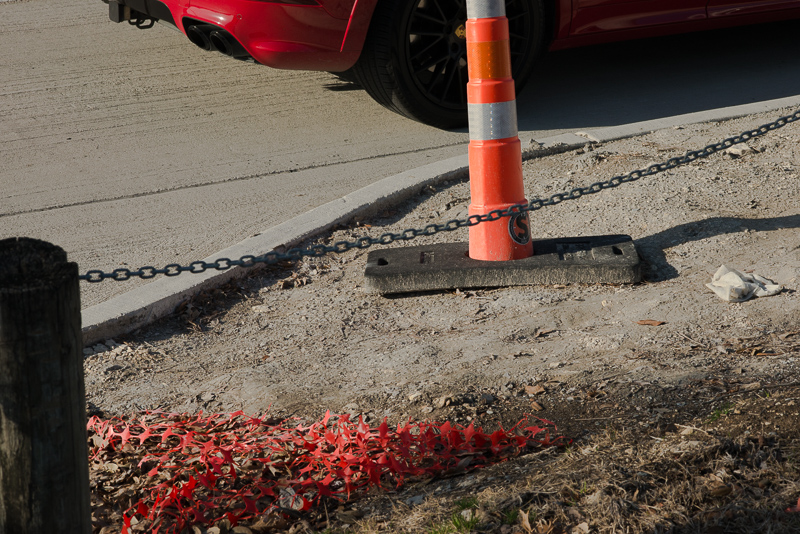
from walkabout.. driving by, during rain, went too quickly. These were the slower version, a day or so later. The blue windows got me. In the mist, they seemed bluer than in this AM sun.

Text on the table was Auerbach’s Mimesis. Picked up in Portland during 2014 trip. What does that have to do with the pictures … don’t know, yet.


mimesis notes -- prompts, since the answer changes more often than the question
-- what is reality
-- what is a portrayal (of reality)
math itself is an analysis, a synthetic formulation of reality./ it proves and approves itself
by definition... is math a science or a philosophy

LONG QUOTE, from the epilogue, which I took as my prelude around 1963..
"the interpretation of reality through literary representation or “imitation,” has occupied me[ Auerbach] for a long time. My original starting point was Plato’s discussion in book 10 of the Republic—mimesis ranking third after truth—in conjunction with Dante’s assertion that in the Commedia he presented true reality. As I studied the various methods of interpreting human events in the literature of Europe, I found my interest becoming more precise and focused. Some guiding ideas began to crystallize, and these I sought to pursue.
The first of these ideas concerns the doctrine of the ancients regarding the several levels of literary representation—a doctrine which was taken up again by every later classicistic movement. I came to understand that modern realism in the form it reached in France in the early nineteenth century is, as an aesthetic phenomenon, characterized by complete emancipation from that doctrine. This emancipation is more complete, and more significant for later literary forms of the imitation of life, than the mixture of le sublime with le grotesque proclaimed by the contemporary romanticists.
"

bee shit

Keeping the image from falling too far. “the misty territory of truthful fiction”

imagery stimulates the creative.. often stepping across the boundary setup by prior makers. An image type, structure, content, will make it into another mode. Ads/Art/Commerce/Collection.

People who like photographs to be of things, make photographs of things they like .. The things they like often are places; often large places, with large cameras. These same photographers rarely make photographs of people … frequently they avoid people.. 

When presented an image, an object, a picture of people … people presented without adornment, without background ,so that your attention is directed towards only that person..if you don’t like that type of person, you won’t like that photograph.  You probably won’t like the photographer. You may feel confronted, intimidated.

Too often, a hardened view becomes a prejudice. Unexamined, so extending into more matters. Their prejudice extends deeper than their aesthetic matters, it has to vilify, not only them ,but those like them, even those who like them — a prejudice down to explaining the glasses. Maybe even cameras, cities

We know, of course, these critics  don’t apply such level of scrutiny to themself. Instead they conform. Limiting what they know to when they were 30.

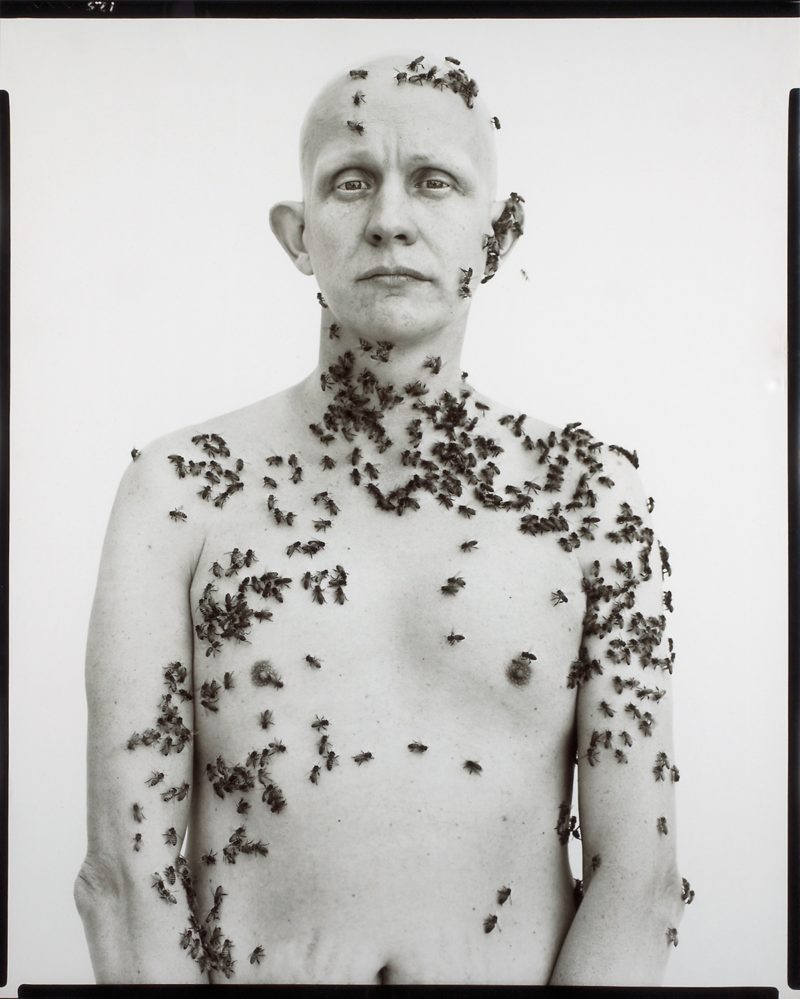
Richard Avedon [1923-2004] , in 1979, was commissioned by the Amon Carter Museum [Fort Worth, TX, aka Cow Town] to produce photographs attentive to to people with overlooked occupations — to summarize the West. The overlooked westerner. Laura Wilson, a Dallas photographer, worked with Avedon on the project.

[ Richard Avedon died in San Antonio, TX, on assignment…]. His work, in overview, is here.

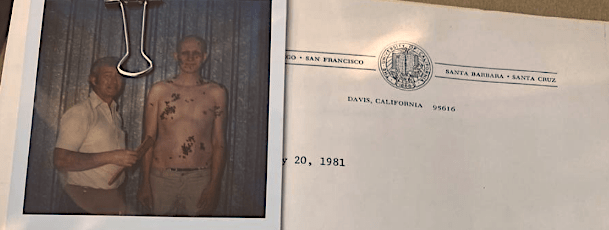
>> I like the picture. Obviously, it was staged; most beekeepers don’t wear their bees. But it’s still a natural picture – its natural bee behavior. I think those who were against Avedon before…are the ones who were most vocal about this picture when it comes out.— Ronald Fisher. Not from “.. some place up north…” Still selling Vacant Acres honey[2024]

Initial contact. Davis, California, which, even to this day is in the West, not the north… within CA is is east of San Francisco.

Richard Avedon – Ronald Fisher, Beekeeper, Davis, California, May 9, 1981, printed 1985


Note: Bay Area Avedon: “A career retrospective that covered all areas of Avedon’s photography, it was Avedon’s initial collaboration with the curator and museum director David Ross.  The first of Avedon’s photographs from In the American West debuted at Berkeley, an oversized portrait of Boyd Fortin, the rattlesnake skinner.  The show was disrupted (though not closed) when Avedon’s 30-foot-long mural of Andy Warhol and Members of the Factory was vandalized by a visitor who tossed an iodine-filled balloon at Warhol’s head, destroying the photograph. ” — UNIVERSITY ART MUSEUM, BERKELEY, CA, 1980

Links, refs:

—–

It took years for Carnie to see behind the mask: