Thomas T. Hill. A Tutorial Paper: Photographic Gelatin and Synthetic Colloids for Emulsion Use. Journal of the SMPTE1968, 77 (11) , 1185-1188. https://doi.org/10.5594/J10922
DARKROOM safety: If mixed use, meaning, your kitchen, bathroom etc serves as a chemical mixing, storeroom, darkroom — think it is riskier if you share it with others, cats, children… Consider this: powder can collect: cabinets, containers, exhaust ducts, sink drains. Kodak’s dye transfer process relied on Pyro as tanning developer. One lab (MPC in Texas) was referenced by Kodak technicians for years to Portrait / Wedding photographers. The facility was declared hazardous waste site because of the contamination in the pipes and vents.
You aren’t going to be sloppy, but what do you expect to gain by mixing from “skratch” — if you expect that there is a secret to your trial and error chemistry, be prepared to accept more consequence. While it is true that food is a complex of chemicals, which taken in isolation seem dangerous. That is also true of the earth we walk. I am not prepared to call it poisonous, nor hazardous. I am not careful about eating apples, nor am I carefree in mixing raw photochemicals.
I mix chemicals, and have since 1960. In that time, I have increased my skill and cuations considerably. When mixing tanning developers, i use a glove box. My sink has multiple levels of exhaust — for heavier than air, and for lighter, the airborne items. My drains are changed, with the pipes turned in at hazard sites. My exhaust vents are also “smooth” channel with drop caps for cleaning.
Reminder: flakes “flake” into dust; dust into finer powder.
Is there a disadvantage, do you increase risk if you wear PPE? What do you give up, lose, surrender? What are the motives of those on the hobby boards? Is their situation the same as yours? Do you think they would assume your losses if you have an accident?
WHAT DO YOU do for a splash to the eyes? If it is apple juice?
Acute Oral LD50 is the dose of a substance or mixture of substances, in milligrams per kilogram of test animal body weight, which, when administered orally as a single dose, produces death within 14 days in half of a group of 10 or more laboratory white rats. The oral LD50 of arsenic ranges from 15 to 293 mg/kg in rats, and from 11 to 150 mg/kg in other experimental animals
——-
TANNING effect — if current products exhibited differential tanning, dye transfer [imbibition printing] wouldn’t require special emulsion making. Using Kodak’s Tanning developer shows no sogn of tanning Tmax, Delta, nor FP4 films. Although silver is developed, and leaves a ‘hole’ in the colloid if it is bleached out, this isn’t tanning — D23 produces the same effect.
.. and the great misdirections.. Where do I buy _X__ is one frequent question on photo forums. Forums are built around buy/sell, how/tell. since you don’t correct him, it means you don’t know.
NB: realize Maxima was never intended for the retail, general darkroom user of RA materials, so was handled diectly by Fuji USA diect to the user. It also was serviced by distributors to those with resale association agreements; typical of professional labs. There was an person on LFPF cutting Maxima for anyone interested. She also offered a complete dye transfer lab, including starting supplies at no cost — no takers after a year. Showing how strong the market was among these longtime hobbyists.
[**/Wiley/ Mr. Bill /mshchem /— ** ]
forums come together to express opinions; additionally, posters attempt to out talk each other, like perennial freshmen.

mr. bill, another back officer, explains why it is difficult[thinking that manufacturers don't sell direct]. They do.
 Drew Wiley hasn't achieved success, even with his consummate back office communication skills. after all, he talked with some of the wealthiest salesmen in the world. he even worked at a Pella store selling door knobs to billionaires.
— the answer is in there … just lost in Wiley telling everyone his story. Koraks, a mod, never picks a review point , yet continues to make his repeat point. To get a group past freshman status requires someone to direct the group. In open-classrooms such as medicine, and law, this is achieved by use of extreme interrogation by seasoned upper class-men. These schools aren’t hobby shops. Getting the conversation moving… keeping the plate juggled, means getting the conversation to more points, or away from points making it all pointless. since you don’t correct him, it means you don’t know.
[ the answer for USA: maxima is sold direct. it can also be walked thru for some mini-lab sellers. Minimum order is one roll.
it is up to that seller to decide if you can become a customer of theirs.
these are not the  B&H, Freestyle stores. Unique can get Maxima. You can also buy directly from Fujifilm USA. Just make polite, reasoned access. Simple to do.
The direct answer, a name and phone number, was provided by Jen, on Large Format Forum. She posted it overnight after Gregory Davis posted a contact name at Pakor, the equipment supplier known to photography labs since 1984. Gregory Davis had a fight with D.Wiley over color retouching. Mr. Davis, has removed his posts from LFF (and Photrio). So it goes... You keep a Wiley, you lose the Gregory's and Jen's.
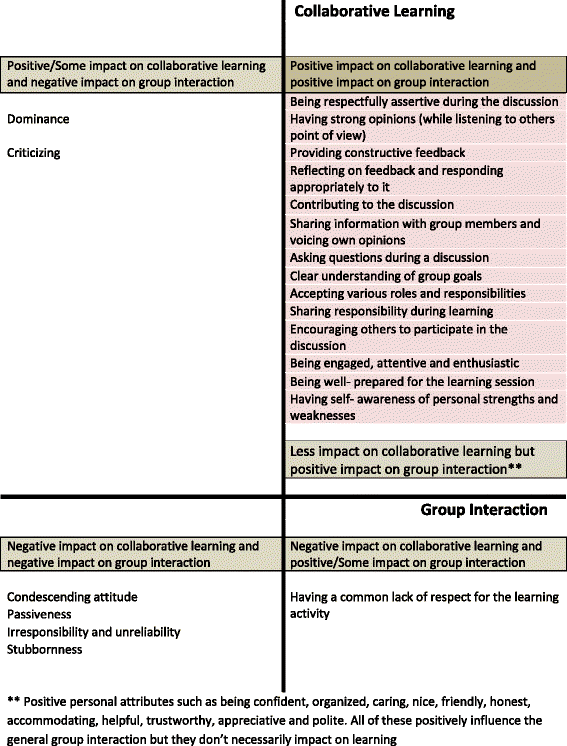
https://bmcmededuc.biomedcentral.com/articles/10.1186/s12909-016-0730-1/figures/1 ‘Students and tutors identified a range of behaviours that influenced collaborative learning. The main themes that emerged included: respectfulness; dominance, strong opinions and openness; constructiveness of feedback; active listening and contribution; goal orientation; acceptance of roles and responsibilities; engagement and enthusiasm; preparedness; self- awareness and positive personal attributes. An important finding was that some of these student behaviours were found to have a differential impact on group interaction compared with collaborative learning. This information could be used to promote higher quality learning in small groups.’
[ they have fresh, broadening explanations that they lose within a fortnight]
Material #
DESCRIPTION
UNITS/CASE
MIN.UNITS/ORDER
4/1/2019 SUGGESTED RETAIL PRICE
600020562
CLP CA PROL MAX GLOSSY 16 x 275 (40.6×83.8)
1
1
$375.30
600020550
CLP CA PROL MAX GLOSSY 20 x 275 (50.8×83.8)
1
1
$469.13
600020549
CLP CA PROL MAX GLOSSY 24 x 164 (61.0×50)
1
1
$335.72
600020548
CLP CA PROL MAX GLOSSY 30 x 164 (76.2×50)
1
1
$419.66
600020547
CLP CA PROL MAX GLOSSY 30 x 164 (76.2×50) EM OUT
1
1
$419.66
600020561
CLP CA PROL MAX GLOSSY 50 x 164 (127.0×50)
1
1
$699.43
600020553
CLP CA PROL MAX MATTE 16 x 275 (40.6×83.8)
1
1
$375.30
600020552
CLP CA PROL MAX MATTE 20 x 275 (50.8×83.8)
1
1
$469.13
600020554
CLP CA PROL MAX MATTE 24 x 164 (61.0×50)
1
1
$335.72
600020551
CLP CA PROL MAX MATTE 30 x 164 (76.2×50)
1
1
$419.66
600020530
CLP CA PROL MAX MATTE 30 x 164 (76.2×50) EM OUT
1
1
$419.66
600020529
CLP CA PROL MAX MATTE 50 x 164 (127.0×50)
1
1
$699.43
fuji maxima … just a phone call and an email
Maxima Labs… this list is shrinking as those using Polies close their RA4 polies out. Polies had the highest dpi, using the newest engineering.The 50×100 inch Polielettronica LaserLab HD C-Printer, excels with a 610 dpi resolution (6100 dpi “apparent” resolution) and 48-bit color.
[ Measurements always go in the same order. The first number is always the length, the second one is the width, and the third one is the height…. \note to: the long winded forumat iley ]
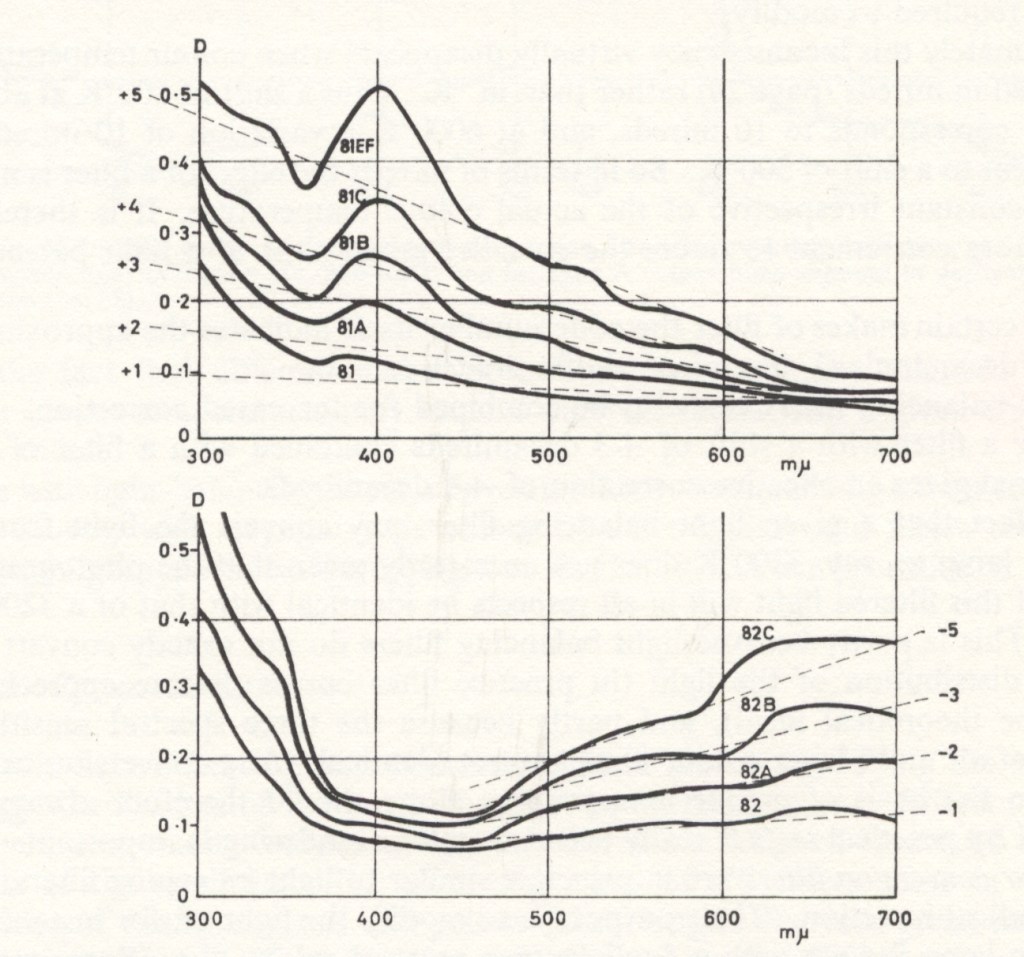
a brownish or amber series of filters to reduce ‘effective’ color temperature. Gevaert CTO, various R ranges, and Wratten 81.
bluish Wratten 82, Gevaert CTB, and B filters increase color temperature.
These plots are of absorption, not transmission.
--- riddle me this
if you want to change color of shadows (landscape photo) using a filter on the lens, does it also affect the brighter sunlit portions?
understand why CT filters are correcting a scene. architecture photographers had to understand this for most work done after 1970. we had rolls of neutral density material in addition to tungsten, or daylight correctors -- this, along with multiple emulsions designed for different tungstens lights meant we achieved long scale balance. Also, labs could push or pull because of modified chemistries. That is all gone. Well, not gone, it has migrated. Evolved. It has followed the natural path of all industry.
-- another riddler
long straight line film wasn't the best design of contrast masking film. standard camera films were used to make masks when sharp division of subjects could produce 'halo' against a clear background on the 'chrome. separation neg Type I was favored by labs in NYC.
-- the curves are meant to sum to a desired line. the original isn't linear, and often its layers aren't parallel. Masks "move" lines by adding density.
experience with actual, true, real, pro-level [I’m snarking] images teaches the answers. anyone who believes Wiley isn't believable... they don't have depth.
--- third riddleabout points of control.
2 point control is what much of the photolab is about. exposure sets shadow, development sets highlight.
to make a color *interneg without adjusting the development means you have single point control. exposure, with a standard high being maintained by your c-41 lab. this means you are making multiple rounders to get masking/color correct. okay, lets say that is locked.
we have to mask the 'chrome to bring it to too high an initial [c-41 standard] point. this likely means we need to make a post mask as well.
the internegative is an intermediate, a conversion step between 'chrome and paper.[ E-6 to RA-4]
complex... has anyone said that's what they do [in photrio/lff land][N]
*The color negative film is balanced to daylight; my enlarger lights are tungsten balanced. I use a tungsten to daylight conversion filter. I also may make masks. I always used modified C-41 processing.
...continuing with the riddle of control points:
3 point aim was the height of the better labs. a very few, ~3[?] achieved 5 point control for clients. those cases involved making split-masks and colored masks -- this meant dyeing the silver mask.
in this digital age, simplified skillsets involve matching 16 aim points, while achieving control of 1024 is a practical matter for commercial printers. film makers go even greater lengths to satisfy an image aware consumer.
-- subpoint: Keyed Process. Emulsion makers design for full step process. The color negative is designed for a color positive. Kodak Portra films were designed for printing onto Kodak Professional Portra and Supra Papers.
The Top Knot is: you lose the people with direct answers and experience, keeping those who don’t know, but keep the arguments alive. Perhaps that is the path to commercial success. Perhaps take a look at the payment status of the deflectors.



You must be logged in to post a comment.