Blue Pizza

The New Dye group, as it changed names with almost every meeting of a growing group, they gathered impressions of their growing community. What, if anything, do we call this thing?

… because, for a while one of the printing tests was to turn a pizza blue ..

–here’s an Ektachrome transparency of a pizza. Standard Manhattan pie. Print it so that it’s blue.

My, (we), asking that inner self about your result: do you find an interesting way to do it, or do you print it blue, like a good student would do.

Do you make an ashtray — piece of clay, shaped roundish, with dimples for the cigarettes.

This answered the question that wasn’t asked directly: are you a printer or a printmaker. Is there a question you can answer we haven’t asked. A question interesting to the group. This was always the second round of matriculation interview..
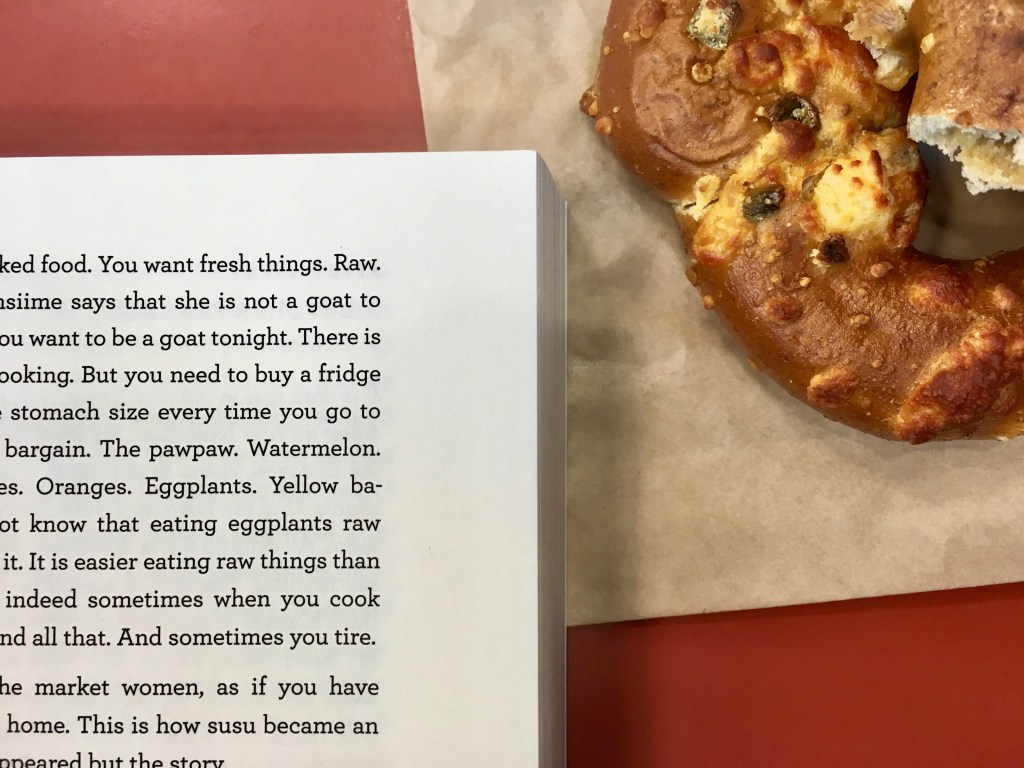
DYE TRANSFER: learn to tell time before taking the watch apart.

TODAY, soup is getting cold, salad getting warm. It is a film day. Stay away from the endless thread pullings.

How about a strange brew of two songs:

— success with few bars, fewer words George Strait https://youtu.be/x_JL_hMBakk?si=WjxBAt5iTWS6JQHn

and only because it seems a counter fact: Dire Straits https://youtu.be/jhdFe3evXpk?si=xsBHpViV4c3VMACc

Both would be/were played at Blue Pizza tables. With dance, discussion, delight.
gooood morning Time Transfer

price as power. power of condit. belief in power. so it comes to this.. hold onto it long enough… you don’t use it, neither does anyone else. What could have been $400 useable wasn’t of interest, nor of use. In these ongoing times, money vanished. The chosen become beggars.

INFLATION DEFLATED.

Condit 4×5 pin registration equipment

–[So I’m holding onto it for them. But even if they don’t, $1000 is more than a fair price for the gear 
if it’s something you need…  and if it’s not something you need, $400 is a waste of your good money! [smile] –
2019

slowly we flip calendars… stations change… so, too, voices of options.

 The big name dropper posts:  I want to sell my set of Condit 4x5 pin registration equipment:

-- 4"x5" Precision Negative Carrier
-- Two of the rectangular/diagonal cut upper-class inserts for the carrier
-- Two of the rectangular lower-glass inserts for the carrier. The end of one is broken off, but it doesn't intrude into the image area with 4 x 5 separations.
-- Two film punches, one set up for four-inch wide film and the other for 5 inch wide film
-- Two Condit wooden contact printing frames, 7" x 9" inner diameter
-- Three pin-register glass plates, 7" x 9", for the contact frames
-- Some odd mounting brackets and bits of hardware and screws that apparently are used to affix the Precision Negative Carrier to some enlargers. I never needed them with mine, so I don't know how they work.

I’d like to get $500 for it. Any takers?
--- 2025

Guess he didn’t keep my open ended offer (SMILE) ..(WINK) (BLINK)..

UND ZO EET GOEZ

Guess he would never consider donating the items to anyone, perhaps the keepers of the dye transfer group he uses to broadcast

Between Threads

Reading to read again builds a muscle. Memory among others, even distant, is an extension of time.

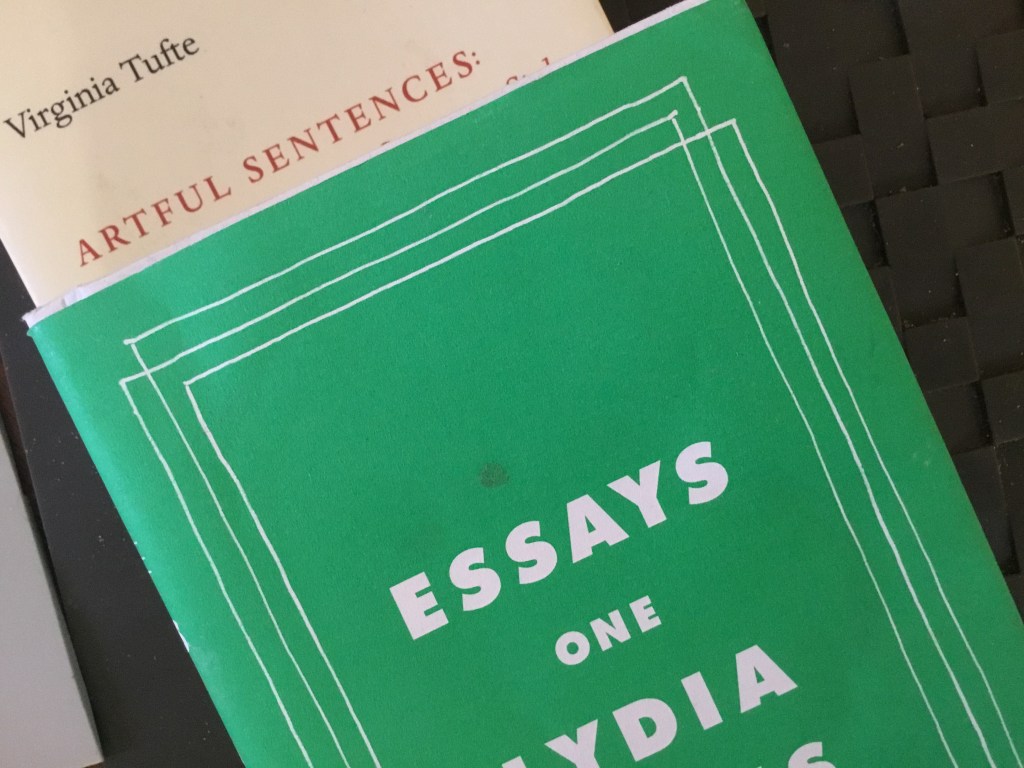
Essays by Lydia Davis is a ready source of ways toward an open table awaiting stacks from around the house. Today she directed me toward a book I rarely read. I promise to read.

Lydia writing about lists and order: “You may have the elements you want in a list, within a sentence, but in an order that is arbitrary or a bit jumbled. The reader receives the content that you have offered, but doesn’t receive it in the best possible order …” She proceeds to suggest Tufte’s “Artful Sentences” and a Jefferson sentence.

Immediately pulled out Tufte… added it to a table by a chair with readings about AI. Bam. What you have is a reference set instead of a compelling sentence. I am easily distracted by interesting people. May be the bird-eye mind reaction.

… Lydia Davis calls to Virginia Tufte…

Okay. Today, I will flip through it. I begin, but stop, since on the floor I find a text on cognition. It is stuffed with stickies, unfinished notepapers. Better writing will have to wait. Instead, a collection of references from the book on the floor …

References of a time: Brain. Cognition.

  • Bechtel, W., and Graham, G. (1998). A Companion to Cognitive Science. Oxford, England:
  • Blackwell. (Encyclopedia-style entries on all the important topics, with a useful historical introduction by Bechtel, Abrahamsen, and Graham.)
  • Boden, M. (1990). The Philosophy of Artificial Intelligence. Oxford, England: Oxford University Press. (Seminal papers by Turing, Searle, Newell and Simon, and Marr, with some newer contributions by Dennett, Dreyfus and Dreyfus, P.M. Churchland, and others.)
  • Boden, M. (1996). The Philosophy of Artificial Life. Oxford, England: Oxford University Press. (Nice introductory essay by Langton, and a useful window on some early debates in this area.)
  • Haugeland, J. (1997). Mind Design II. Cambridge, MA: MIT Press. (Fantastic collection, including a fine introduction by Haugeland; seminal papers by Turing, Dennett, Newell and Simon, Minsky, Dreyfus, and Searle; a comprehensive introduction to connectionism in papers by Rumelhart, Smolensky, Churchland, Rosenberg, and Clark, seminal critiques by Fodor and Pylyshyn, Ramsey, Stich, and Garon; and a hint of new frontiers from Brooks and Van Gelder. Quite indispensable.)
  • Lycan, W. (1990). Mind and Cognition: A Reader. Cambridge, MA: Blackwell. (Great value-a large and well-chosen collection concentrating on the earlier debates over functionalism, instrumentalism, eliminativism, and the language of thought, with a useful section on consciousness and qualia.)
  • MacDonald, C., and MacDonald, G. (1995). Connectionism: Debates on Psychological Explanation. Oxford, England: Blackwell. (A comprehensive sampling of the debates between connectionism and classicism, with contributions by Smolensky, Fodor and Pylyshyn (and replies by each), Ramsey et al., Stich and Warfield, and many others.)
  • Braddon-Mitchel, D., and Jackson, F. (1996). Philosophy of Mind and Cognition. Oxford, England: Blackwell. (Excellent introductory text covering the more traditionally philosophical territory of identity theory, functionalism, and debates about content.
  • Kim, J. (1996). Philosophy of Mind. Boulder, CO: Westview. ( text, covering behaviorism, identity theory, machine functionalism, and debates about consciousness and content.)

Don’t be distracted by AI things. Read until nine-eyes dies.