
an overnight. Not every error is the same error; not every color error is a crossover. Most aren’t.
separations. telling theory from experience. the cowboy from the hat
pigment diameters: a pigment isn’t a colorant of a fixed size. It doesn’t have to “fail to fit thru those tiny nozzles” in a jet printer to be a pigment. That test is a failure to thrive in a learning world.

Structural pigments don’t have color.
“A dye is a colorant which is molecularly dispersed or solvated by a carrier. The carrier can be a liquid or a solid at room temperature. A commonly used carrier is water or a mixture of water and organic co-solvents. Each individual dye molecule is surrounded by molecules of the carrier. In dye-based inks, no particles are observable under the microscope.”
“Pigments are colored, black, white or fluorescent particulate organic or inorganic solids which usually are insoluble in, and essentially physically and chemically unaffected by, the vehicle or substrate in which they are incorporated. They alter appearance by selective absorption and/or by scattering of light. Pigments are usually dispersed in vehicles or substrates for application, as for instance in the manufacture or inks, paints, plastics or other polymeric materials. Pigments retain a crystal or particulate structure throughout the coloration process.” –CPMA – Color Pigment Manufacturers Association, Inc.
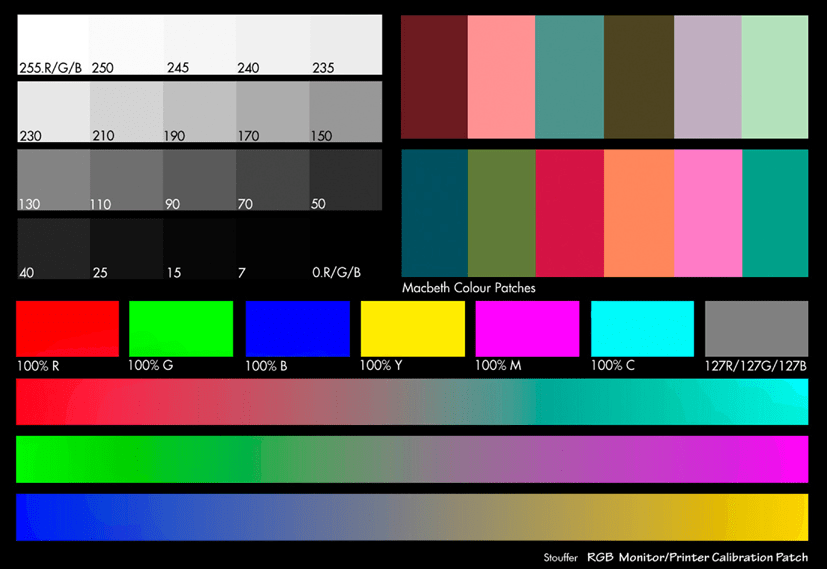
The problem with pigment, carbon printers’ results are: Undercolor. undercolor — CMY have degraded, overlapped out of balance. UCR mask reduces these colors so that the K will be image content. Exposure controls amount removed. Soup the mask to a contrast that reduces in the shadow of the separation negatives.

mask is option in best match colorant sets.
the essential is matrix, dye, blank
masking is an aid to holding the Chrome for the paper



You must be logged in to post a comment.