
give it a try. If you know the answers well enough AI chat answers will amuse, or frustrate. The answers the at hand models provide are based upon web posts and link count results which are somewhat circular. The answers provided are incomplete, sounding much like a salesman taking over the help desk during lunch. Or, good enough for an interview, but falling far short of being able to make prints in a commercial lab. But why?
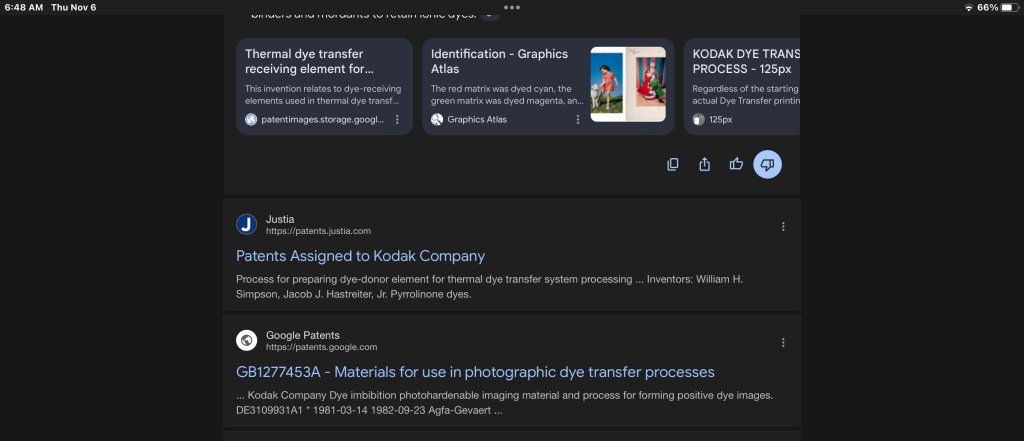
The models seem to have been trained using data collected from internet forums along with, at most, 4 website collections of publications from the 80s. In short, they don’t go back to origins, far enough to source matterials; worse, they don’t detail steps or stages of the process that would be recognizable to a practitioner, nor are they specific enough for the novice seriously intent on reproducing the process.
I asked general questions — most models got close enough for a high-school paper. The more specific I got, the less useful their responses.

my dye transfer chats were with these models as well as Google’s browser version. It was most dependent upon websites which meant that the more detailed my request the less accurate the response. Google’s link valuation system presents the problem of knowledge transfer remaining among those with little direct experience in the hobby fields.
As of this point [Nov 6, ’25 ] I am hesitant to post any direct results… as many of the Models say … bubble, bubble, thinking… bubble.

When asked for references used in answering me, it answered with seemingly plausible references. At least until I checked, first the patent, next two journals … I stopped with those non-existent materials. Who would check? Who, other than me, has the time as well as prior knowledge to even attempt the test, verification cycle.
The bubble is worse than financial.

You must be logged in to post a comment.