>>Who made the best/first/… maybe check the patent database;;
patents: darkroom enlargers
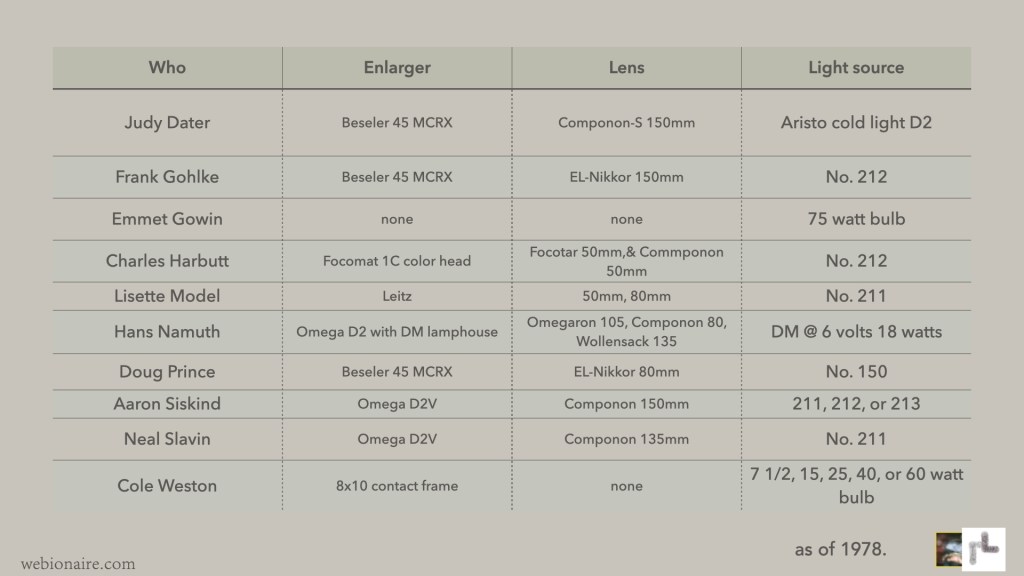
My first enlarger was a Kodak. It was equipped with Ektar lenses. My selection was easy because it was the enlarger mentioned in a dye-transfer guide. And, I found a used one at a local camera store (DC). Next, came a Durst, then and Omega D2. At places I worked, were Fotars, Agfas, Dursts, Omegas and an occasional Leitz. Each had something worthwhile, while each had something missing. In a professional custom lab, there is no reason to keep testing enlargers: those that work well become the central tool. If it doesn’t meet all needs, modify it. In my present darkroom, I have several Omega and Beseler enlargers. One Omega has a Durst carrier system added. With point light, several types of condensers, and diffusion lampheads; I can print using additive, subtractive, split filter — any which way I want.
There was a time that photopaper was slow,varied by batch. It didn’t print the same month to month– reprints were risky. Additional consideration in the best printing labs, the enlargers had to print the same color, the same contrast across a divided order. That is something the home brew doesn’t encounter. Home cooks never have to make the same thing 50 times a night. Professionals do.
Commercial chefs have many knives, can cook on many fires, are expected to produce peak performance order after order.
The light, the lens, the space are primary tools — choose those you will use. An enlarger is a holder, a jig for the light , lens, and film stage.
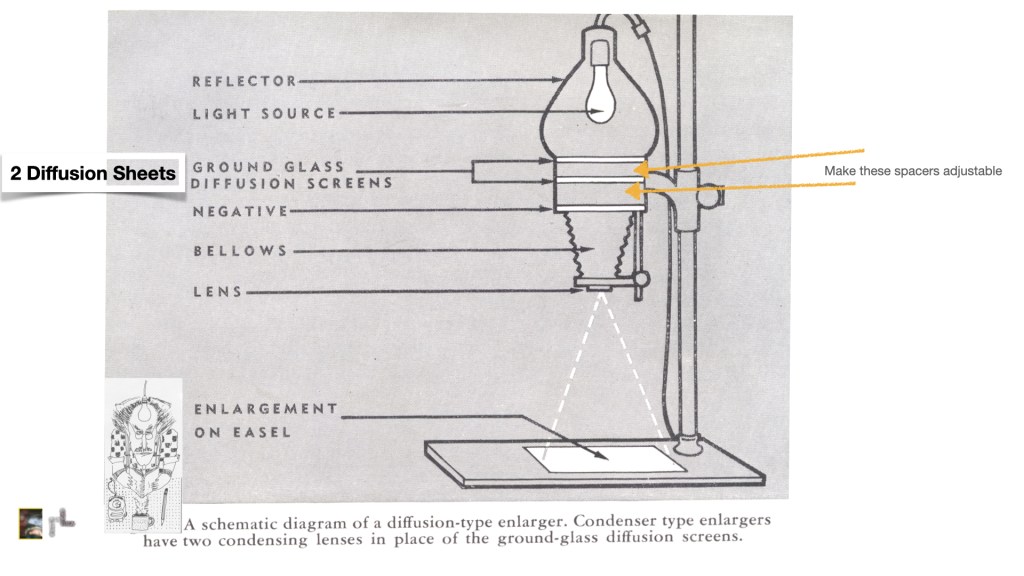
Deciding the type of LampHead affects the contrast range of the negatives you make:
A condenser is an optical lens that renders a divergent light beam from a point light source into a parallel or converging beam to illuminate an object
the only way to print is with a stopover to the screen. digital is the “new” analog. (it has been since the time of Scitex; the time when removing blemishes was called: Scitexing). One constant over time is that those people less capable of retouching, deride it in all its forms: brush, pencil, or mouse.
Scanning brought knowledge and doubt. Some have knowledge, some know-how, many more have doubt. The transition to ready scanning methods took more than 60 years to make. Scanners are part of the age of transition from chemical to computer; machine space to math scape.
Is there magic in the sauce? Maybe knowledge is held by some, being shared in the darknet (of books, journals, patents and conference lectures)
Glossary
Raised by my reading (about) Richard Benson, reminder of many other printer/printmakers, some having influence, such as Dan Margulis, some not. Dan Margulis was an early Photoshop advocate and user of LAB.
Gamut. the range of colors that can be produced by a process.
GCR gray component replacement, using black to some extent rather than cyan, magenta, and yellow in combination
Metamerism. visual phenomenon that two colors may appear to be the same under certain lighting conditions but different under others; two colors exhibiting this are called a metameric pair.
UCA undercolor addition. adding cyan, magenta, and yellow to areas that are predominantly black, to a achieve richer, darker color
UCR GCR that is confined to shadow areas
YCC Kodak’s proprietary colorspace much like LAB.
In the begin– [T, skoffs: I’m highly skeptical about what ‘people’ say on forums about scanning software mimicking RA4. The reason for this is that I’ve never come across any hints that these people had any inside information on the color algorithms and for the most part seemed to make an educated guess, only. Sometimes, that is good enough, but especially in this case, I don’t think it helps any.
— \\in fairness, krk is responding. as naysay to:One comment, by a couple of users on the facebook Coolscan community – really caught my attention: these people mentioned that the tool was engineered to produce a result that closely matches the colour response of C41 film onto RA4 paper – as most film for the pa..
Certainly, it may seem to those not a member of the change-over, the time of Scitex and others, that no one could have inside information about the algorithms, ie, the science being used by Kodak, Fuji etc. Luckily, color science is a widely published field — both the densitometric and the colorimetric theory is available in text and articles distributed at conferences. Nikon scanners as well as Hasselblad ones implemented modes introduced by firms such as Scitex along with Kodak and Fuji.
Sensitometric Curve sources: profiles from PhotoCD[Kodak]
[April 2, 2021: VueScan first started supporting different film types about 20 years. We originally got film profiles from the PhotoCD database. These film profiles contain ‘sensitometric curves’ for different film types, and they don’t vary much in film types in use in the past 15 years or so.]
Negafix claims similar source for their film-types.
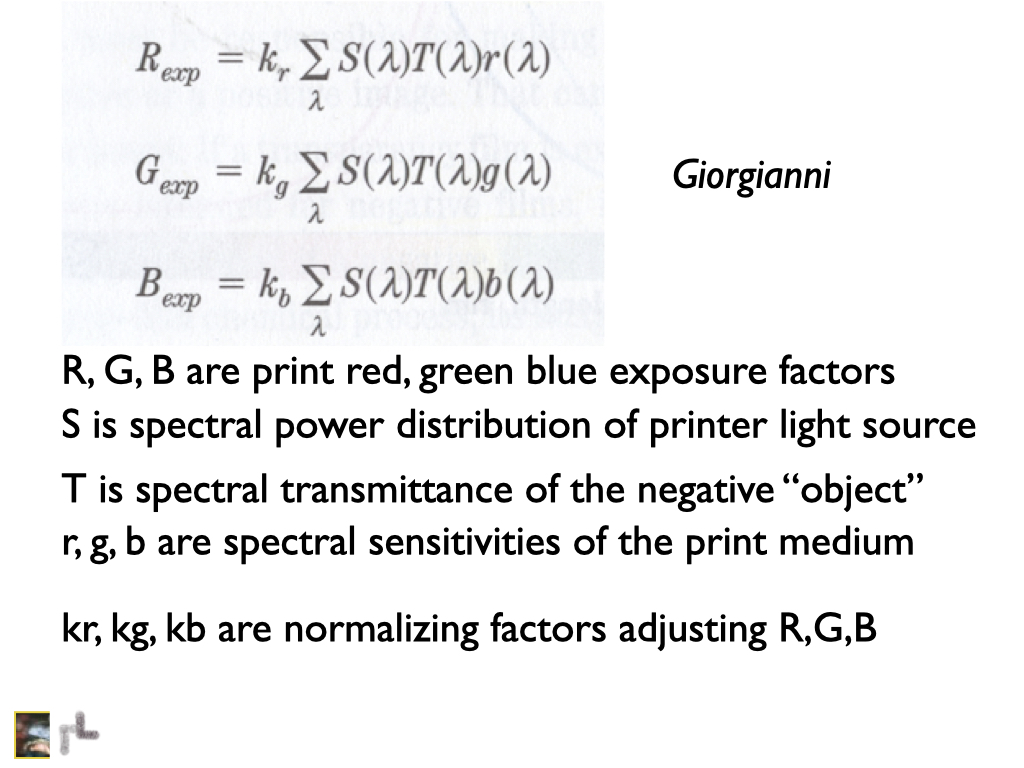
[from the Kodak designers, “… each photographic negative is designed to be optically printed onto one or more specific print films or papers, using specific printer light sources. That fact provides the key to making meaningful measurments of color negative images.” — Giorgianni and Madden.
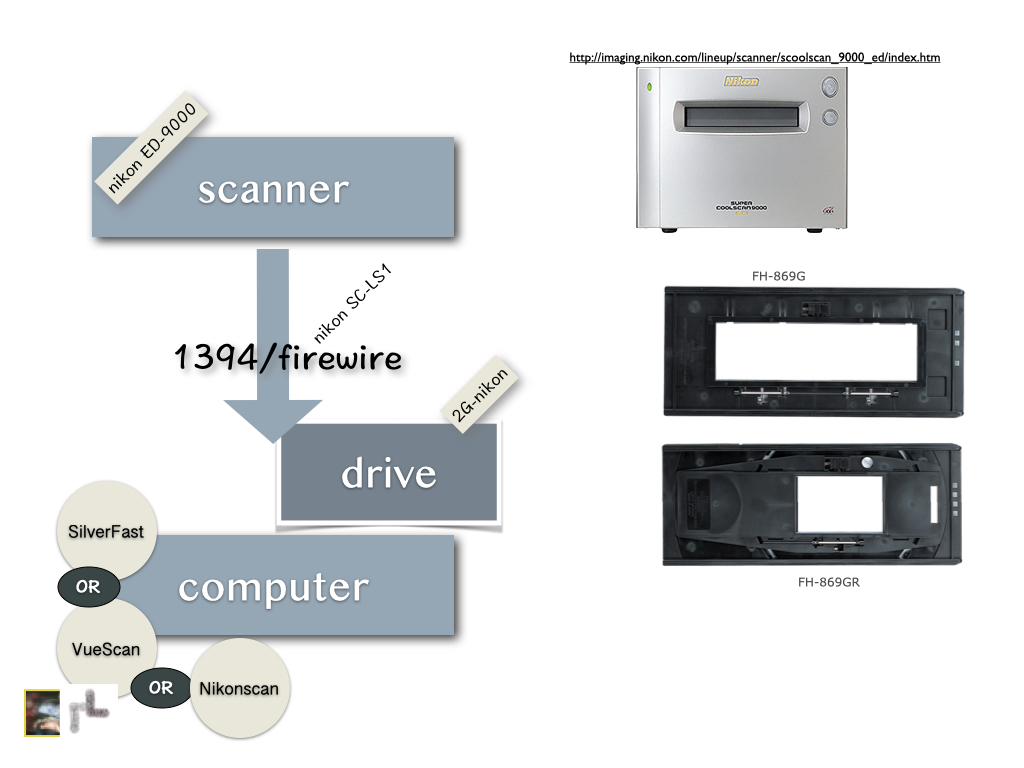
What do I do?: I use Nikonscan with a Nikon Scanner. I scan to a NEF format file. My use of Vuescan is for making PDFs with an Epson scanner. Hasselblad has a native camera file format which I request when someone scans with a Flex*.
“[157] since negatives are not meant to be viewed directly, it would not seem logical to also measure them using methods based on the response of a human observer” [meaning standard colorimetric measurements] [160] The neutral and color characteristics of color negative films are designed in terms of computed printing densities; therefore, printing desnities are the most meaningful desntiy measurements tat can be made from color negative films.
Nikon film scanners were manufactured from 1988 to 2004. Nikon Scan is Nikon’s own proprietary software for film scanners but it only supported computer operating systems up until scanner development stopped.
most recent to oldest >–>
Super COOLSCAN LS-9000 ED
Super COOLSCAN LS-8000 ED
Super COOLSCAN LS-5000 ED
Super COOLSCAN LS-4000 ED
COOLSCAN V LS-50 ED
COOLSCAN IV LS-40 ED
—
Super COOLSCAN LS-2000
COOLSCAN III LS-30
—
COOLSCAN II LS-20
Super COOLSCAN LS-1000
LS-4500
SCANTOUCH AX210
SCANTOUCH AX110
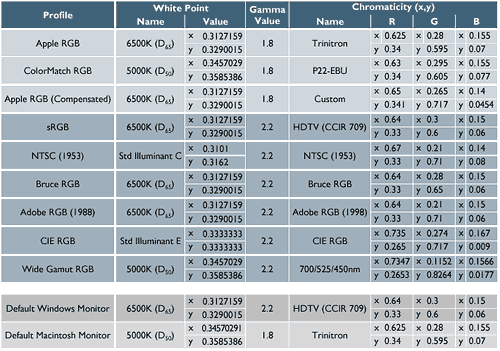
” Nikon Scan 3 and the Coolscan IV provide a choice of a wide range of color spaces, and screen gamma settings of 1.8 and 2.2 (the default gammas for Windows and Macintosh monitors, respectively). With the color management option enabled, Nikon Scan also supports the full ICC-standard workflow: The software chooses an input profile based on the scanner model it detects, uses the one of the offered color spaces as the “edit” profile, and allows you to specify a monitor profile for accurate screen display. (You’d develop your own monitor profile using any of a number of available profiling applications.) The chart below (courtesy Nikon USA Inc) shows the colorimetric parameters for the standard edit color spaces offered.”
.. and the great misdirections.. Where do I buy _X__ is one frequent question on photo forums. Forums are built around buy/sell, how/tell. since you don’t correct him, it means you don’t know.
NB: realize Maxima was never intended for the retail, general darkroom user of RA materials, so was handled diectly by Fuji USA diect to the user. It also was serviced by distributors to those with resale association agreements; typical of professional labs. There was an person on LFPF cutting Maxima for anyone interested. She also offered a complete dye transfer lab, including starting supplies at no cost — no takers after a year. Showing how strong the market was among these longtime hobbyists.
[**/Wiley/ Mr. Bill /mshchem /— ** ]
forums come together to express opinions; additionally, posters attempt to out talk each other, like perennial freshmen.

mr. bill, another back officer, explains why it is difficult[thinking that manufacturers don't sell direct]. They do.
 Drew Wiley hasn't achieved success, even with his consummate back office communication skills. after all, he talked with some of the wealthiest salesmen in the world. he even worked at a Pella store selling door knobs to billionaires.
— the answer is in there … just lost in Wiley telling everyone his story. Koraks, a mod, never picks a review point , yet continues to make his repeat point. To get a group past freshman status requires someone to direct the group. In open-classrooms such as medicine, and law, this is achieved by use of extreme interrogation by seasoned upper class-men. These schools aren’t hobby shops. Getting the conversation moving… keeping the plate juggled, means getting the conversation to more points, or away from points making it all pointless. since you don’t correct him, it means you don’t know.
[ the answer for USA: maxima is sold direct. it can also be walked thru for some mini-lab sellers. Minimum order is one roll.
it is up to that seller to decide if you can become a customer of theirs.
these are not the  B&H, Freestyle stores. Unique can get Maxima. You can also buy directly from Fujifilm USA. Just make polite, reasoned access. Simple to do.
The direct answer, a name and phone number, was provided by Jen, on Large Format Forum. She posted it overnight after Gregory Davis posted a contact name at Pakor, the equipment supplier known to photography labs since 1984. Gregory Davis had a fight with D.Wiley over color retouching. Mr. Davis, has removed his posts from LFF (and Photrio). So it goes... You keep a Wiley, you lose the Gregory's and Jen's.
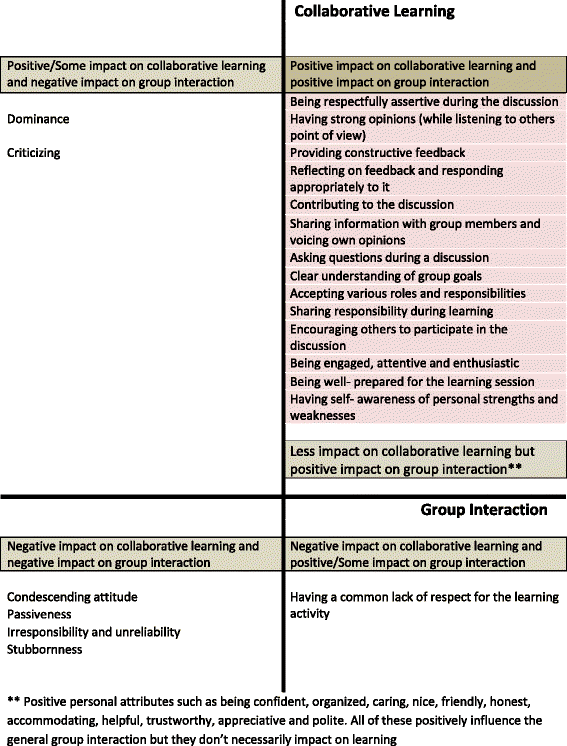
https://bmcmededuc.biomedcentral.com/articles/10.1186/s12909-016-0730-1/figures/1 ‘Students and tutors identified a range of behaviours that influenced collaborative learning. The main themes that emerged included: respectfulness; dominance, strong opinions and openness; constructiveness of feedback; active listening and contribution; goal orientation; acceptance of roles and responsibilities; engagement and enthusiasm; preparedness; self- awareness and positive personal attributes. An important finding was that some of these student behaviours were found to have a differential impact on group interaction compared with collaborative learning. This information could be used to promote higher quality learning in small groups.’
[ they have fresh, broadening explanations that they lose within a fortnight]
Material #
DESCRIPTION
UNITS/CASE
MIN.UNITS/ORDER
4/1/2019 SUGGESTED RETAIL PRICE
600020562
CLP CA PROL MAX GLOSSY 16 x 275 (40.6×83.8)
1
1
$375.30
600020550
CLP CA PROL MAX GLOSSY 20 x 275 (50.8×83.8)
1
1
$469.13
600020549
CLP CA PROL MAX GLOSSY 24 x 164 (61.0×50)
1
1
$335.72
600020548
CLP CA PROL MAX GLOSSY 30 x 164 (76.2×50)
1
1
$419.66
600020547
CLP CA PROL MAX GLOSSY 30 x 164 (76.2×50) EM OUT
1
1
$419.66
600020561
CLP CA PROL MAX GLOSSY 50 x 164 (127.0×50)
1
1
$699.43
600020553
CLP CA PROL MAX MATTE 16 x 275 (40.6×83.8)
1
1
$375.30
600020552
CLP CA PROL MAX MATTE 20 x 275 (50.8×83.8)
1
1
$469.13
600020554
CLP CA PROL MAX MATTE 24 x 164 (61.0×50)
1
1
$335.72
600020551
CLP CA PROL MAX MATTE 30 x 164 (76.2×50)
1
1
$419.66
600020530
CLP CA PROL MAX MATTE 30 x 164 (76.2×50) EM OUT
1
1
$419.66
600020529
CLP CA PROL MAX MATTE 50 x 164 (127.0×50)
1
1
$699.43
fuji maxima … just a phone call and an email
Maxima Labs… this list is shrinking as those using Polies close their RA4 polies out. Polies had the highest dpi, using the newest engineering.The 50×100 inch Polielettronica LaserLab HD C-Printer, excels with a 610 dpi resolution (6100 dpi “apparent” resolution) and 48-bit color.
[ Measurements always go in the same order. The first number is always the length, the second one is the width, and the third one is the height…. \note to: the long winded forumat iley ]
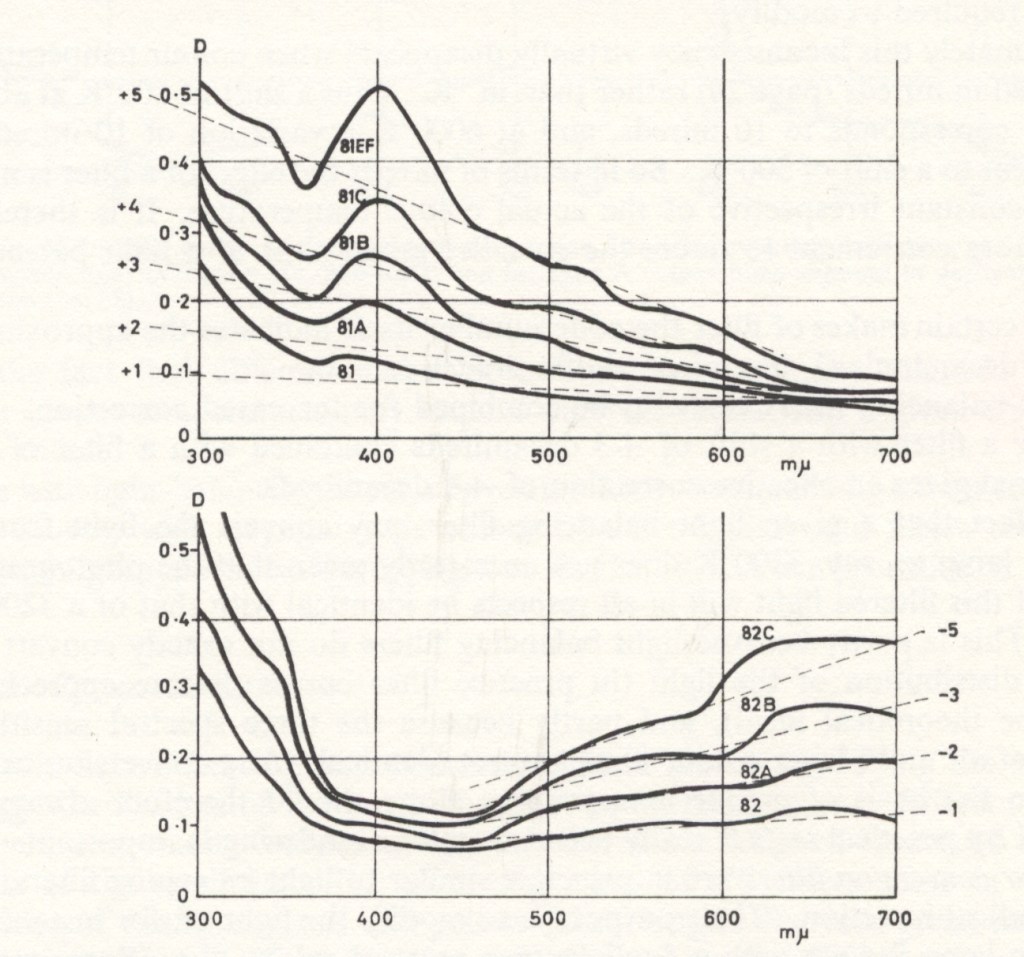
a brownish or amber series of filters to reduce ‘effective’ color temperature. Gevaert CTO, various R ranges, and Wratten 81.
bluish Wratten 82, Gevaert CTB, and B filters increase color temperature.
These plots are of absorption, not transmission.
--- riddle me this
if you want to change color of shadows (landscape photo) using a filter on the lens, does it also affect the brighter sunlit portions?
understand why CT filters are correcting a scene. architecture photographers had to understand this for most work done after 1970. we had rolls of neutral density material in addition to tungsten, or daylight correctors -- this, along with multiple emulsions designed for different tungstens lights meant we achieved long scale balance. Also, labs could push or pull because of modified chemistries. That is all gone. Well, not gone, it has migrated. Evolved. It has followed the natural path of all industry.
-- another riddler
long straight line film wasn't the best design of contrast masking film. standard camera films were used to make masks when sharp division of subjects could produce 'halo' against a clear background on the 'chrome. separation neg Type I was favored by labs in NYC.
-- the curves are meant to sum to a desired line. the original isn't linear, and often its layers aren't parallel. Masks "move" lines by adding density.
experience with actual, true, real, pro-level [I’m snarking] images teaches the answers. anyone who believes Wiley isn't believable... they don't have depth.
--- third riddleabout points of control.
2 point control is what much of the photolab is about. exposure sets shadow, development sets highlight.
to make a color *interneg without adjusting the development means you have single point control. exposure, with a standard high being maintained by your c-41 lab. this means you are making multiple rounders to get masking/color correct. okay, lets say that is locked.
we have to mask the 'chrome to bring it to too high an initial [c-41 standard] point. this likely means we need to make a post mask as well.
the internegative is an intermediate, a conversion step between 'chrome and paper.[ E-6 to RA-4]
complex... has anyone said that's what they do [in photrio/lff land][N]
*The color negative film is balanced to daylight; my enlarger lights are tungsten balanced. I use a tungsten to daylight conversion filter. I also may make masks. I always used modified C-41 processing.
...continuing with the riddle of control points:
3 point aim was the height of the better labs. a very few, ~3[?] achieved 5 point control for clients. those cases involved making split-masks and colored masks -- this meant dyeing the silver mask.
in this digital age, simplified skillsets involve matching 16 aim points, while achieving control of 1024 is a practical matter for commercial printers. film makers go even greater lengths to satisfy an image aware consumer.
-- subpoint: Keyed Process. Emulsion makers design for full step process. The color negative is designed for a color positive. Kodak Portra films were designed for printing onto Kodak Professional Portra and Supra Papers.
The Top Knot is: you lose the people with direct answers and experience, keeping those who don’t know, but keep the arguments alive. Perhaps that is the path to commercial success. Perhaps take a look at the payment status of the deflectors.





You must be logged in to post a comment.