Judd, Albers again

Judd’s red book, Writings, is a table regular. Taking breaks by flipping thru books from the shelf is my way of avoiding news of non-art-world. One turned down page held a big question mark bookmark. It was from Judd’s 1963 reflection about Josef Albers’ book. About how expensive it was. How beautifully made, along with it owing much to Chevreul who had made so much influence on Impressionist painters.

some passages: Albers: “We study this first, not as a surprising or entertaining illusion but to make eyes and mind aware of the wonders of color interaction; second, to learn to utilize color deception in creative color performance.’ “The book Interaction of Color is a record of an experimental way of studying color and of teaching color.”

Judd observes instance of Albers’s teaching: Albers wants to emphasize that “color [is] the most relative medium
in art.” A color can be made to look different. The class is shown examples of this.““Then the class is invited to produce similar effects but is not given reasons or favorable conditions. It starts, therefore, on a trial-and-error basis.”
.. and: “The information taught to art students is even more relative than color. It is highly circumstantial and transitory. But at any one time, specific knowledge of some kind is necessary. Usually, though, it is being formed at the same time that it is necessary. Techniques and information are vital if there is an artistic use for them and completely useless if there isn’t.

finally, my margin-marked item : … Albers’ particular view of color is indicated by a qualification to a harsh study in black and yellow: “Despite its lack of an harmonious or pleasant appeal…” He goes on to say it is useful anyway. [Judd’s writing ] AND my takeaway lesson.

Aspect Michel Eugène Chevreul Josef Albers
Primary Focus Color contrast and its laws Relativity of color perception
Theoretical Methodology analysis of color interactions Experimental and pedagogical approach
Key Work: The Principles of Harmony and Contrast of Colours Interaction of Color
Impact on Art Laid foundational principles for color theory Expanded understanding of color use in art

Expending time with my shelf is what I do instead of asking the passing webstream. I had to review Chevreul. Very glad I did. Not because it will help my art, instead because it raises questions about how much some people contribute to general knowledge as they pursued their curiosity of “sense” world.

from wikip “Chevreul became the first scientist to define the concept of a chemical compound and the first to formally characterize the nature of organic compounds; he is consequently considered a founder of modern organic chemistry … and … Chevreul’s study of textile dyes while director of the Gobelins Manufactory in Paris led to color theories that “provided the scientific basis for Impressionist and Neo-Impressionist painting”

The cruel gap  between knowing and doing ..

those who know it all have little left to learn; if learning was a pleasure, little pleasure remains

july 2026: am changing what, why I use the net as writing surface.

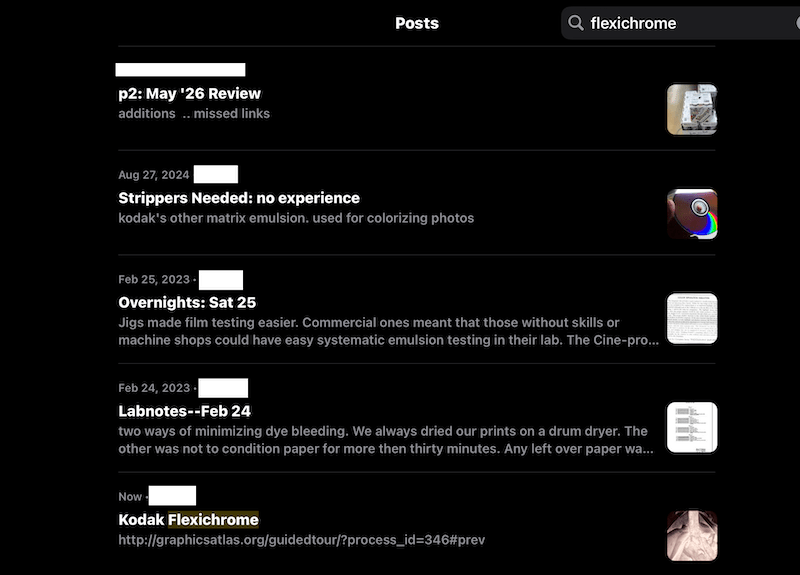
p2: May ’26 Review

additions [p2’s ] .. missed links and updates to prior posts.

>> link [ Seeing it in person, however, gives a more weathered impression than in photographs.
The greens are not as vivid, and the garden feels dry, even somewhat rough.
It’s best not to expect something overly decorative.
Tōfuku-ji,
A Study in Geometry and Garden Design in Kyoto

>> link [ Gabriel Antonio Reed is from New Market, Tennessee. He received his MFA from Hollins University and his PhD from the University of Tennessee, Knoxville.
“a will to change that derives from our inability to change ourselves”—Gabriel Antonio Reed
Gabriel Antonio Reed

>> link VSW [Matthew Schlanger’s image processed video works are serial constructions created with custom-built analog and digital processors. Each video is a real-time synthesized recording in which sound and image are parallel structures, often using periodic waveforms as image and sound source material. Schlanger is both an artist and a tool maker. He has been working with analog synthesizers since the 1980s, and continues to create video in his home studio in Nyack, NY.

lumpy banger https://vimeo.com/18289189?fl=pl&fe=vl&goal=0_3b0c1d68ed-eef87426d4-631039129&mc_cid=eef87426d4&mc_eid=f0298e5cc5

–Invisible Fisherman: The Art of Bill Brand
now available through VSW Press

 VSW Press is pleased to announce that our most recent Film Art Book (FAB) publication is now available in the VSW bookstore! Invisible Fisherman: The Art of Bill Brand is a 160 page artist book featuring critical essays and full color images documenting the scope, breadth and impact of Bill Brand’s creative practice in film, installation, drawing and painting. Brand is well known for his work as a filmmaker and preservationist, and this book shines a light on his lifetime studio practice of drawing and painting. Brand himself navigates his portfolio in a “studio visit” with Tara Nelson, sharing his personal history with drawing and painting as a critical approach to problem solving and creative development throughout his career. 

Click to access VSWPressSPRING-26BillBrandRelease_FINAL042126.pdf

EXPERIMENTAL CINEMA, VSW provides a walk along the path, to this: https://expcinema.org/site/en/books/invisible-fisherman-art-bill-brand
AND opening that we come to a site of many others making the swim.
https://www.billbrand.net/biography preservation of experimental cinema-video.


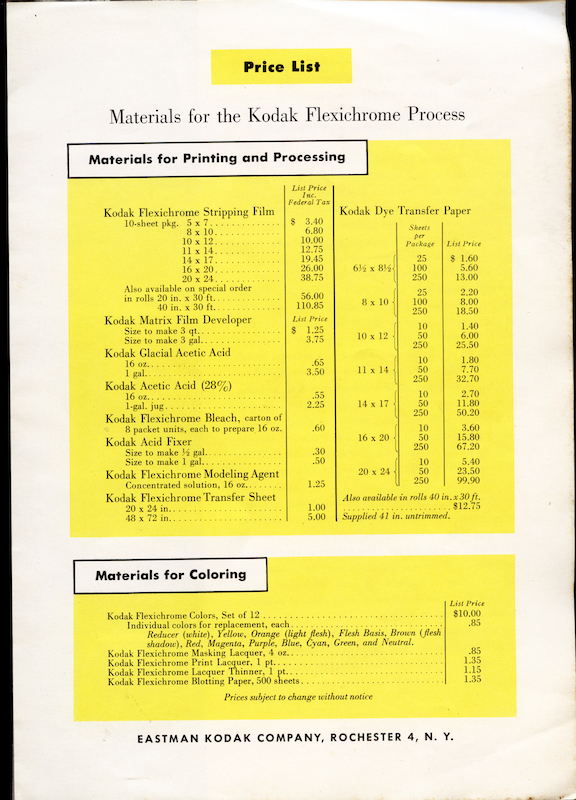
flexichrome — photographs are always colorized, it’s just that some tell better color lies..

i seem to repeat myself .. someone, at some time asked a question..on the web, nothing ever finishes; nothing is ever found.

flexhichrome.

just Friday (yesterday), as if by synchronicity, C found an old Flexichrome brochure among poetry magazines she was reviewing… keep, or pass along..

That refreshed my thinking about some posts I made several years ago… I wrote, but never published.

The Flexichrome process has special memories… serving as release from constraints that I was setting upon myself too early in my career to recognize as bad habits. Habit of “giving away” my eyes. to some prior, unknown visionary. Why let them set my standards?

So, maybe I will finish and release the tech post I made more than a decade ago on the process of Flexichrome.

spray bottle has been returned to her place above the wet sink in the processing room of the lab. Used to keep the lavender seeds and seedlings moist. Now, they are big enough to take on full water..

Relative humidity as well as other concepts will apply longer than the specific instance. that’s how firms as well as art schools and studios acquire and extend practice and theory awareness..
early, in fact my first reading about application of registration of masks and subs, included paper tape. when I realized that paper tape included an envelope with adhesive, I was able to revive a method from the 40s when packaging tape was widely available.. this was part of making a ‘cab,’ a carrier to hold mask and original.
The general principle must be combined, must be modified by your local current awareness; what’s available to you locally, currently. photography, all plastic Art as a practice includes a physical component, a manual component.. Our current change to a “text to image ” is part of the sense of many that we lose skills — visual art becomes removed from prior plastic concerns and privileges. The scale of the hand, the privileges granted to those practitioners with that skill diminishes when that skill no longer controls the input to the eye of the receiver..

Conception to perception is a tough path for some. particularly for those stuck forever in perpetual adolescence.