
Without hybrid, there is no breed..
The analog rebound is more in the mind than in the hand. A rebound that never recovers to a prior high is termed a “dead cat bounce” — as in, “even a dead cat can bounce.” The Analog Revival is a low point in revivalism. This is a dream of those with more past than future. More memory than plan.
The companies, groups that lasted —
Freestyle and Lomography kept supplies flowing, now, CineStill has become strong enough that Eastman Kodak sees revenue. The new companies, those providing film scanner solutions, those automating the wet steps, these are the small cadre looked to by the incoming users. The green, energized under 40s. They may come to a darkroom, but by the time they do, products will be so expensive, only the richest, or most dedicated will buy. That is apt to be the shortest lived bounce.
Without digital, film would never have been revived.
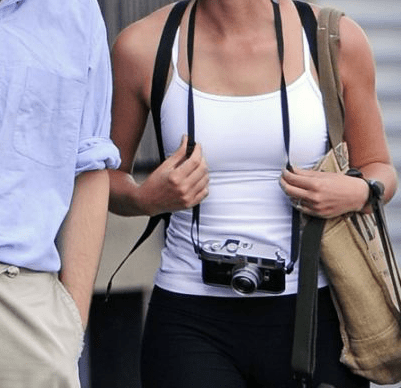
The resuscitator was Instagram photos of camera carrying celebrities. *Lauren Lauren’s Leica, with very long leather strap. Brad Pitt’s Hasselblad 500.
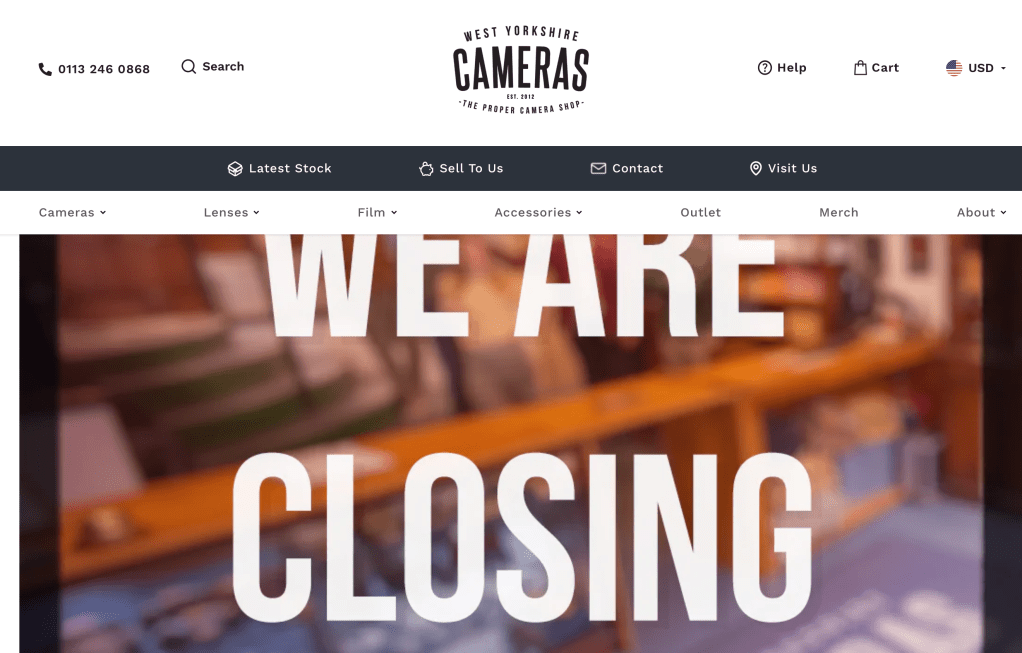
November 24… Another camera/ film store closing
Mechanical Analog Chemical Photography was built assuming a darkroom in which the unseen, slow, contemplative work was undertaken, or realized. The camera was the first part, not the key distinctive part. Even today, that public, camera centric portion of photography continues. It has been rephrased as “lens based” photography, thereby including the digital camera, the spine of 21st century imaging.

items of the fad aren’t always well made.. fads fade… more times than they succeed.
People want to believe. A gathering of the loud, too easily believe they are heard by everyone. They aren’t heard, even among themselves. Instead, believing their arguments of importance. In the land of money, there are no other motives by those who make the machines used. Fads are opportunities for advance which the foolish think are permanent, an annual. Wiser money understands the difference between crops; between land, soil types. When it is better to reap, or sow. Money is only money when it is mobile.
Will a new coater arise? Yes. But they won’t have a stronger future than the existing coaters. They will have to remain small scale, surviving only if their best first product exceeds anticipation. And/Or, they have physical barrier… a close, local market. Perhaps one offering camera rentals, tea, tours of a surrounding area — a destination site for the young, perhaps the retired.

Without paper and associated chemistry, the darkroom will die. Already, the range of coaters capable of absorbing the possible losses involved in coating and distributing photo-sensitive paper declines. Fujifilm is the only company financially durable enough to risk making papers Their remaining paper interest is in supplying European ready printers — amateurs. Fujifilm is paying attention to Instax coating in their homeland, where enthusiasm, free time, disposable cash, continues growing among the young city people. The visual Karaoke, seems durable. If not, a small write-off to a company Fuji sized.
The Forum Effect–
Forums provided no benefit on any dye transfer revival. It was actually a diffuser of intensity, by allowing people to believe that someone else was doing it — that there was a grand benefactor in the sky. They didn’t have to invest anything more than they ever had. Wait long enough, someone will realize how fabulous a market there is, just awaiting new product.
Even now, forums focus on cameras, old lenses, attempts at digitizing –just as bad salesmen never improve, neither will they. Dispersed, disorganized information leaves the field open to more brag than awareness.
Forums are a remarkably fertile field if you are interested in becoming an old, white male, having strong opinions about photography prior to 1980; before its growth, before the silver explosion, when it makes it way into commercial galleries. Opinions formed using knowledge gained in piecemeal fashion.
People buy tickets to ride steam trains. They get there flying in a jet, or driving in a car. Steam trains are not making their way onto the tracks of life.
REFS:
- * == “How the West Was Wed” https://www.vogue.com/article/western-union-lauren-bush-and-david-laurens-wedding


You must be logged in to post a comment.