
NOTE: the lightbulb shown above is the light I use for making contact Azo prints. It is not an enlarger lamp.
A standard light is the the guidance setup, or initial configuration of an exposure recommendation to match one source to another.
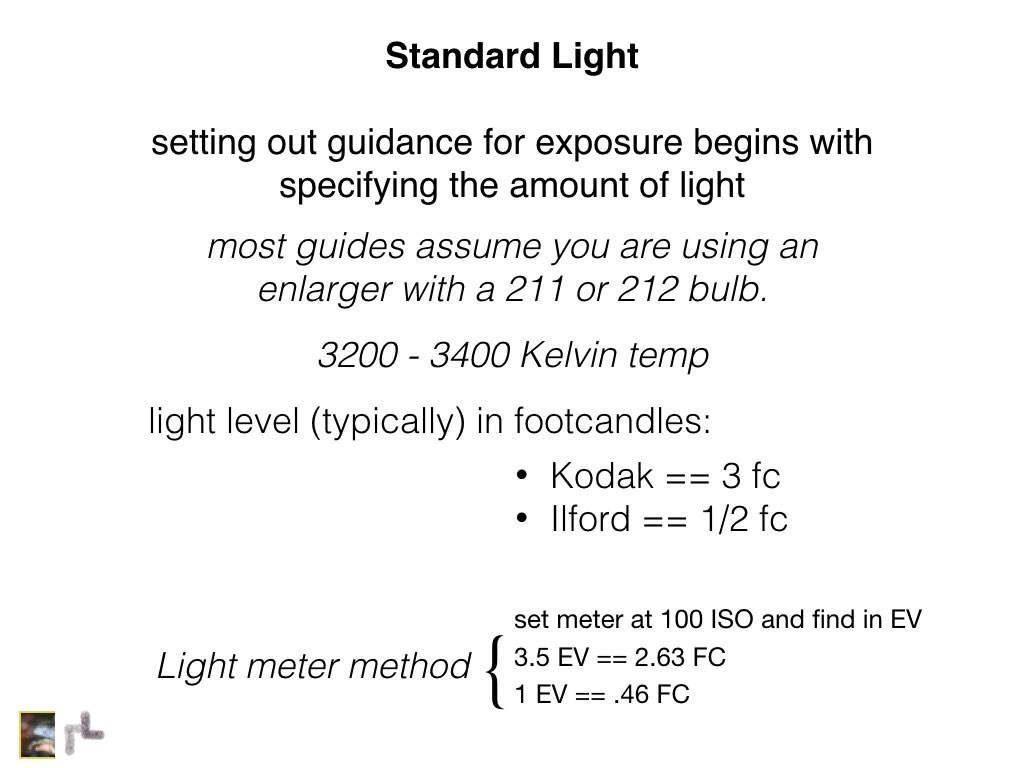
Standard Light
The standard light setup will be used in making masks, and separations, in addition to other darkroom procedures such as characterizing paper and developer. In my practice I no longer start with the guidance of the manufacturers since I’ve characterized so many films/papers for so many years I just start with my own best last information. That is usually written on tape at the enlarger, or has been set into the darkroom meters I use.
Ilford EM-10
Ilford no longer makes the EM-10. In the 90s it sold for $28. Mine still works just fine, even though I rarely use it. I have much more sensitive and accurate digital meters. Ilford provides the calibration instructions at: EM-10
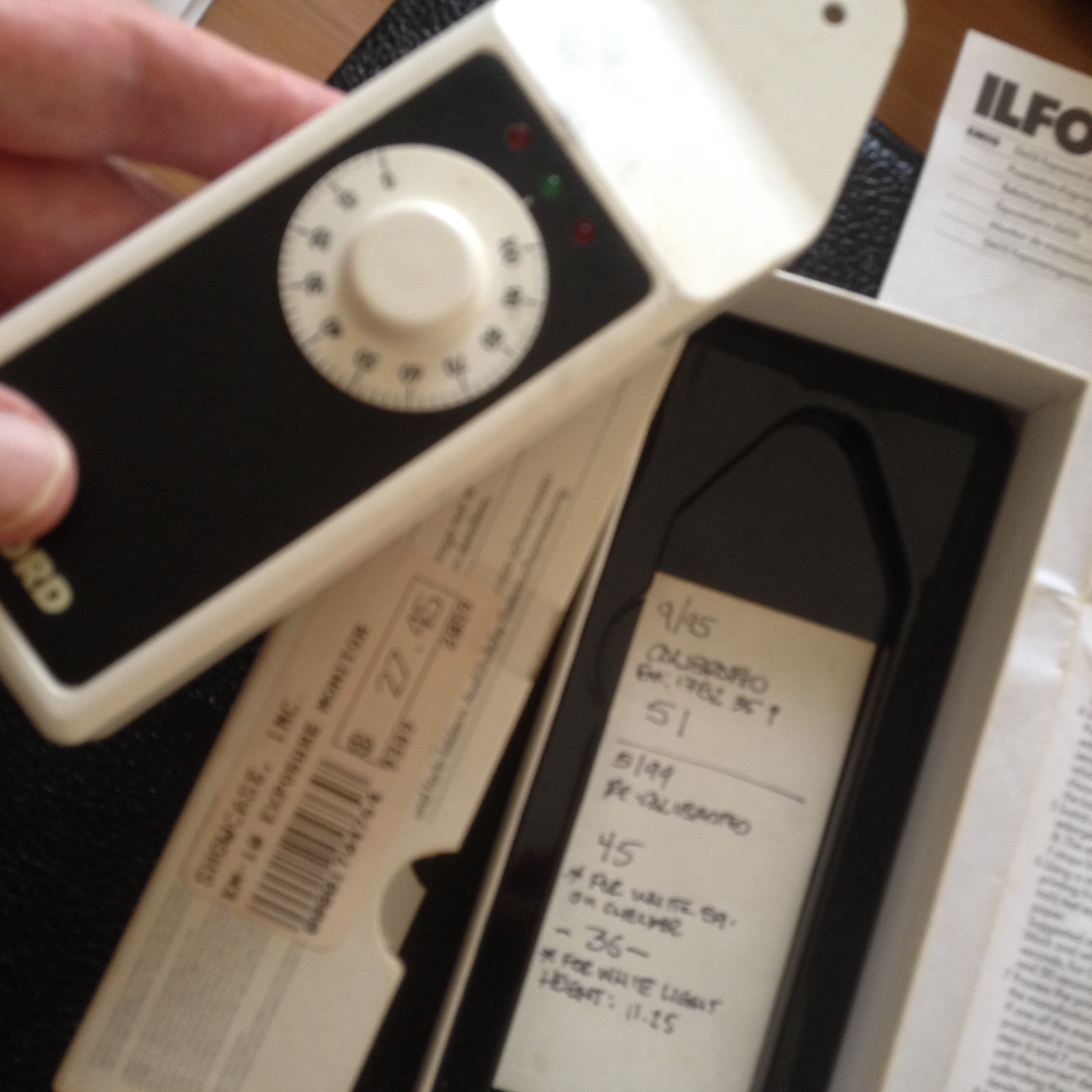
//TBD w ref link to Darkroom Tronics
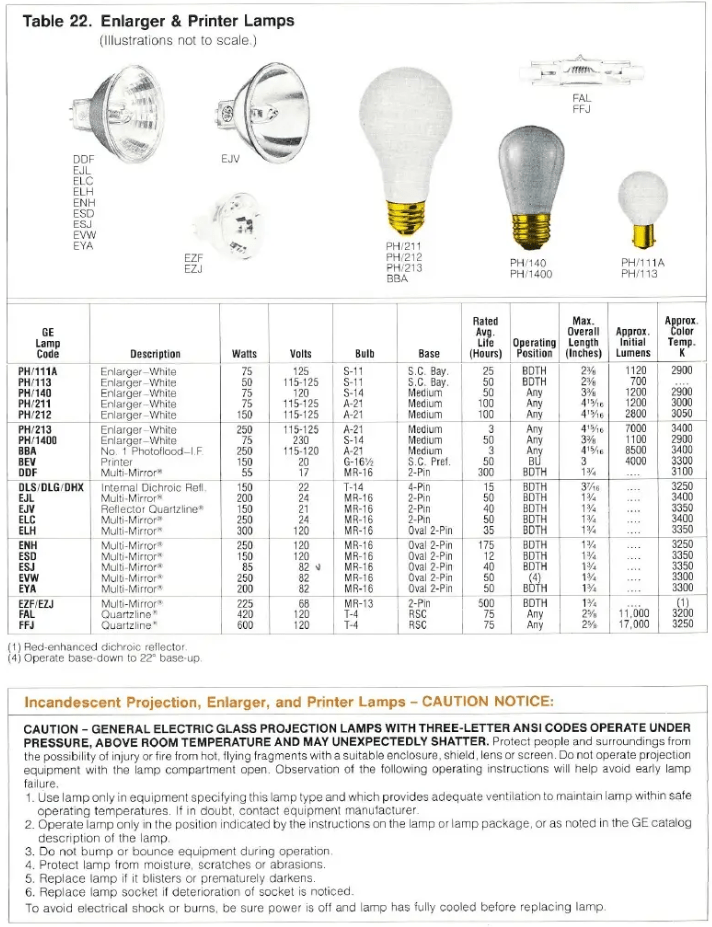
| 2800 | 82C | |
| 3000 | 82A — note: original lit (1950s) relied upon PH211, hence no filter used | PH211 & 212 |
| 3200 | STANDARD CT .. NO FILTER NEEDED. dichroic standard | |
| 3300 | 81 | EVW |
| 3400 | 81A decreases color temperature 200 Kelvin | ELB & PH213 |


You must be logged in to post a comment.