The RIP of others. Two three today. There are few weeks that pass without a death of the world of meanings.
When younger, I didn’t note the passings of most of my field. Maybe because I was raised on independence. Perhaps because by 22 I’d knew the smell of cordite, skin, blood. Whatever mixture makes real actions, until the past decade, death was final as well as paper.
burial camps: you honor yourself in the way you honor them. The self you never had they are yourself they took the path you never took a live the life that you read about
the thing they share: they work in black.
George Tice: [‘Bard of New Jersey’ With a Camera, Dies at 86] I knew of his work without following his life. His is work that meanders into or across my ready understanding. It can add. Maybe it will, although I doubt it since my work, world of workers is quite full. My ideas run over.
The others: two from the camp of others, those whose images didn’t cross over my middle or current table. They would have held me as a young imagination, just not for long. They took similar paths, maybe, but they certainly have similar followers. Often death is the marker of similarities.
Too often death marks our life with our absences, lacks, short falls. Reviewing a life provides stimulus to consider ours. Who do we live among. What is your relationship with photography. Do you have a constructive, nurturing system?
sometimes it pays to update your map by reviewing the recent past rather than the distant one.
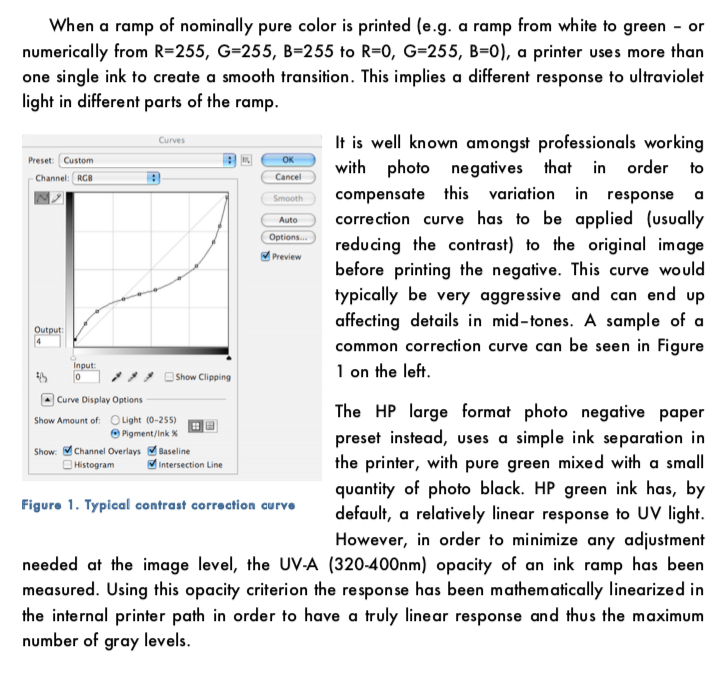
color inksets have increasingly compound ways of meeting the needs: gamut, and longevity. encapsulation is one method; wrap some of the inkset in UV absorber.
The last dyes are like embers from the fading analog engine. The revivalists are rushing to ride the final fashion like Lauren Lauren’s Leica slung, long lean strappy dangling from her pampered bridal shoulder. Both, she and her camera, accessorizing his success.
Dye transfer prints will decorate many a wall. Some may hang for most of the year.
THE REAL : The show — meaning from the real world. The gallery world seeming more connected to factual effort.
Dye Transfer had an early glow, mystery of process, mystique of object value. The process was time and material consuming, making it in the fuller sense something for advertising, appealing as Veblen Good to the Haute Bourgeoisie.
“I was reading the price list of this lab in Chicago and it advertised ‘from the cheapest to the ultimate print’. The ultimate print was a dye-transfer…. The color saturation and the quality of the ink was overwhelming. I couldn’t wait to see what a plain Eggleston picture would look like with the same process. Every photograph I subsequently printed with the process seemed … better than the previous one.” —William Eggleston in conversation with editor and writer Mark Holborn, 1991
:
CVI, Color Vision Imaging laboratory, Manhattan, 1981. Guy Stricherz (b. 1948) graduated from western Washington University in 1974. He went to New York city in 1977 to work for Frank Tartaro who was one of a dozen masterful printers. Even at that time the process was falling out of use. It had peaked by 1980. Irene Malli (b. 1964) graduated from Cooper Union; after graduation she worked as a printer before answering an ad for CVI in 1989. CVI was moved to Vashon Island from NYC in 2004. Some of their recent clients: Larry Burrows, Bruce Davidson, Thomas Demand, William Eggleston, Mitch Epstein, Ernst Haas, Hiro, Evelyn Hofer, Graziela Iturbide, Zoe Leonard, Arnold Newman, Irving Penn, Christopher Williams.
Frank Tartaro was another user of the idea of “tone zone” masking.
The best memory is based upon your experience. Make your own.
THE IMAGINED: Unfortunately The Last Dyes show brings out the zombie experts of the hobby forums. Killers of a process they view from sideline. The show provides opportunity to talk as tho they had a privileged seat; bring out their old bar counter stories, a chance to repeat their prejudices of process. This is the use for the brag boards.
Question the tale of the salesman. I didn’t call him on his bullshit, so you have been left with his constant crap for a decade. Mea Culpa.
They don’t learn enough because they don’t ask, they aren’t curious. They don’t do enough because they lack courage. They fear failure more than they crave doing.
The false information is imprinted onto the naive minds. False tales aren’t questions, even though he is doubted. Why trust any part of his complex tale if the beginning direction is in error. Part of his ongoing commitment to his fantasy story of his skill is due to my being so bored with him at the St. Regis meeting, I fed him his own ignorance agreeing in order to escape. No one used Tanning Bleach in a commercial practice past 1952 — the mats weren’t sharp, nor durable enough for the uses of commercial printing. There was one use of tanning bleach: schools doing Pan Matrix film– this was rare, caused by group darkroom restrictions. AND the Army never made Matrix Film; they did buy it, while after Korean War, the Department of Defense sold the surplus materials. K&L (Len Z.) bought thousands of sheets which gave him a price advantage for several years.
The Army doesn’t make sandbags nor shoelaces. Not even CCA made their materials; they did have a need for large “trans” materials which Kodak refused to make. They couldn’t. They didn’t have the ready knowledge, so CCA tried two different coaters; NG was able to make the materials using a design provided them by Robert M. of Defender.
Lasting Lie Transfers: turning sales speak into history. The story is now being told by people who didn’t even participate until the story was over eggleston show brings out stale fish stories; stolen valor from the photo fantists
“he was a machinist ” — about Eliot Porter; he wasn’t a machinist. His mode of making DTs didn’t require him to have “made his own” transfer equipment. He was a long time woodworker. He discovered the “black box” printing system. His self-made items are all wooden. No metal, no punch-pin system.
” soft image– dye bleed” — the reason Condax was brought into Kodak was because of the improvement of Tanning Development over Bleach Tanning. Two immediate improvements: sharpness of transferred image, and improved color clarity with existing dyes.
” don’t hold highlights well” — hmm, how about all those suds and softgoods ads? Or, Eggleston’s White Ceiling Fan.
a piece of the elaborate custom equipment made by Eliot Porter for his dye transfer lab.
Google has found my post from 2013, titled: The Last Dye Transfers .. coincidence a long time coming
For those considering another possible use of matrix film– think it as a mask. I did. See this patent which I’d discovered around 1961: https://patents.google.com/patent/US2371746
You must be logged in to post a comment.