
// Kodak directions were complete. More information was made available in the product datasheet than in the instructional guides. Labs always had access to support from the marketing group. If you were big enough, or persistent, you could talk to the research group well into the 70s; then it changed. The product was on the way out — no one wanted to say. Now, I know that the reason my contacts from the 60s called from home was that the labs weren’t supposed to be talking.
A main Kodak invention for imbibition printing was their film punch. Looks like a very complex paper punch. Not far from wrong, although paper punches aren’t always best for thick sheets of plastic like film.
Pan Matrix sheets came pre-punched to fit the Kodak Transfer table.
An early fight with Kodak was over large rolls of Pan Matrix film. They wouldn’t make it… even though we had many accounts wanting large displays from original color negatives. So, we had to devise the interpositive method — then we had talked to DuPont. And Ansco.
to duplicat today search forregister pins with a #4 x 7/16″ screw stud at McMaster or comparable


Condax’s patent for registration device and method. April 1945, #2455735
It is the Kodak Blanket, the method used from the first decade of Dye Transfer. The early guides (E-80s) showed its use. This was the time of cut-n-but registration — the form inherited from litho-press plate work. The Condax patent references earlier litho patents.
Kodak’s system for making Dye Transfer prints included large pin system. The film used couldn’t take fine punches; not if you were going to put film off and on many times, such as what happens when making real prints. Theoretical prints could be made by punching glass plates, sadly, real glass plates would snap if you punched them.
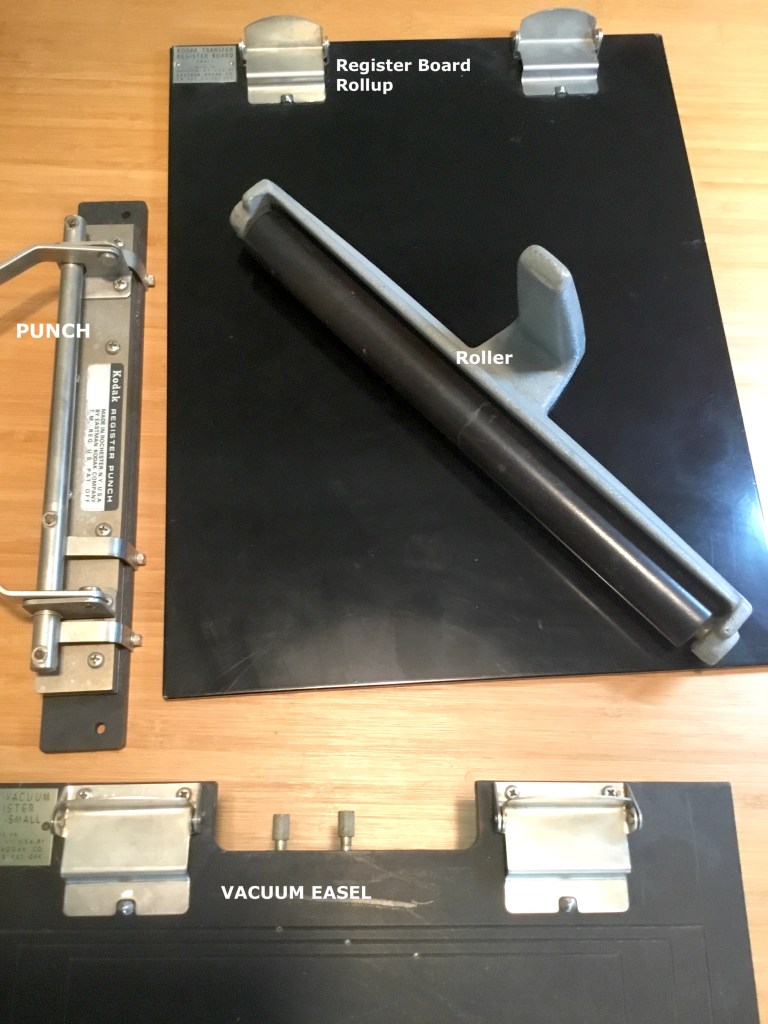
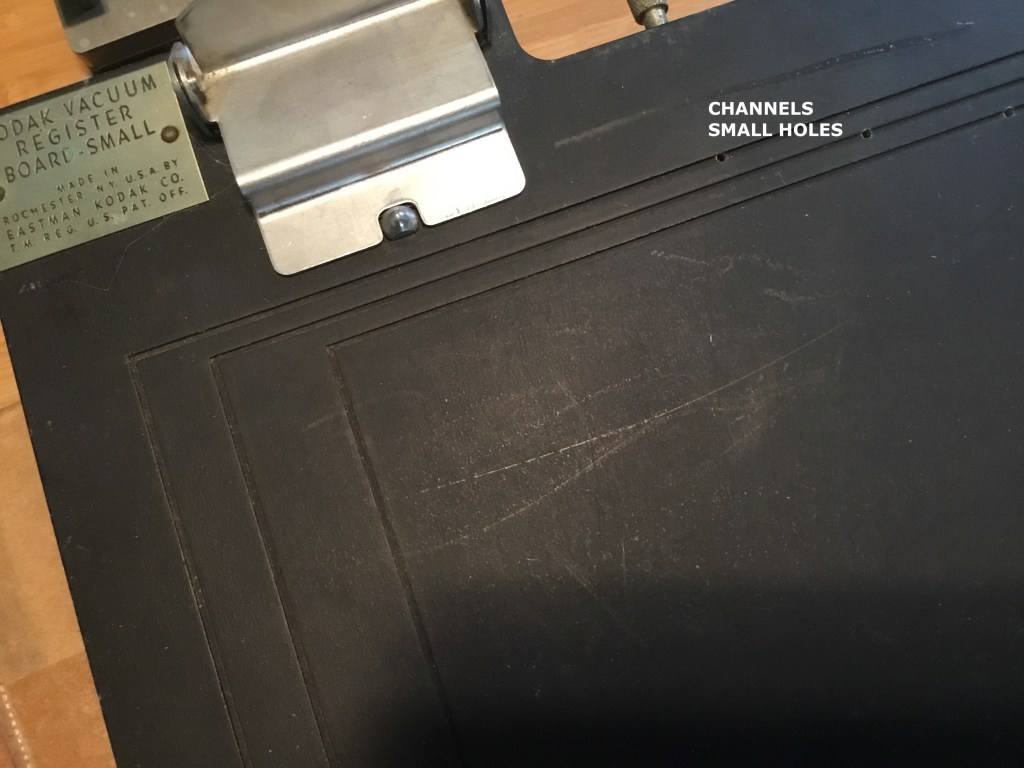
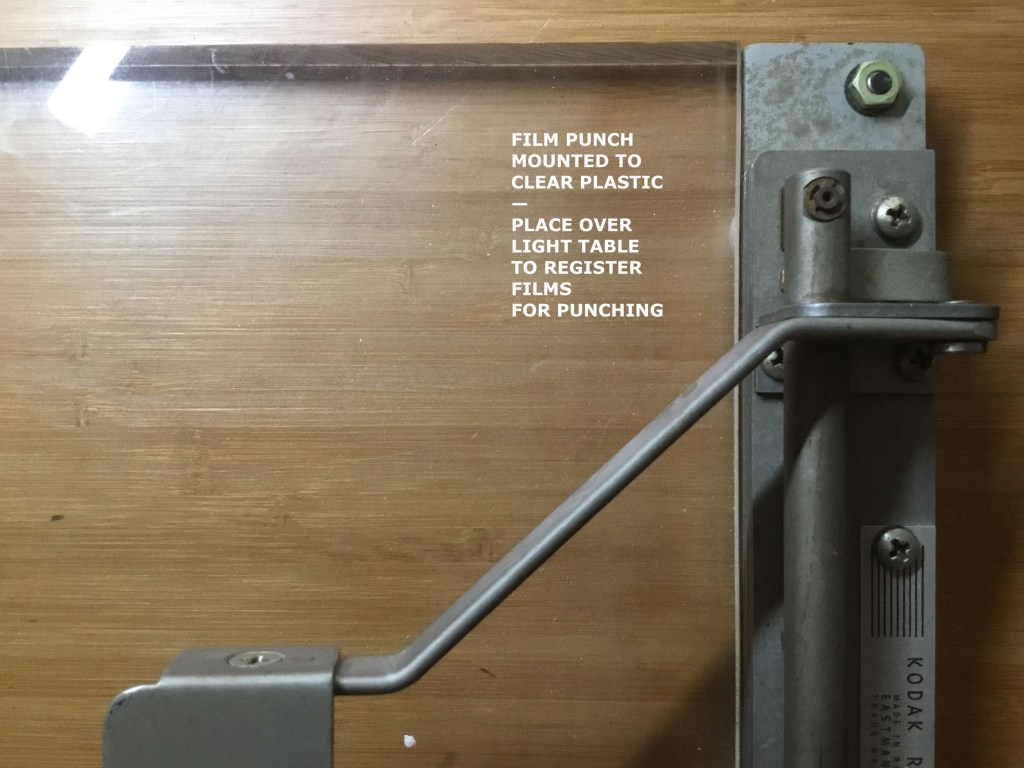
A punch for the film + an easel used during exposure + pinned transfer board + a roller for rollup of the mats onto the blank.
This was a standard set of equipment found in commercial and weekend labs. These items went out of production by 1980. From the mid 60s they were specialty items sold through graphic supply houses, not regular camera stores.
In 1968, Adolph Gasser (big San Francisco store) didn’t know about them, nor dye transfer supplies. I worked with them to make my order; standing with them to make the call back to Rochester. A long time ago. It foreshadowed much of what would come to the very small community of dye transfer printers.


You must be logged in to post a comment.