Elemental Film

the difference between the frame and the frame strip — the tripod and a track — standing and walking. Everyone makes a movie as they drive. No single frame holds onto your mind. Driving, I see patterns against other patterns. The fence framing makes the scenic live.

Time is one of the strands of exposure. Short, long. Too much, too little. How we make an emulsion respond to light is a judgement made over time. The table of elements for camera craftsmen is exceedingly small — few basic means of achieving a life.

// Maya Deren. Titarenko. Slow cinema

Maya Deren (1917 – 1961). “was one of the most important avant-garde filmmakers of her time for her use of experimental editing techniques and her fascination with ecstatic religious dances. Deren earned an MA in English literature from Smith in 1939 before joining choreographer Katherine Dunham’s tour. “

“The still photograph is concerned with the isolation of the moment.  The moment is stayed, composed within a stable frame.  Films are concerned with the way in which a moment passes and becomes the next. This metamorphosis cannot be composed within the frame, but only through frames, from one frame to the next.” — Maya Deren

NOTES:

  • Brakhage, Stan. “Maya Deren.” In Film at Wit’s End: Eight Avant-Garde Filmmakers (1989): 91–112.
  • Clark, VeVe, Millicent Hudson, and Catrina Neiman. The Legend of Maya Deren (1984).
  • Deren, Maya. Papers. Department of Special Collections, Mugar Memorial Library, Boston University. NAW modern.
  • Obituary. NYTimes, October 14, 1961, 23:4.
  • Renan, Sheldon. An Introduction to the American Underground Film (1967).
  • Sadoul, Georges. Dictionary of Film Makers (1972).
  • Vogel, Amos. Film as a Subversive Art (1974).
Titarenko .. studio visit

“.. Proust taught me that the only way to communicate and to share what I was feeling with others is the use of the metaphor…” Titarenko

the City as Novel.. short

“slow cinema” concept.

  • Arnheim R. (1993) From Pleasure to Contemplation. The Journal of Aesthetics and Art Criticism 51: 195-197.
  • Bíro Y (2008) Turbulence and flow in film – The rhythmic design. Bloomington: Indiana University Press.
  • Boer J (2015) As slow as possible: An enquiry into the redeeming power of boredom for slow film viewers. Unpublished Paper, University of Groningen, Netherlands.
  • Doane MA (2002) The emergence of cinematic time – Modernity, contingency, the archive. Cambridge: Harvard University Press.
  • Flanagan M (2012) Slow Cinema: temporality and style in contemporary art and experimental Film. PhD thesis, University of Exeter, UK.
  • Margulies I (1996) Nothing happens – Chantal Akerman’s hyperrealist everyday. Durham, London: Duke University Press.
  • Wollen P (2000) Time in video and film art. In: Capellazzo A (ed) Making time: considering time as a material in contemporary video and film. Palm Beach, Fla.: Palm Beach Institute of Contemporary Art, pp.7-13.

overnights: June 13/23

knowing gamma
mask easier to calculate effect on final

where use
— range
— percent

drew is the hero of his own lies: calvin and drew are opposites

TOP of the useless knowledge..
top atop the skill
pile of useless skills
johnston

libertarians are those who gave up thinking about efficient/,oral and became bad financeers
the center doesn’t exist
eSig X
welcomed by the oh gees
self-worth hung on a format or process

chinese plaster board in the 80s: was it the coating or the board

original & mask
up or down
— contact or projection
the physical parts of process
abstracts are color, density, and range
single / multiple
use of effect of


able to believe what they already believe
trust dies, mistrust thrives
TLG

Hartmann: Stieglitz
Newhall:: Adams
Szarkowski::Egglleston

AI:: pureprint, Jones
Landscape Formula Forum
desperate woman from Prague seek desperate men from Pittsburgh.

auteur vs F64
left coast envy of Stieglitz
to diffraction and beyond

See. Stop. Click

We walk around, make our way to or from something. If we look with easy eyes, arrangements, occasions, even sounds prompt attention. Further inspection, reaction. Most of us, for most of the time are more involved with something else to see what is seeable. People drive thousands of miles without seeing what they drive past so they can do what they think is expected; do what the great-one did.

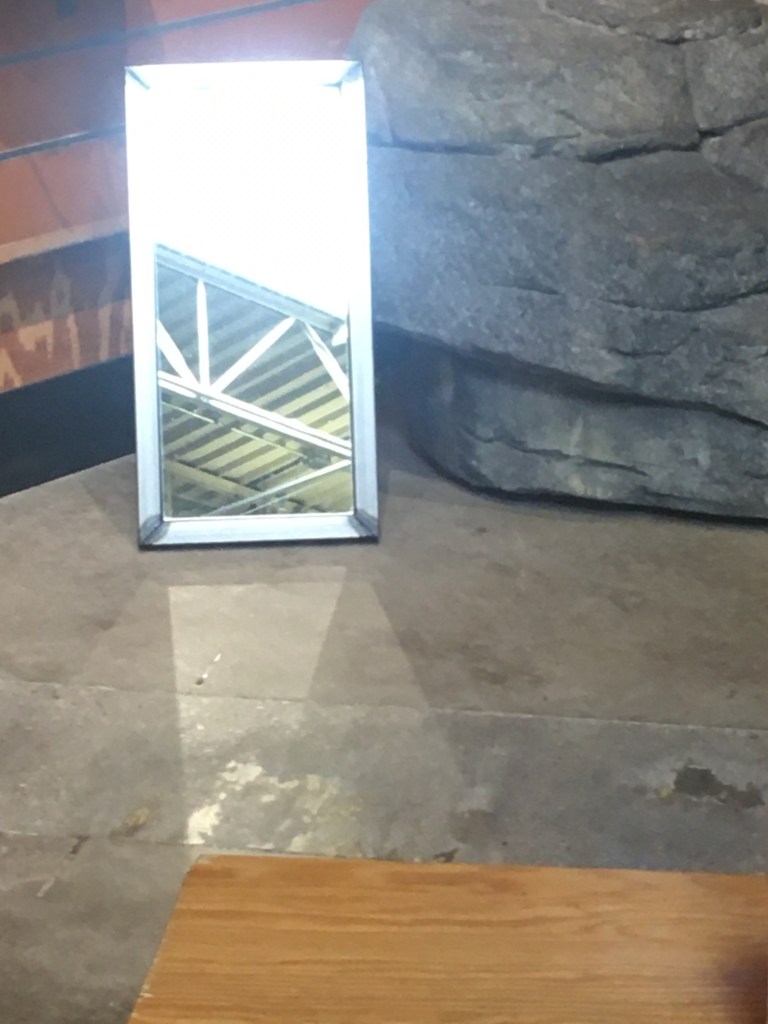
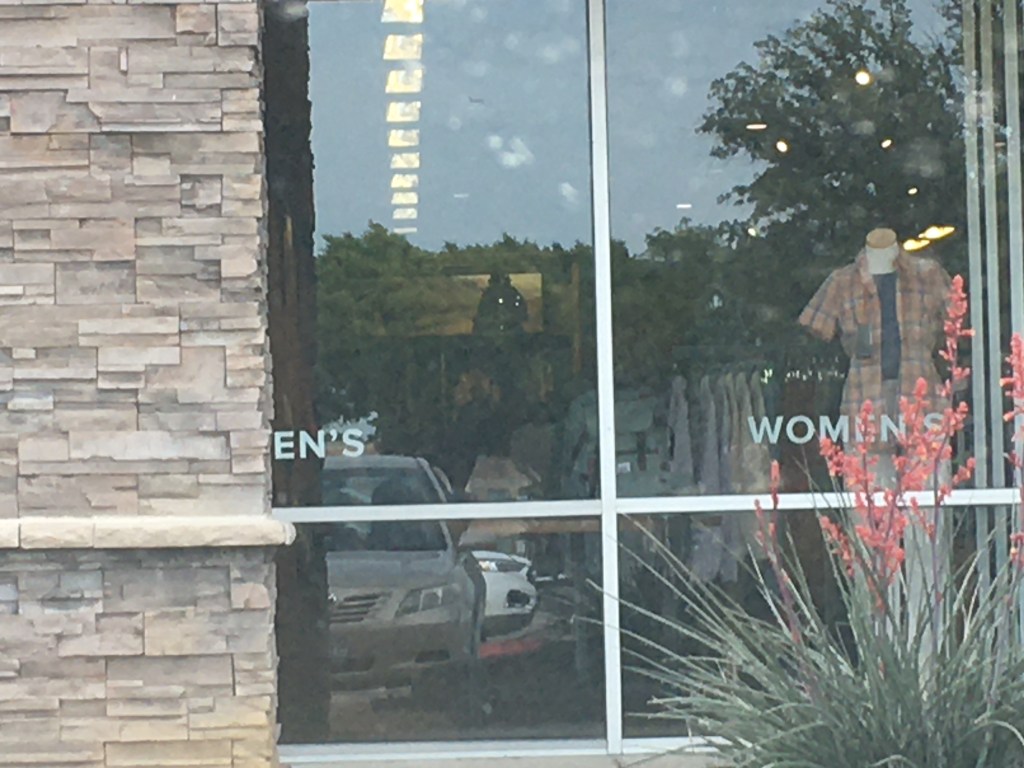
Three instances of misses, and the effort of making them. These are all part of the infinite roll. They aren’t edited; not even change of exposure. They remain direct phonecaptures.

I notice something — not a snake. has a shiny part. So, I make an exposure. This assures that the angle, first surface of the render is made.

walking closer, make another exposure.. it will need post to succeed. As it is, it fails.

Inside, a mirror and shop display. It must be something. Feels like it, because of the light patterns. As I adjust my position things arrange themselves. Three tries. I’m tempted to move the mirror; even the bench. I don’t. This isn’t a studio shot. If it were, I’d feather the lights. Make changes to the surface of the mirror. Dulling spray applied locally.

Three it didn’t work. If it had been on film no chance of getting that image — film that could have done it would be cinema film.

Outside; windows with words. Breaking the scene into one word pulled apart. It fails. The bush that would do the main “obscuring” isn’t dense enough. This could be retouched. Not certain this is worth the effort, given the format of the file — too low pixel density. Is it worth the return with the Phase Back?

We can see before we can walk. We can walk before we read. Everything leads us toward understanding.

If you think it might be something, make it into that something. If you can’t; if it just doesn’t work, make the effort anyway, otherwise, you won’t know, and if you don’t know, you don’t learn. The main learning isn’t about the how of things. It is the other part of things.