a stepping stone. Even those I taught for years do not know me.
Bergger — arches base / forte coating
“Nearly a year after restructuring, following a period of receivership, Forte will cease production at the end of this week. This is a real shame. Forte have been producing a full range of graded and variable graded papers, films and chemicals in the old Kodak works in Vac, Hungary since 1922.”
[ Here is a link with an announcement by the company stating their intent to permanently cease operations on January 26th, 2007…
[ The British Journal of Photography similarly reports that the factory is to be demolished to make way for housing (this is exactly what happened to Stirling in India five years ago).
“At the end of the day, it appears that the land is simply worth more than people will pay for the operation. And it would be unreasonable to expect potential investors to pay a lot for that operation because the plant is somewhat outdated and designed to produce a capacity much greater than they need. In other words, any profit is likely to be modest.”
Designed by the former chief chemical engineer for Guilleminot and Boespflug of France, fiber-based Bergger Prestige paper is available in double weight, premium weight (300g/m2), and, with Prestige Silver Supreme, an extra premium weight (320g/m2) base. Except for Silver Supreme, these silver-rich papers are offered in neutral and warm tone, graded and VC, and in standard sizes from 8×10″ to 20×24″, including 12×16″. Silver Supreme, produced only in 40x50cm and one (Normal) contrast grade, is coated on an exquisite 100 percent cotton rag base”
New Bergger Printfilm
or, old Ilford Ortho Plus?
for labwork as interpositive internegative- Bergger is bigger, but for 8×10 & smaller I continue to use O+. I liked the Efke Printfilm which is what Bergger reprised in this new offer. Price same, only size differs.
print Film Developed in Dektol:

5.5 minutes development Dektol 1:7

8 second main exposure
.43 D min
1.72 D max
1.29 DR
AND
Efke Print Film 8x10 developed in HC110 1:175. Agitation every 40 seconds. Development by inspection under deep red safe light.

Efke Print film is a high silver content, chlorobromide, orthochromatic emulsion coated on a clear 170 micron polyester base. It was designed as a replacement for Agfa's Gevatone N31P and is excellent for creating enlarged negatives (in a two-step process) for contact printing. Used by many alternative process photographers the world over as the industry standard.

It has an ISO rating of 25 and a speed of P400. Varying the concentration of the developer can control the ISO range. For example using Dektol or LPD in stock solution increases the contrast. Further dilution reduces the contrast. Experimenting with different dilutions and developing times will produce the desired results.

Efke Print film tones in all available toners: Cachet/MACO Sepia, Selenia and Azure Blue toners. With the blue toner, underexpose by 0.5-1.0 stops because blue toners add image density.

The Efke Print Film emulsion is relatively fast. Use a standard step wedge to determine exposure times. Put a black card under the film to avoid bounce back through the transparent substrate. Develop at least two minutes with all developers regardless of dilutions.

Use a red filter during processing. Be sure the distance from tray to safelight is at least 40 inches.

Replaces item #4916 - Maco Genius Print Film
(Efke Print film is the same product directly from the original manufacturer)
EFKE closed because the plant was old and wearing out, it was still using the old Schleussner Fotowerke GmbH coating line that DuPont had sold them, they licensed the emulsion rights from DuPont..
The EFKE 25 (tungsten speed) film went because an ingredient was no longer available (according to Mirko), the same happened wirth Agfa APX25 and Agfa stated sales were to low to warrant the R&D costs of reformulating the emulsion.
Of course Kodak’s emulsion formulae for early Tri-X etc did fall into German hands when they invaded Hungary and took over the Kodak Ltd (UK) coating plant there which was then put under Agfa’s control,. After the war it was nationalized and became Forte. The reverse happened in the US where the Government seized Agfa Ansco and gave Eastman Kodak access to all their Agfa trade secrets.
Making do with information available —
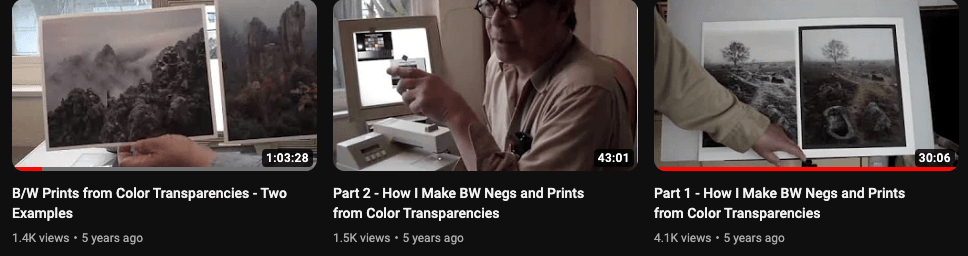
what does he say? Seems to be a friend of Bernice of LFF … also, he has enough viewers to be taken seriously.


You must be logged in to post a comment.