
the medium is massaged
walls and malls
trade tantrums
nationalist conservatism


small parts must contain more. on viewing.
avoiding the laws, just to pay the in-laws

riding the craft carousel keeps them failures; stuck in 1st grade art.
it’s craft time: everyone get your brushes and aprons

important because craft isn’t  the commitment

don’t explore, don’t stretch beyond craft. they let craft fill them.
keeping them from certain failure beyond.

An example:
you must envy him — he has expensive possessions gotten on the cheap or free; ‘cause he is so clever, or has such successful admiring friends
He posts on Loud forums in sales brochure english, like a clerk without a law degree. maybe a low degree

Fear of not knowing becomes not doing; no mistake worse than that.
Category: A Symbol Life
Overnight: Art &&
notes from the table:
MacLagan - Psychological Aesthetics
the rise and fall of the aesthetic
the split between inner and outer worlds and the impoverishment of psychological life
from iconograph to embodiment
from inarticulate to aesthetic form\
//rl inart to artic form
aesthetic, beauty and soul
art therapy and the therapy of art
towards a new psychological aesthetics
putting aesthetic and psychological qualities into words

Efland - Art and Cognition
the uneasy connection between art and psychology
artistic development in cognitive development theories
the cognitive revolution and conceptions of learning
cognitive flexibility theory and learning in the arts
obstacle to art learning and their assessment
imagination in cognition
the arts and cognition: a cognitive argument for the arts

Modell - Imagination and the Meaningful Brain
Uncertain steps toward a biology of meaning
metaphor, memory, and unconscious imagination
imagination's autonomy
the corporeal imagination
internality and the self
directing the imagination
the uniqueness of human feelings
feelings and value
imagining other minds
mirror neurons, gestures, and the origis of metaphor
experience and mind-body problem


Cognition through color
Eliot Porter Wars
We draw lines; we make selections, interpret them, and write history. Drawing upon sources means we sort thru the fog of distance and lost debates. What remains is a result of who wrote, why and, in response to what. This is the distance of time; remote memories remembered to meet this day’s question.
Too often, the audience wants a story to support their own; their hero should face the same problems with outcomes the reader understands and wants. We want to think we could have done that so we explain our choices with the hero’s story. Our path is the same as theirs…
We have spent all this time, a life getting something, only to find that we didn’t get anywhere.
Eliot Porter is a standard bearer of craft .. complex craft; something taking much effort, time, intense focus of energy. Something so difficult that few doubt its value. Something like Dye Transfer. Reality being what it is, those who have taken the longest to make a dye are those who consider it the hardest way to print. In some ways, they are correct. Making a dye transfer is time consuming, requiring attention to a process with many possible alterations. The key skill is energy.
So, where does this get. What is the history? Actually, what is the question?
Groupings of people view Eliot Porter’s work differently. The craft forum or the artforum come to differing conclusions about the importance of Mr. Porter’s work. They also hold different versions of Eliot Porter’s time at the Radiation Laboratory during World War II.
These versions, simply, are:
- he was a machinist (meaning he could make precise craft items in later years)
- he was a scheduler

he was a machinist

helped develop radar
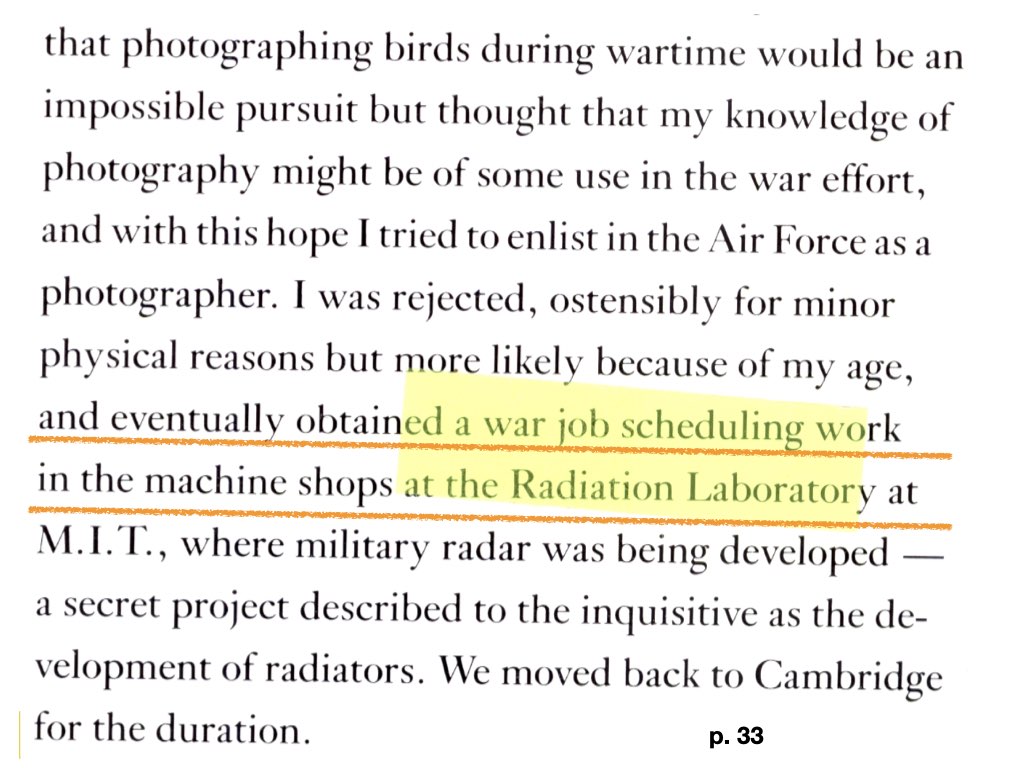

And in 1987, the fuller tale: he was a clerk who expedited (scheduled) work within the shops at the Radiation Laboratory. He did help develop radar, along with several thousand others at the Rad Lab.
We use other’s war stories to fight our wars — tell our story. But as we all know, growing up is up to us.
So, is it necessary to be a machinist, or a scheduling clerk, or a Doctor, chemist to make Dye Transfer prints?
NO. Some of my better students had to rely completely on the step by step worksheets for the ‘craft’; however, they had the harder skill: they could see what they wanted the picture to look like.
[ I am doing edits on a post on the ways of making dyes in the early years …]

You must be logged in to post a comment.