Happy 122424

children and childhood in the uncomfort zone beyond the comfort pick up your children and throw them at the world  — but do it with a camera 

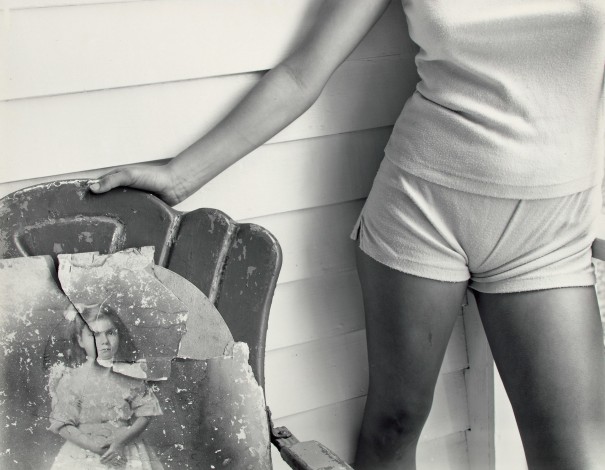
Women re-revising their childhood; their adolescence; their children as memory props, children as merch

it’s all become just another book on the shelf 


122424
Stages
Music. Lyrics. Dance. Occasion
providers of the occasion are those receiving greatest reward.
We are not randomly inlueninfluenced. There is a shuffle of the influence/exposure.
Making pictures are based, prompted by triggers & response repetition
this things produce that slide show in your psyche, visual paths,

Much 21st century photography is an extended caption.

Limited paths
cards in a deck there is a limited number but an infinite shuffle

A limited number but an unlimited shuffle

The triggering more fix the Henry Home Smith and the glass sculpture trigger the same interactions shapes on the Earth are of the Earth shapes within a culture are of the culture

/yellow pad overnight December 24 24

Photographs or just office supplies in the visual factory
Paper clips in the art factory

aura: divinity

stature of being beyond

calling something cinematic provides the heightened reverence of the commercial cathedral of movies
calling a movie something that is entertainment for children and board workers calling at cinema turns it into the chapel of culture of high culture the no brow eyebrow to the pinky
wearing a wife beater's becomes a member of the beefeaters
b theaters?

covid & artworlds

by destroying the gallery and growing the studio

as the Gallery closed the studio opened
as the art fair closed the bookstore opened
now the collector returns and the studio becomes a banana stand
American West

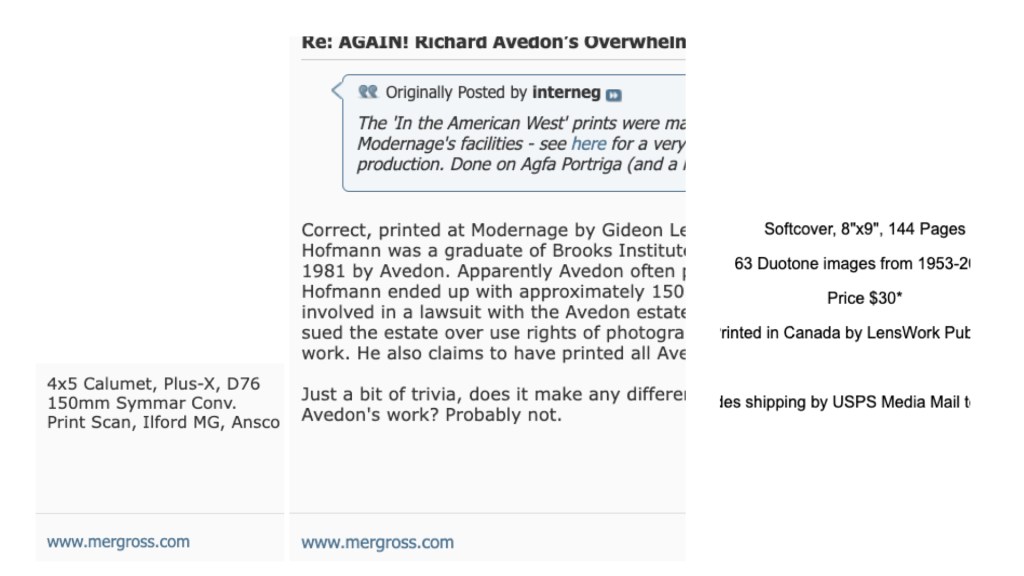
when trivia becomes the reason for the gathering. Weekenders, devoted members of the Snobby Hobby discuss work turning to the meaningless, quickly.

It may not mean anything, yet it fills the time of those without much effort.

Let’s get to the work… they can’t. What they can say about their work is how it was done. Even after decades, the conversation is at how-to.

speaking from rumor. once heard becomes the word.

The why-for of considering their campfire stories. Do they propose a mode of looking without understanding who, what it excludes. What, the how and the who they condone (or condemn) matters, perhaps, even more as the world of profession recedes into the past. There are amateurs and then again others. The nature of a field mixed without common ground is my interest.

Richard Avedon

Baldwin and Avedon. Nothing Personal [ https://www.newyorker.com/magazine/2017/11/13/richard-avedon-and-james-baldwins-joint-examination-of-american-identity ] was my preferred book. Baldwin’s writing was my prompt. Many years later, I see Avedon as a masterful photographer. A maker of cliches rather than a perpetuator of them. His story is that of many commercial photographers, although he was able to move from the commerce to collection with help from the Amon Carter.

 Philip Gefter’s book, “What Becomes a Legend Most,” argues for Avedon’s place as one of the 20th century’s most consequential photographers.

Laura Wilson documented the project’s gestation and birth in her book “Avedon at Work: In the American West.” Published in 2003. She learned the most necessary “craft” of photography — dealing with the world. The following video at the Amon Carter hits several key points in her method.


Modernage

Founded by Ralph Baum in the 1950′s, New York’s Modernage Photographics pioneered many of the most advanced darkroom techniques in the last half of the 20th Century. A master photographer and technician, Baum was to champion the notion that the art of the photographic print was equally important to the creation of the photographic negative that served as its inspiration. Name Drop: Josef Cernovics; Michael J. Masucci 


1985 Amon Carter shows Avedon In the American West

Deborah Bright (spe exposure) publishes Mother Nature and Marlboro Men… about landscape photography and western spaces

Click to access Bright-Marlboro_LAndscape.pdf

Judith Joy Ross: Threading

One thing becomes another. Or, nothing comes first. If you can’t do it where you are …. how far from seeing are you?

Ross, Fink, -> Connor[Halsman] -> Pennsylvania/location, distances, differences

my own travels among ideas isn’t a clean map, more like my deskside stack of colored notes made on impulse. Keeping myself involved with some unknown ghost. My linking line above is my reminder of what to do in this post.

I wrote about JJR. Just a notice of her show in Philadelphia. A show that I will not see, yet wanted to remember for some possible future [thing]. She does what I don’t, in an area that I knew.

People. Place. Time. What imaging things, including cameras, share. Beyond “light,” something all visual arts consider, are the subject becoming the object. Much of photography is about people, place; so much so that software programs default to these categories. How much does place mean to a people; how much do people mean to a place. Those interactions always trigger me. As I look at pictures made by other skilled artists, I’m hoping to find some part of that response.

It is common for photographers to think a long journey is needed. Much of the time this is a long journey for more take-out — they can’t find nourishment where they are. What makes them think the food is better at another roadway. Probably because they are midway on a journey; a journey using someone else’s map.

Judith Joy Ross hasn’t travelled a great distance. She lives within easy drive of her birthplace. She is fortunate to have been to MoMA. Szarkowski included her work in New Photography exhibition at MoMA(1985)

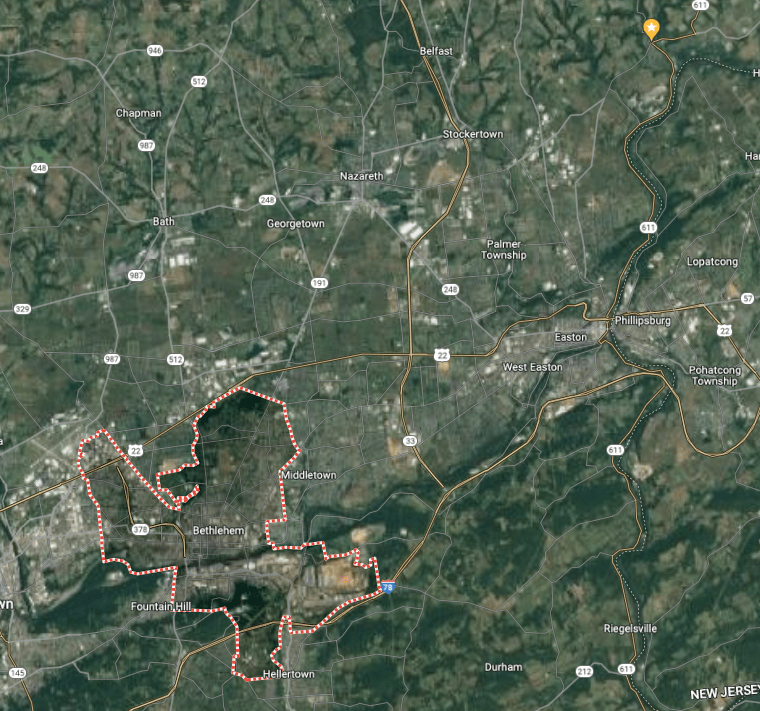
Judith Ross and Larry Fink live within a half-hours drive, in a section of Pennsylvania that changes little. Larry Fink is better known for his Street Work, stuff from a different place; a place that makes distinct time marks upon people. They dress for their part in the culture. Wall street during Vietnam looks the part.

Judith Joy Ross born 1946. Moore College of Art and Design 1964. Masters from Institute of Design 1970. 1984, shows Szarkowski portfolio. In 1985, takes part in New Photography exhibition at MoMA. 1993, the SFMOMA presents personal exhibition of hers.

Looking at the Ross portrait, by Lois Connor, on SFMOMA webpage took me to Connor’s info. Lois Conner received her BFA in photography from the Pratt Institute. At Yale University, where she received her MFA in 1981. She credits Phillippe Halsman, her The New School teacher.

Bringing me to this 1961 Halsman on the “Creation of Photographic Ideas,” six rules:

  • the rule of the direct approach
  • the rule of the unusual technique
  • the rule of the added unusual feature
  • the rule of the missing feature
  • the rule of compounded features
  • the rule of the literal or ideographic method
  • In his first rule, Halsman explains that being straightforward and plain creates a strong photograph.

I do take many trips; many that don’t get me to a rest place.

If you live broadly and are curious about it all, you understand what it is about us that draws us together. It’s that kind of picture that I really like to make.
—Larry Fink

It’s such an intense pleasure to photograph strangers because, in that moment, you can see them in such an intimate way. It’s kind of crazy, but I love some of those people even though I have never seen them again.
—Judith Joy Ross