The thin trail .. drip drop of darkroom chemicals . It will be available, sometimes… until it is no longer around. The depth of the market is thin and thinning. You may sing the hymn, but you aren’t its author. The supporting structures are not stable enough to sustain even the small subsistence suppliers of your hobby. Knowing that, is the difference between paths to keep, paths to explore.
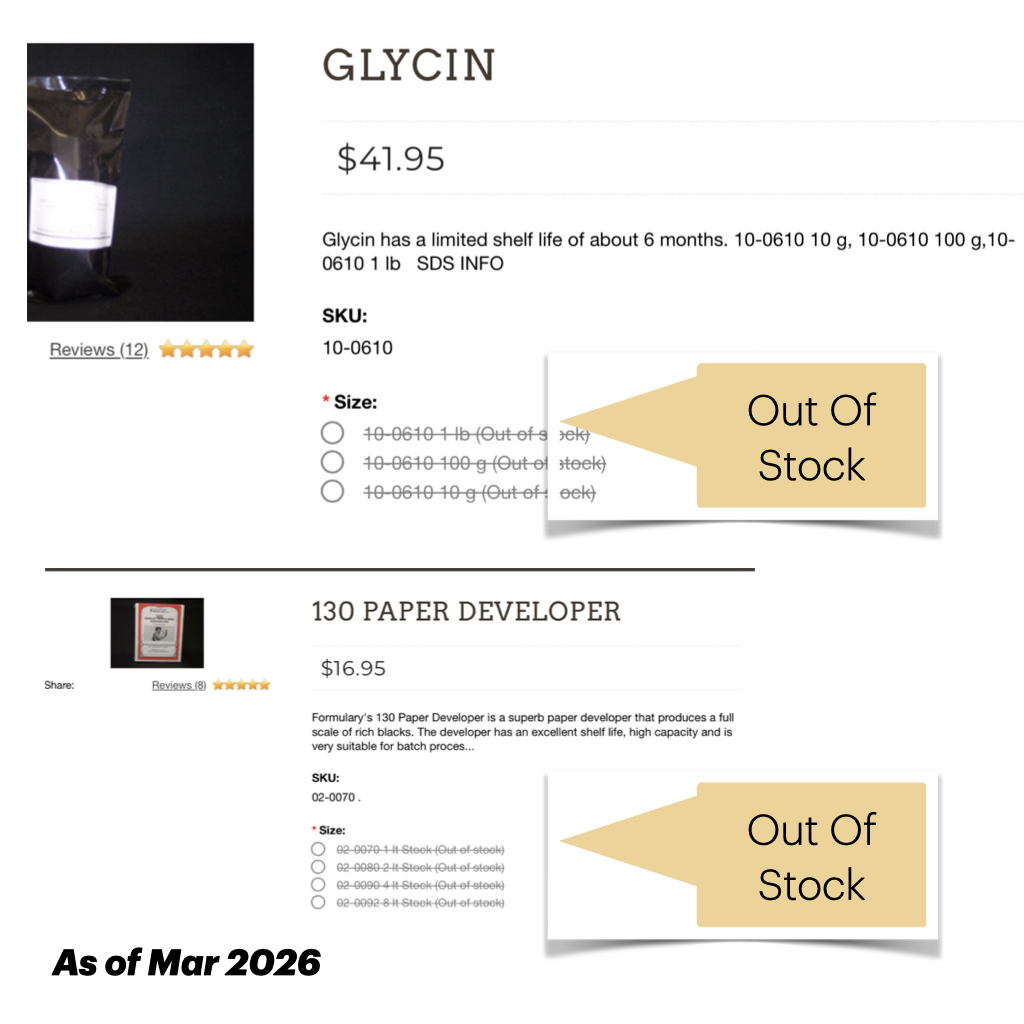
Glycin, when made in quantity, by industrial chemists using trained technicians is a long lived chemical. Light is its ager. When made in small batches, using cookery skills, it lasts months before losing its use as a magic-developer-bean.
the shorthand: it hasn’t been in stock for 2 months…
Asking for more isn’t enough … the oasis has limits of everything but sand… an acolytes prayer book can lead the neophyte into a desert. Memories don’t matter when it comes to nourishing a craft…
Better build using what is replaceable, repeatable… that’s just my opinion..
NB: “overnight notes” are briefs, responses, as are “minimum daily requirements,” “morning wood” — the differences are along the lines of possibly longer, should be considered, scoffs – toss outs — one liner possibles.
weather changes.. gain some self confidence by shopping for yourself. have more trust in facts you make. the facts of darkroom life change more often than the opinions, awareness of the ensconced forum-familiary.
“Intelligent individuals learn from every thing and every one; average people, from their experiences. The stupid already have all the answers.” ― Socrates
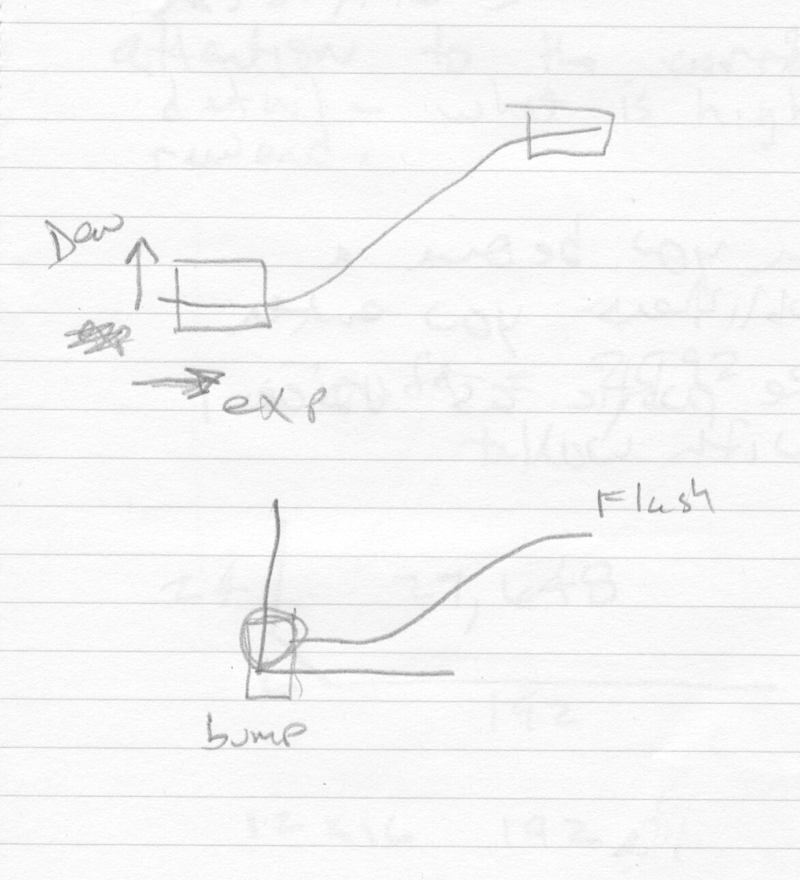
one of the optiquals… using light for means, by means other than image-formed pattern. Sometimes the H&D curve is more bendable than others. More details follow…
:the mysterious Q is called upon from the shadows as explanation for almost any effect. What does it explain? Do you use it… that other light; that other exposure summation. Think weeding … sometimes it makes tea.
Photography is a simplified form of drawing; let the thing draw itself.. the law, rather, the principle of exposure holds for most of the time. Like all real things the exposure rule varies. This variance provides confusion or useful options, even if you don’t know the names of the various effects. Reject before using is a rule of turds. Well known, widely influential resources gain stature by passing along their approach; their dictionary, complete with conceptual restrictions takes hold.
if not controlled, at least understood — edge of distinction —
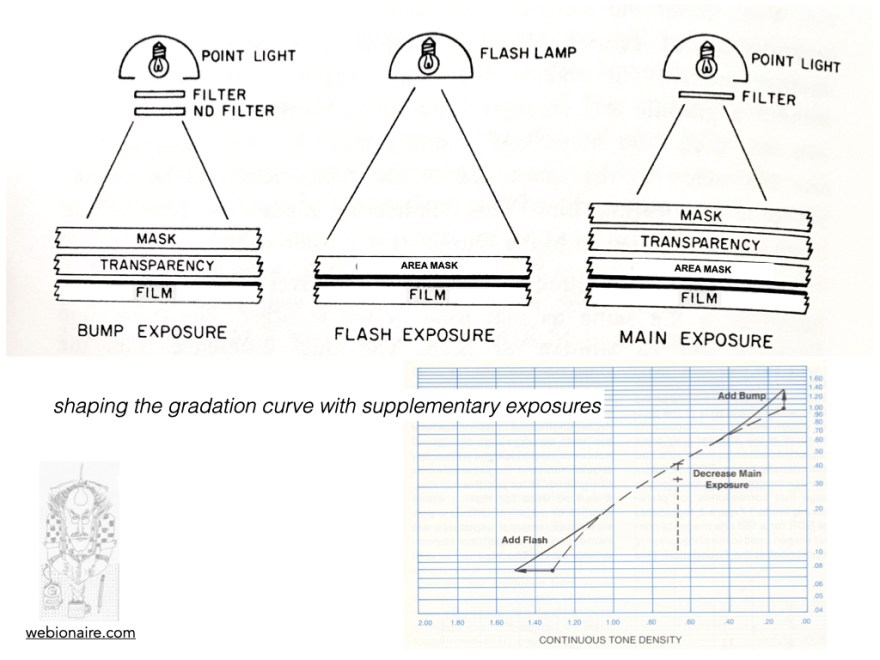
More importantly, how can you use exposure effects in control of the image. How to manage the different points of the curves. Tone-bending, by using effects discovered and refined by early photographers building out the field of light sensitive surfaces.
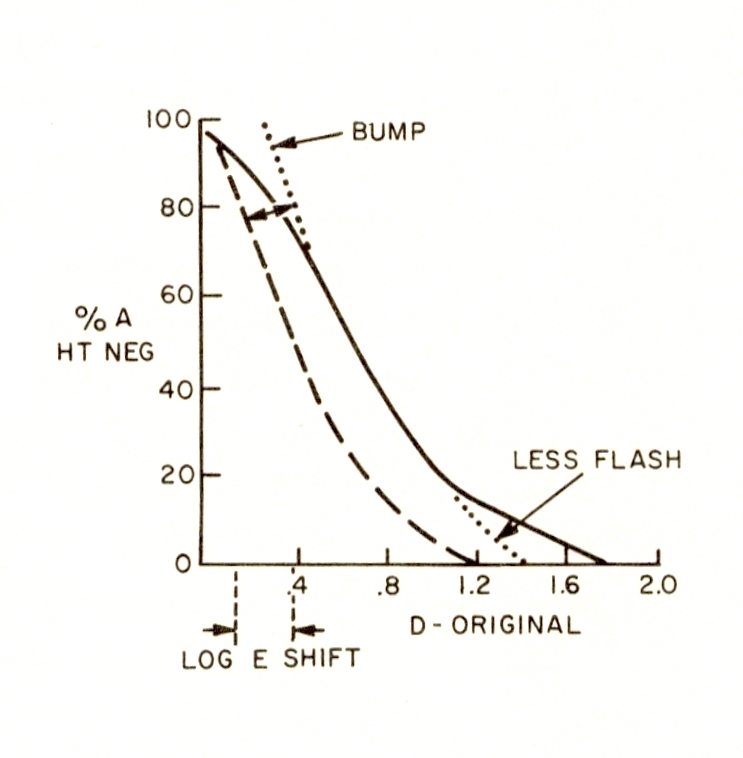
Flash and Burn characteristics of the enlarger. The slide-set introduces the concepts of controlling some of the HD shape by means of altering single contrast emulsions, such as films. All dye labs had full understanding of these principles. Some of the information carried over into the fixed grade BW darkrooms.
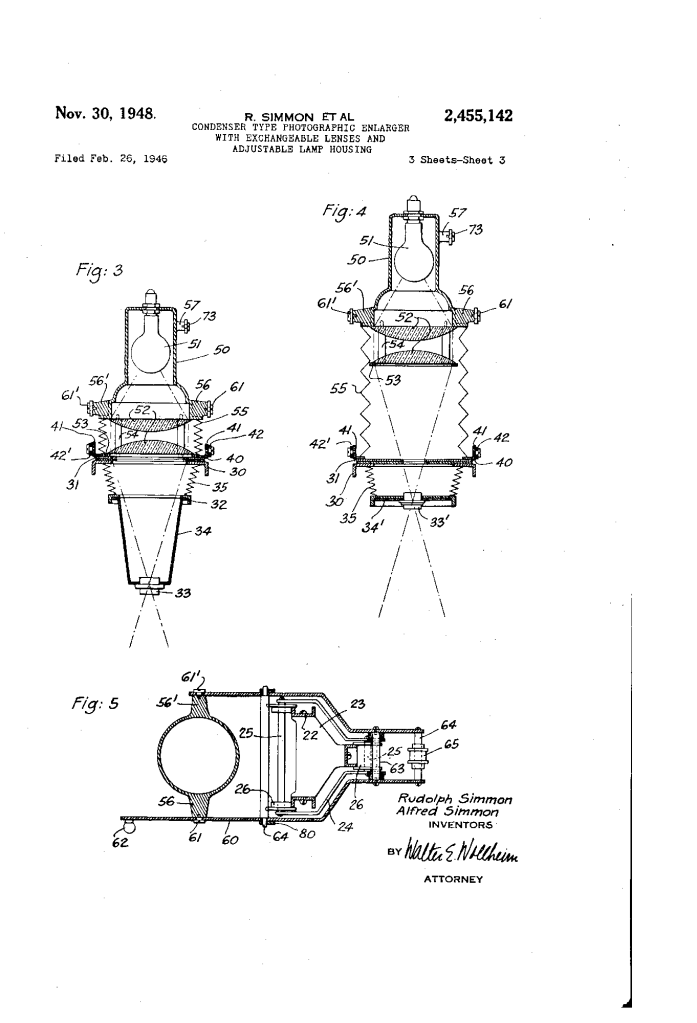
Early darkroom lamphead patent for a condenser enlarger. 1948
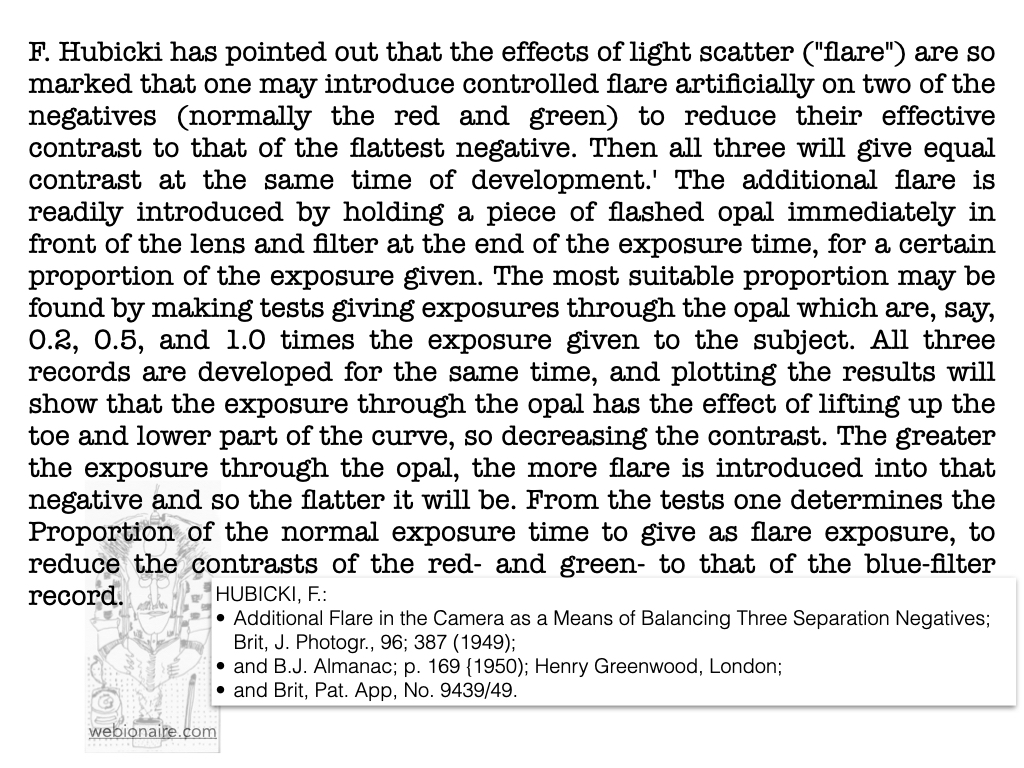
Flare up. The other words, effects found upon deeper reading into the the literature of exposing silver materials. If you were a designer of systems, or an extremely inventive user, these terms, often named after their initial discoverer, will take you along the full path of the characteristic curve; enough so, that you could begin to design exposure making and measuring systems.
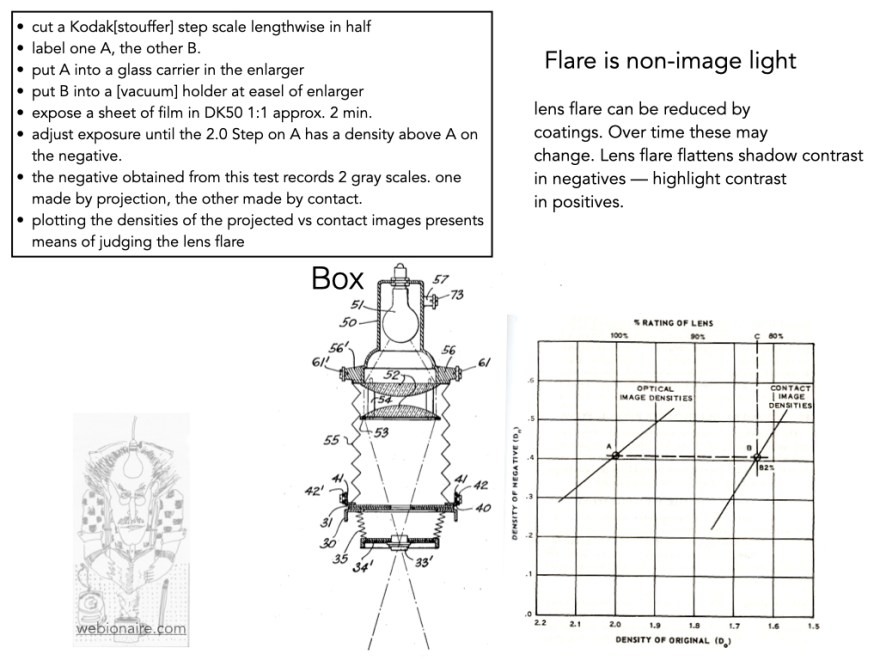
Flare: The worst element in photography. The projected light that escapes around the image and causes fog and distortion of the original image. — Bob Pace.
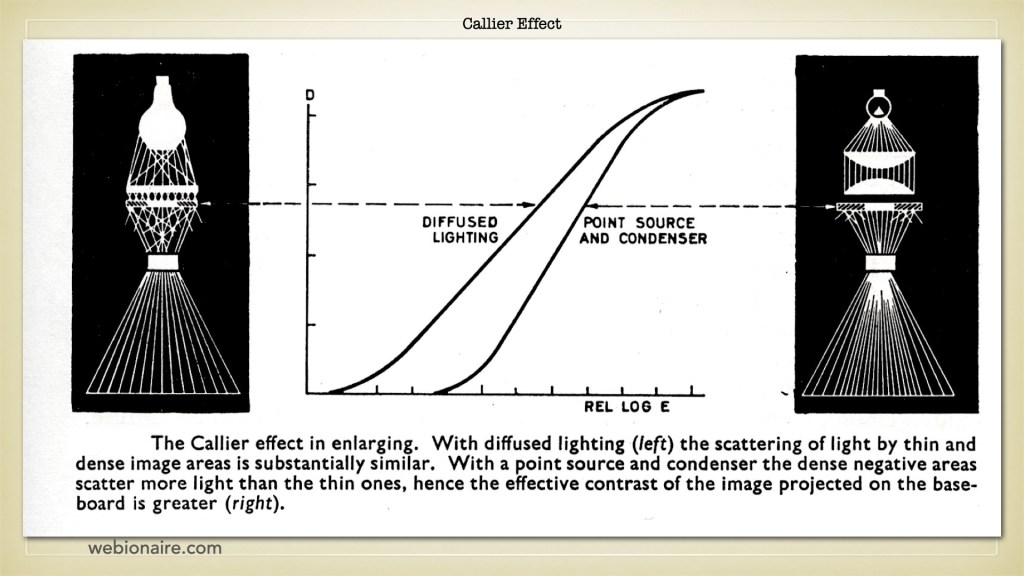
callier: Pierre Chavel and Serge Lowenthal, “Noise and coherence in optical image processing. I. The Callier effect and its influence on image contrast,” J. Opt. Soc. Am. 68, 559-568 (1978) AND C. Tuttle. 1926. “The relationship between diffuse and specular density.” J. Opt. Soc. Am. 12, 6 (1926), 559–565
villard: Jenkins, R. L., & Farnell, G. C. (1972). Internal-Image Formation and Related Photographic Effects. The Journal of Photographic Science, 20(5), 167–173. https://doi.org/10.1080/00223638.1972.11737692
sabattier: Woodlief, Thomas Jr. (1973). Carroll, Burt H. (ed.). SPSE Handbook of Photographic Science and Engineering. New York: John Wiley & Sons Inc. p. 428
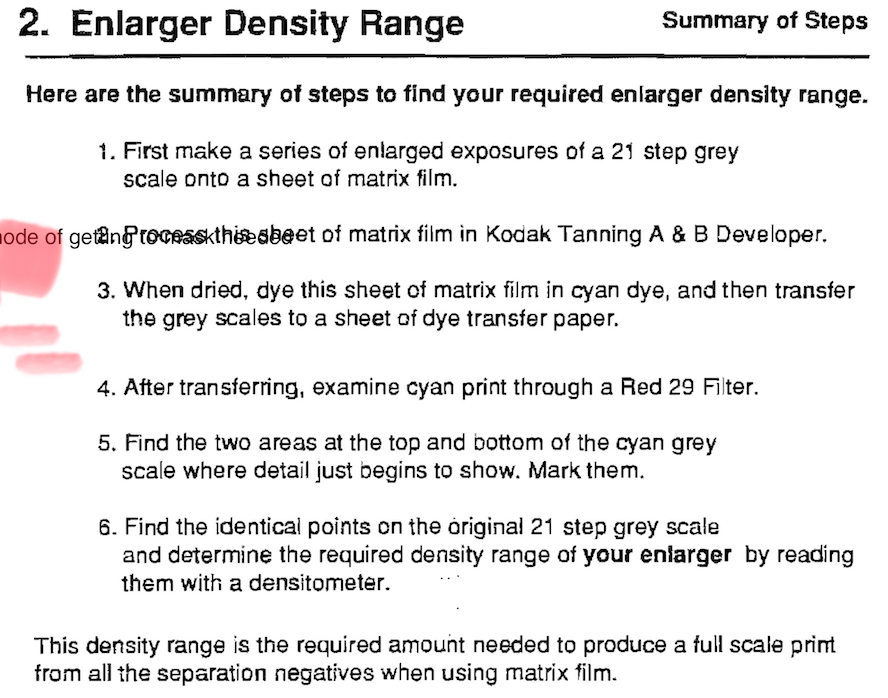
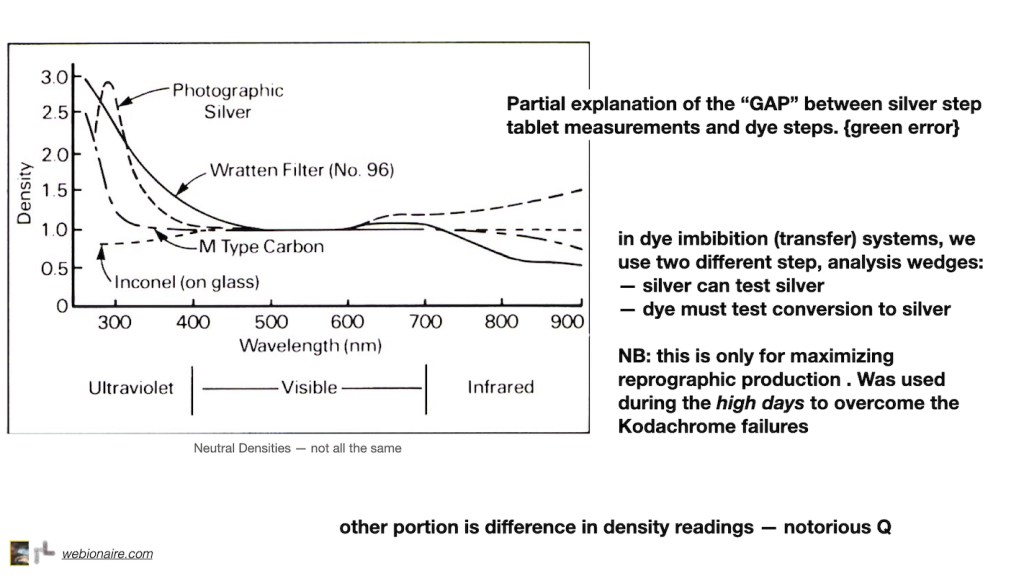
Using means knowing the difference between a silver contact and silver projected image in common darkroom printing. Dye-transfer is BW made complex by the number of steps; permutations seemingly beyond understanding. We learned the difference between silver testing and color, dye testing. The AIM, targets used had effects that could confuse ones initial learning — without luck, or well directed starting information it could seem a fools burden… pushing snowballs up a volcano.
Become alert to difference in response between instrument reading and material action: measurement may not predict fully, accurately. What you measure may not be what you get — refine, or re-define. Dyes aren’t silver; this meant that what we tested changed by stage of the process; was it silver, or dye stage material.


You must be logged in to post a comment.