Harman flameout

ashes to ashes .. how long does it take to make a color negative ?

if you know it’s possible, and you know something about the chemistry of emulsion making, how long will it take you to make a color negative ?
in the past, how long did it take; who was that first one .. and, The first one who duplicated someone else?

Can you say, Agfa, Ansco… or, has the limited life of the internet set your limits? hint: December to July..

Learning to make fil1m again … after you figured out what the word means you can begin learning what it took to know how to make film.

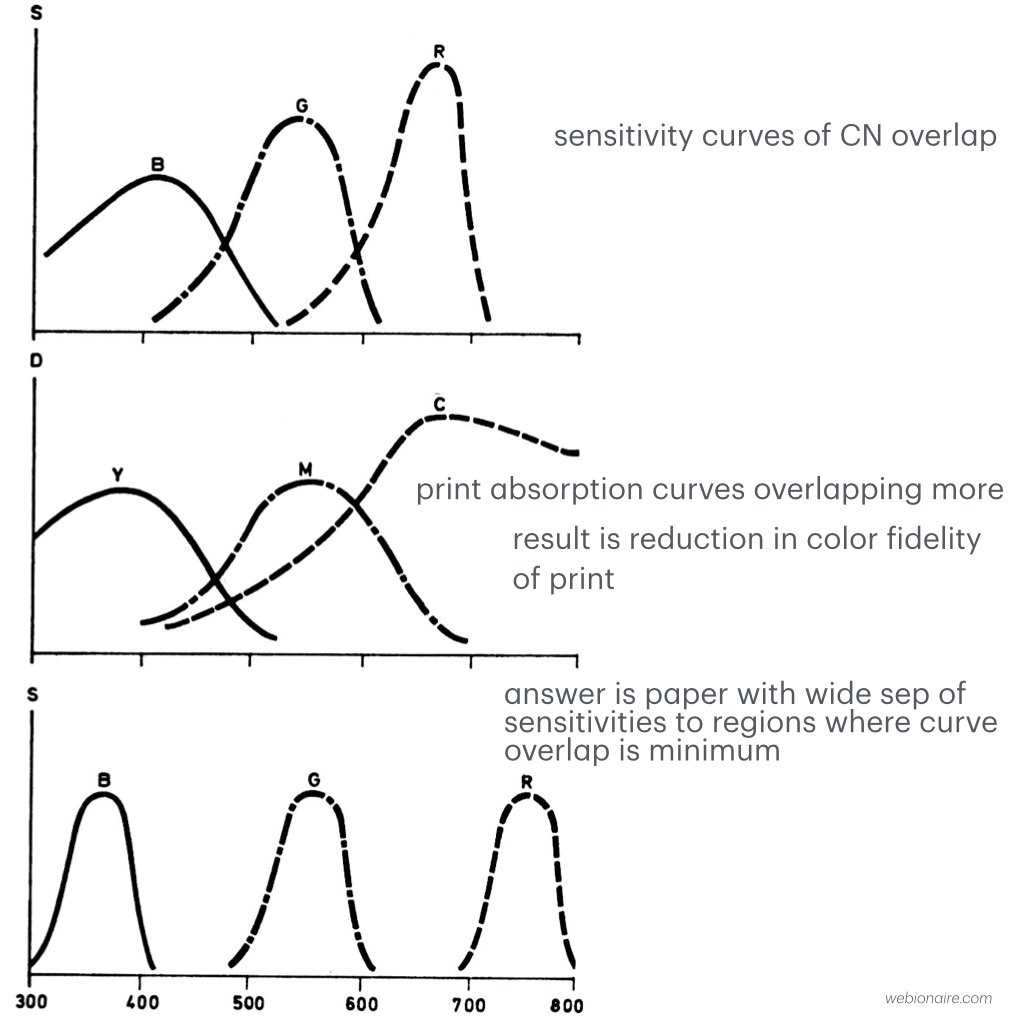
If you know it can be done . The patents for all of the early efforts have long since expired. Even if the patent didn’t cover everything in sequential detail , the more than 13,000 scientific publications available and in the public domain cover the full spectrum of industrial size chemical and emulsion coating through 1950. Certainly what Agfa ,Ansco ,Dupont, Kodak achieved by 1951 could be reverse engineered by a company with sufficient staff and management direction to achieve a 1945 color negative. Incorporated masking, that orange color, wasn’t always used, nor was it always orange — some masked CNs systems were yellow, yellow-green. They were matched to the print stage.

Agfa, Ansco, General Aniline and Film Corporation. Ansco was seized by the US government when WW2 began. Germany already had a color negative film, The United States seizure left Ansco with a plant that had been making that film but without the knowledge of the ingredients of the emulsion. They had trained personnel at the plant in Binghamton, but we didn’t have the deep engineering skill; not in that plant. However, Albert Marshall of Rumford chemical took over to fulfill the request of the United States government for a color film in support of the war effort. it was a success done rapidly: July 1942 the product was demonstrated to a gathering of over 200 . it was billed as the 20th century magic lantern show. –-Louis Walton Sipley, 1951.

early dye-coupler films:

  • — Kodachrome — too strong blue
  • — Ektachrome — weak deep reds, flesh became orange
  • — Ansco — blue-green

.. to make a color negative… knowing it’s possible. In the 40s it took less than a year for one motivated, funded firm. The others, such as Kodak, evolved to a final complete status of negative and paper in six years. Recall: Kodak Ektacolor negative was launched with Pan Matrix Film for the small professional wedding studio user.


Ignore the concepts of Kodak patentees from the 80s about their practice during Kodak’s failure years.. patents, along with multiple research platforms are rich with specifics for one engaged in building something equivalent to 1950 color.

Given that the color film portion is all we are discussing; no need to design for a non-existent darkroom second step: paper, since output is to a scanner. So it is, 2020+ .
Key to a Frontier; be done. This means a full mask set isn’t required. We can design as if making a transparency without requiring a ‘warm bulb’ correction of shadows. The output device is a “minilab” updated: Frontier and Noritsu.

Is Harman falling into the Wright brothers problem ? Or, just standard divided response. Lack of attention to goal; lack of goal?

— Film Version — Launch Date
Harman Phoenix 200 – December 1, 2023
Harman Phoenix 200 II– July 16, 2025
making product revisions takes~19 months
Summary of Changes

— sloppy joe answers —

AI doesn’t know where/what to search, so it does a — lets ask the crowd — where does the biggest sound come from — there’s the answer. Learning in the age of “make a deal” know-how.

Ask AI3: About mid-century color negative-positive systems. Reason was considering why Harman was taking as much time as they were on rebuilding colour negative product.

First answer: “Chromogenic color negative film revolutionized photography by making color images more accessible to the general public. This innovation primarily began with Kodak’s introduction of Kodacolor in 1942”

Kodacolor1942
Eastman Color1950
Kodacolor-X1963
Kodacolor II1972
AIs initial reading of history — Kodak dominant training, me thinks. Oh, those tape jockies of Silicon Valley.

Second response, after suggesting they had missed Agfa. I didn’t mention any other CN films.

YearEvent
1936Agfa launches Agfacolor Neu, the first commercially successful color film.
1942Kodak introduces Kodacolor, the first consumer-oriented chromogenic color negative film
1946Kodak releases Ektachrome, a reversal film that also utilizes chromogenic processes.
2009Kodak ceases production of Kodachrome, marking the end of an era for this iconic fi
revised AI response

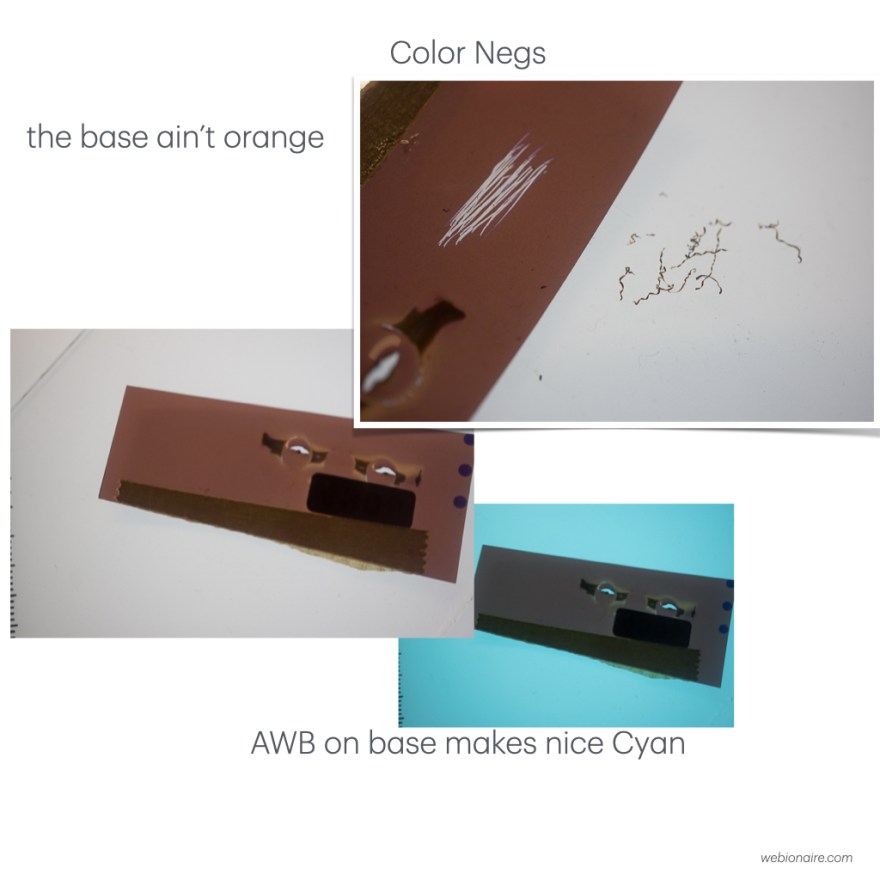
the orange scratches off… not from the base, but from the emulsion.

scratching the base will not remove the orange color.

white balance the film gets a great cyan.

estimate about 50R (50m + 50y)

Notes:

  • orange mask isn’t in the base.
  • orange wasn’t the only color mask; yellow as well as green masking systems have been deployed. Some Color negatives into the 60s would display this.
  • Kodak wasn’t first with color negatives
  • supplemental [silver] masking has also used colored masks. dye-coupling, along with my use of imbibition matrix film, as mask ,1960 –]
  • At, Lutz. “The Photochemical Industry: Historical Essays in Business Strategy and Internationalization.” Pd. D Dissertation. Massachusetts Institute of Technology ,
  • “History of Bayer: 1945-1951.” History of Bayer: 1945-1951 | Bayer Global, www.bayer.com/en/history/1945-1951. Accessed 9 June 2023
  • Wentzel, Fritz. Memoirs of a Photochemist. Wentzel, Fritz. Memoirs of a Photochemist, 1960.

10,26’26

AI in defense of Sandhill’s dictionary

‘takeover’ — AI corrected my referencing the Assumption of Control as a “takeover” — guess Sandhill considers that profanity. Reminder, in 1951, historian writing about the war called it a take over. Perhaps that space is how AIs are taught is correct form.

  1. film, to AI4 is short for film-maker, cinema, movies ↩︎
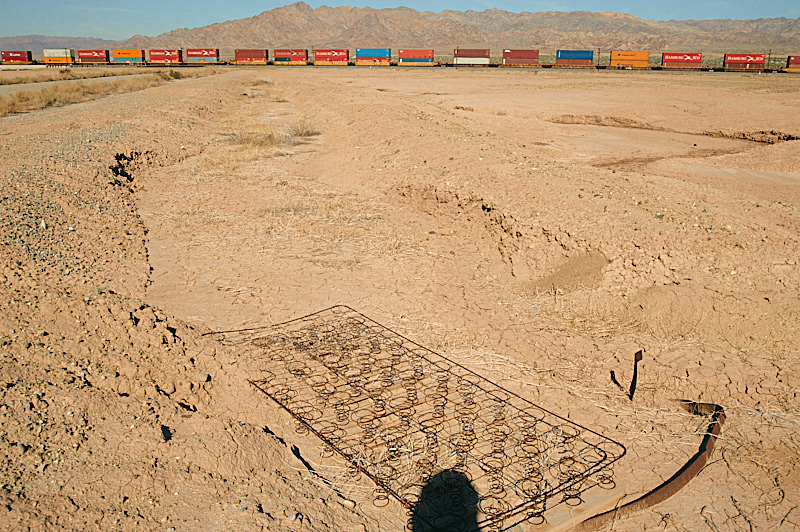
check batt day

One must from time to time attempt things that are beyond one’s capacity.”-– Pierre-Auguste Renoir 

the first of the month; time to check electronics in the studio and the lab.

in or out? when you put the camera, meter, whatsit away, what is your cleanup and storage protocol? Perhaps you haven’t considered the question. When you’re done, do you leave stuff in the bag or on a shelf.

In my commercial world, the process of ending one thing was prep for the next.

In the age of the professional studio every assignment had a set up and a teardown time. cameras along with all equipment were cleaned at shoots end; repairs needed were noted.. before a shoot the equipment was checked; this included batteries for those portable electric items. items which were stored a long time while being assumed always at the ready were checked monthly; batteries being swapped out, freshly charged ones being put into service. For Equipment cage operations someone in charge of the cage followed the procedure with every equipment check-in and check-out. Schools of journalism instilled the discipline in their students which likely spread throughout that industry.

I keep batteries out of infrequently used darkroom equipment, but do keep batteries in the actively used cameras. Lightmeters are not stored more than a week with batteries enclosed. When the meter is being stored, it is stored with its battery put into a bag-box with a tag marked with dates. If the meter is going out pn location it is tested with vtvm. Field kits always include tested spares.

Equipment Poor:

It is also a time to prune, to dead-head equipment. If it isn’t being used, since I’m not a collector, and it is a dust collector, I consider passing it along. 

Emergency in the gun-belt states. Most of the US experiences competitive power failures. So the Free Markup has devised the house-batt. I keep batteries in flashlights; along side these are 8-hour candles. And so it goes.

There remains the ground of difference between being awake and being aware

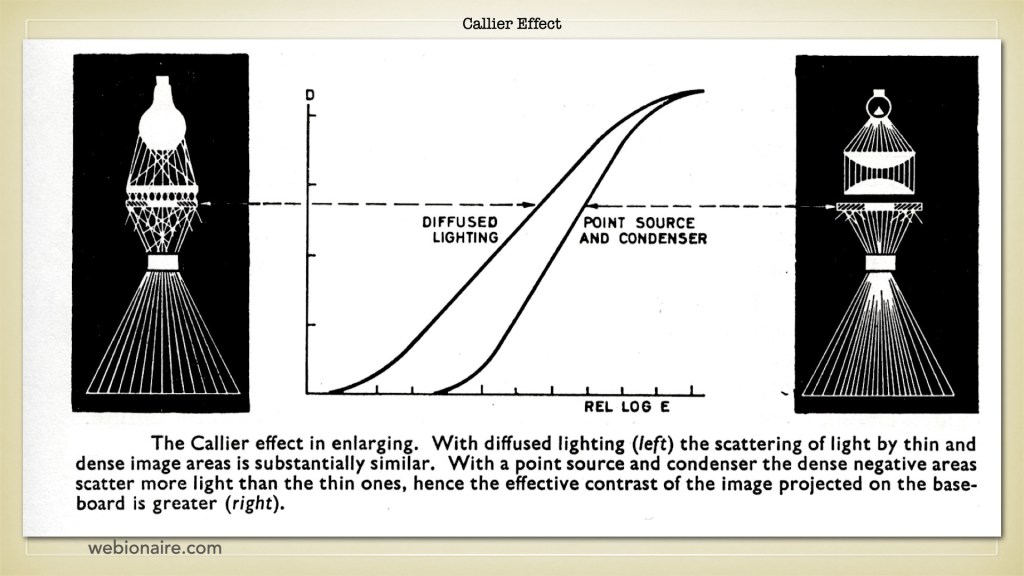
callier confusion

“Intelligent individuals learn from every thing and every one; average people, from their experiences. The stupid already have all the answers.”  ― Socrates

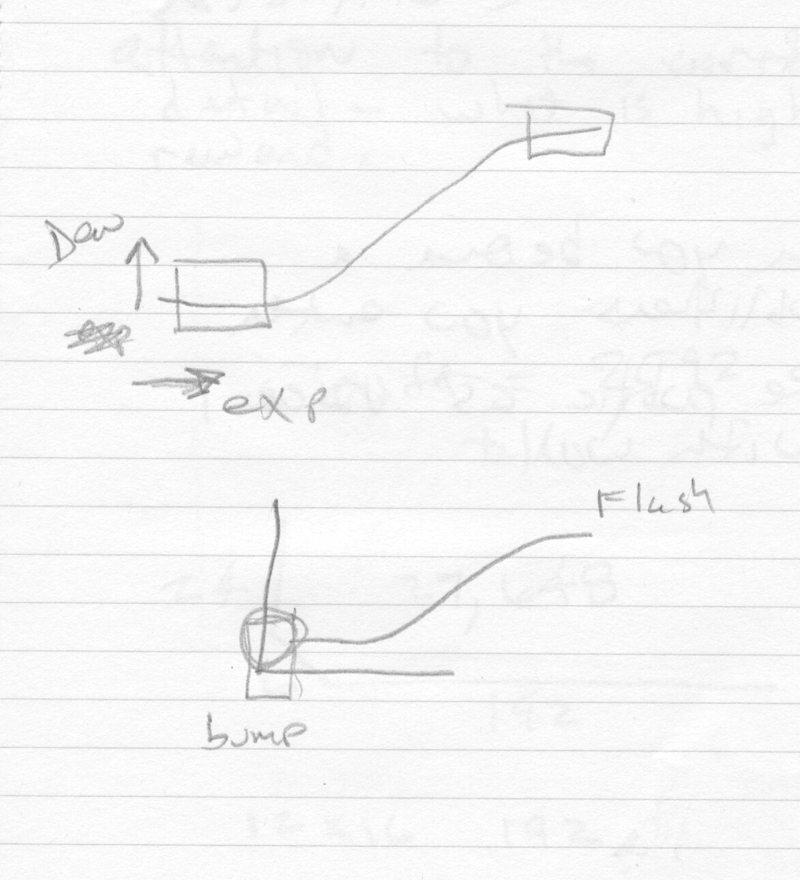
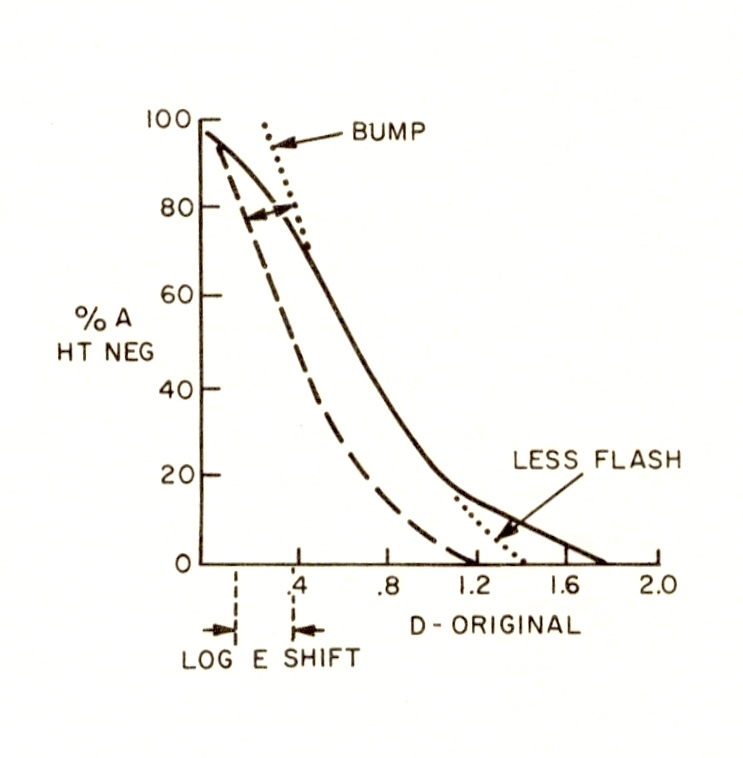
one of the optiquals… using light for means, by means other than image-formed pattern. Sometimes the H&D curve is more bendable than others. More details follow…

:the mysterious Q is called upon from the shadows as explanation for almost any effect. What does it explain? Do you use it… that other light; that other exposure summation. Think weeding … sometimes it makes tea.

Photography is a simplified form of drawing; let the thing draw itself.. the law, rather, the principle of exposure holds for most of the time. Like all real things the exposure rule varies. This variance provides confusion or useful options, even if you don’t know the names of the various effects. Reject before using is a rule of turds. Well known, widely influential resources gain stature by passing along their approach; their dictionary, complete with conceptual restrictions takes hold.

if not controlled, at least understood — edge of distinction —

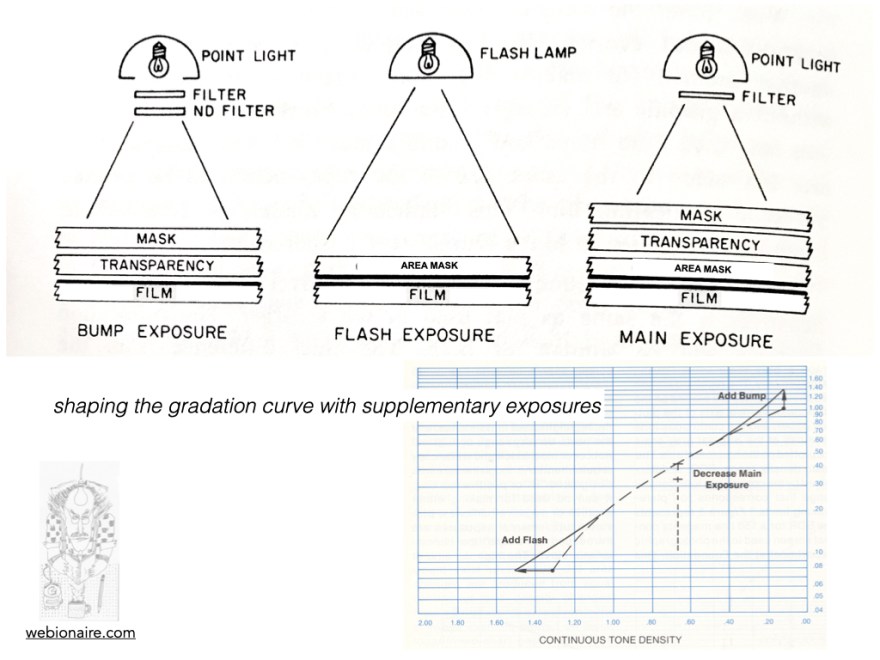
More importantly, how can you use exposure effects in control of the image. How to manage the different points of the curves. Tone-bending, by using effects discovered and refined by early photographers building out the field of light sensitive surfaces.

Flash and Burn characteristics of the enlarger. The slide-set introduces the concepts of controlling some of the HD shape by means of altering single contrast emulsions, such as films. All dye labs had full understanding of these principles. Some of the information carried over into the fixed grade BW darkrooms.

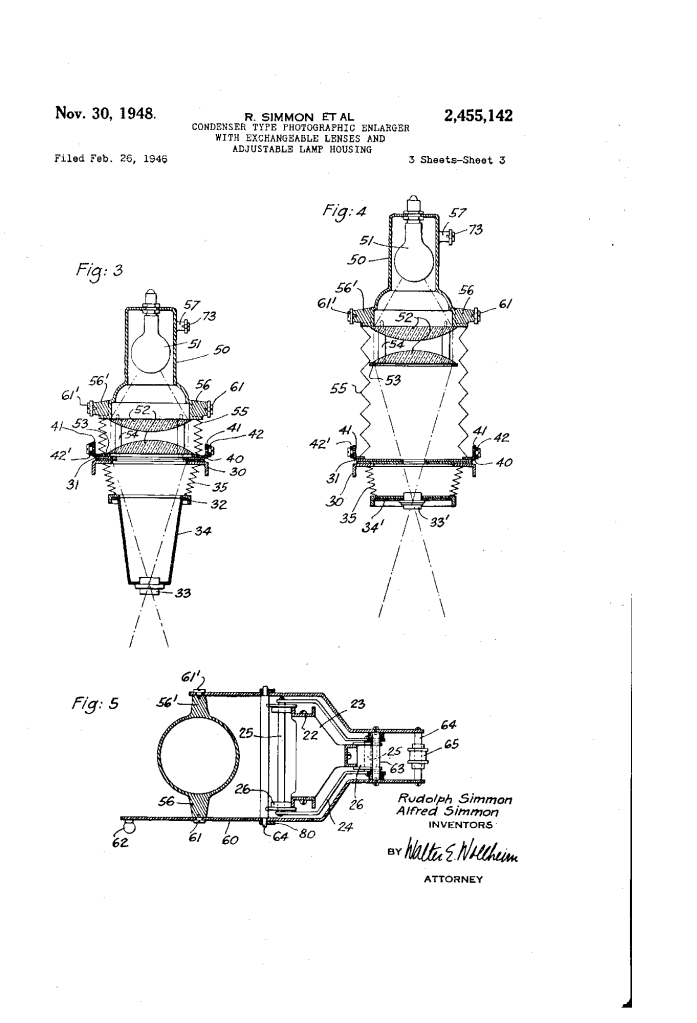
patent simmon
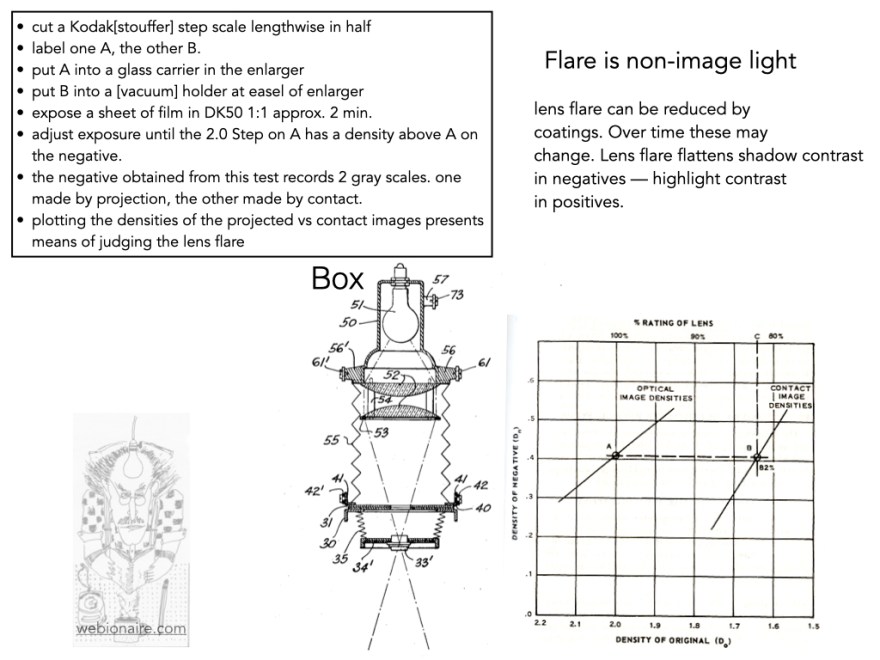
Early darkroom lamphead patent for a condenser enlarger. 1948

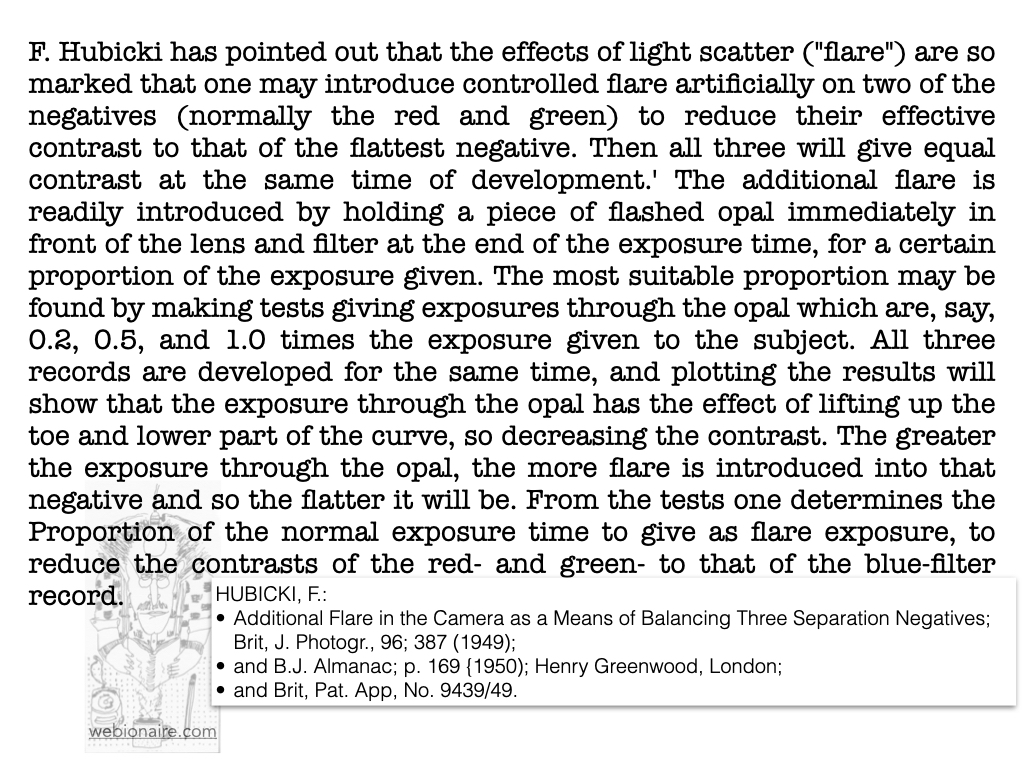
Flare up. The other words, effects found upon deeper reading into the the literature of exposing silver materials. If you were a designer of systems, or an extremely inventive user, these terms, often named after their initial discoverer, will take you along the full path of the characteristic curve; enough so, that you could begin to design exposure making and measuring systems.

Flare: The worst element in photography. The projected light that escapes around the image and causes fog and distortion of the original image. — Bob Pace.

  • MEES. c. E.: The Theory of the Photographic Process, p. 849; Macmillan. New York (1945):
  • and GOETZ, A., BROWN, F. W.: Light Scattering and the Graininess of Photographic Emulsions, J. Soc. Mot. Pict. Engrs., 39; 375 (1942).
  • SMETHURST, P. C.: Scattered Light, Image Gradation, and Surface Treated Lenses; Brit. J. Photogr., 88; 427, 434 (1941).
  • G. Kornfeld, “The Herschel Effect and the Structure and Stability of the Photographic Latent Image*,” J. Opt. Soc. Am. 39, 490-494 (1949).
  • Zachoval, L. A contribution to the theory of some photographic effects. Czech J Phys 8, 214–217 (1958). https://doi.org/10.1007/BF01603694

uses.. filed borders to introduce gate-flare : edge of framing gate induced flare .

Additional References

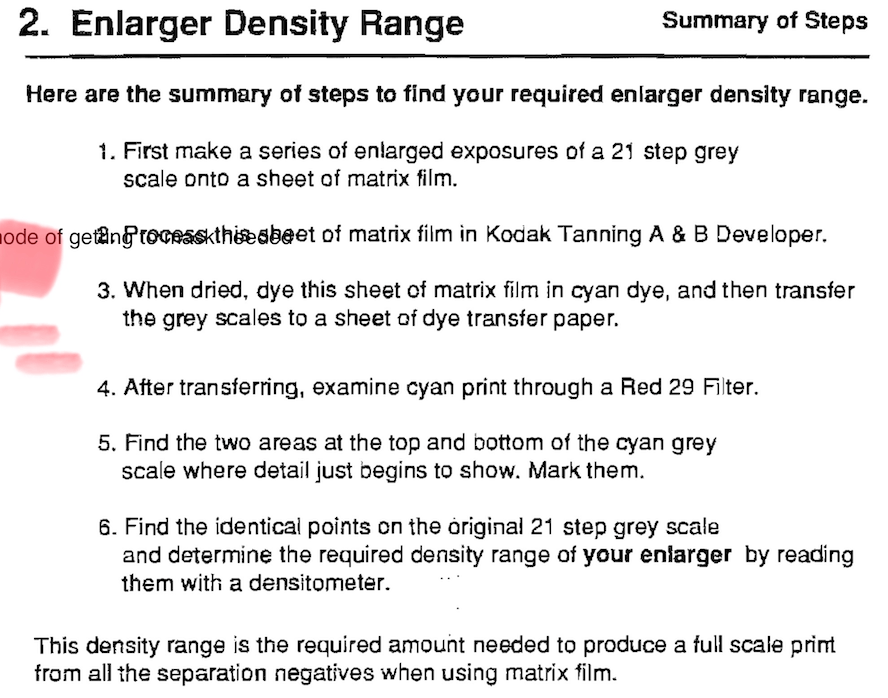
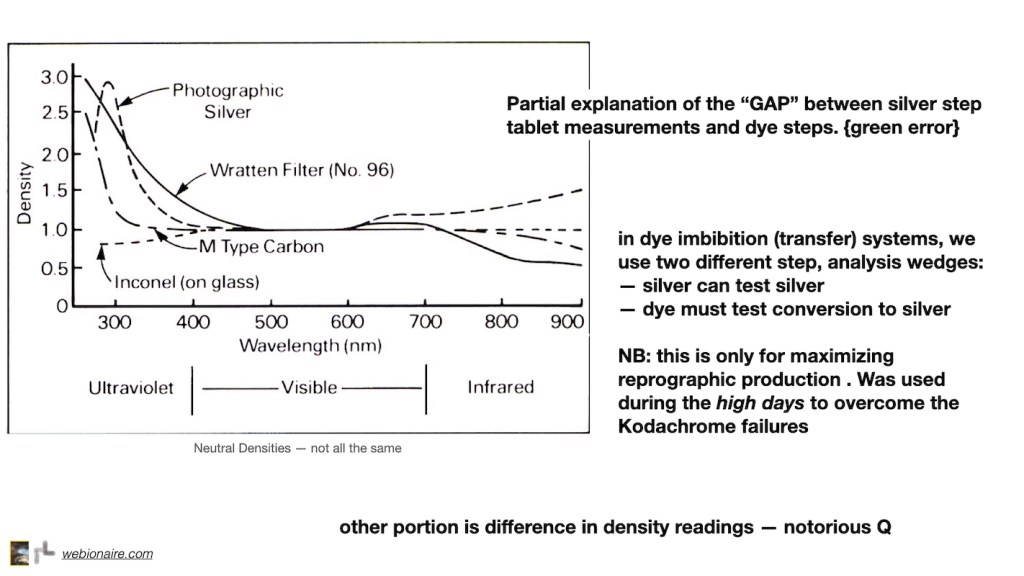
Using means knowing the difference between a silver contact and silver projected image in common darkroom printing. Dye-transfer is BW made complex by the number of steps; permutations seemingly beyond understanding. We learned the difference between silver testing and color, dye testing. The AIM, targets used had effects that could confuse ones initial learning — without luck, or well directed starting information it could seem a fools burden… pushing snowballs up a volcano.

Become alert to difference in response between instrument reading and material action: measurement may not predict fully, accurately. What you measure may not be what you get — refine, or re-define. Dyes aren’t silver; this meant that what we tested changed by stage of the process; was it silver, or dye stage material.

Applications and Implications —

exposing adox lupex : https://www.adox.de/Technical_Informations/TA_LUPEX(EN).pdf

reading adox contrast and understanding: http://www.adox.de/Technical_Informations/MCC_Datasheet.pdf

AN: splasboard processes

zeiss paper: https://lenspire.zeiss.com/photo/app/uploads/2018/12/en_About-the-reduction-of-reflections-of-camera-lenses.pdf