dye transfer, photrio mode

asking googleAI to cite sources of expert information about dye transfer, limiting ‘errself to photrio, demonstrated the decay loop of knowledge. [ the know-how gap extinction ]

are you the party to whom I am speaking ?

Which AI are you using? Gemini is the model; AI Mode (search) is a feature of search relying upon Gemini. Search uses the existing web. By the way, this answer changed since I asked it a week ago. Hmm, go figure– I don’t use Gemini as an app, rather as part of the “browser. ” That stated, the following responses are from google browser based AI interactions. Internally, local to my machines, my name for those notes taken are marked “googAI, or gAI”

I wondered what photrio contributed to darkroom knowledge about processes I knew deeply; so much so that I worked with several people over 15 years of this decade to build out their personal dye transfer practice [OIC].

Q1: according to photrio, who are the top 3 dye transfer experts

R1– According to Photrio community discussions, Ctein, Jim Browning, and Charles Cramer are recognized as top experts in the complex, analog dye transfer printing process . [ not what I expected, but I see how my phrasing led to this answer ]

Over the prior weeks [july ’26], I’ve been questioning various AI engines about loss of knowledge, changes in information transfer modes, differences in group gatherings, reliance of unknown sources of knowledge, etc. — These topics, along with how AI engines are managed. In short, self awareness vs. conversational tactics.

R2 — Estimating the loss of information regarding dye transfer printing since the dawn of the internet era is a fascinating exercise in digital preservation, material scarcity, and the sociology of tacit knowledge. An estimation of this information loss can be structured across three key categories: Tacit Knowledge, Material/Formulation Data, and Digital Bit Rot.

Summary of Estimated Information Status — provided by gAI

Information CategoryEstimated Loss StatusWhere it Went / Why it Was LostRemaining Repositories
Industrial Formulas🛑 ~90% LostCorporate data destruction; obsolete chemical supply chains.Patent archives; deep corporate vaults.
Tacit “Lab” Skills⚠️ ~75% LostPassing of first-generation masters; closure of commercial labs.Photrio Forums, surviving master printers.
Basic Processing Workflows~10% LostWell-preserved because standard Kodak instruction manuals were widely digitized.Jim Browning’s PDF guides, Library of Congress.

R2– cont.. Hobbyist forums like Photrio excel at archiving information, but they are fundamentally incapable of sustaining a complex industrial methodology like dye transfer printing.
While forums can preserve instructions, they cannot preserve the underlying materials, infrastructure, or economic scale required to keep the process alive.

Next, I raised the notion that dye transfer began as a process without commercial support… since AI is consistently as polite as an undergraduate summer intern, gAI noted my “insight” supplying followup responses and prompts to me about how I would like to proceed…

Salesmanship perfected… well groomed my son, well groomed.

does knowledge exist without awareness.. does awareness exist without sensation..
without a physical, what exists/ persists.

add anotheristic: https://turntrout.com/why-i-left-google-deepmind
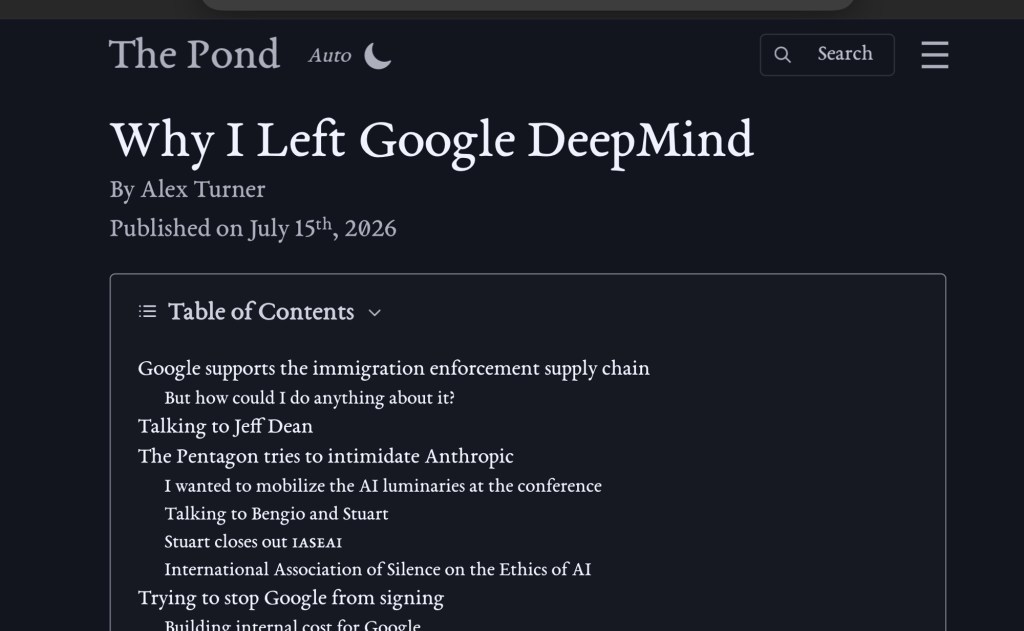
ai: Poisoning

something simple — but about a thing not widely known — experience required. An inquiry into what is known, what was known. Who is feeding the dragons. Over the past five weeks, I have been asking questions of several ( actually 6) chatbot, inference engine products questions about systems of knowledge and processes that I have years of direct experience using. These are questions that could be answered by anyone familiar with the craft. Some of them would require knowledge deeper than brochures; it is contained in patents, along with peer-reviewed publications. Only occasionally have I asked it for information contained in documents found in isolated postings of the internet –these, understandably, haven’t been located in their responses. Not enough link count to warrant a training run.

When someone exclaims: been there; done that — in declaration of a skill they never acquired thereby defending a response set fixed forever among the long-term photo-forums, those remarks make their way into the forever-response of chatBOBs.

Asking AI: In the Kodak Dye Transfer process, what does “poisoning the mat” mean?

In the Kodak Dye Transfer process, the term "poisoning the mat" (matrix) is a colloquial expression for intentionally adding specific chemical agents to the acetic acid rinse bath to control the amount of dye that transfers to the final paper. This manipulation allows the printer to fine-tune the color balance and density of the photographic print. 
Key details about the practice: 
* Mat (Matrix): This is a sheet of gelatin film with a relief image that absorbs a specific color of dye (cyan, magenta, or yellow).
* Poisoning Chemicals: The "poisons" are typically simple chemicals that alter the affinity of the gelatin for the dye.
* Sodium Acetate: Used to decrease the overall density of the dye transfer.
* Sodium Hexametaphosphate (Calgon): A "highlight reducer" used to remove excess dye specifically from the light (highlight) areas of the image.
* Acid: Adding more acid (acetic acid) to the rinse can increase the density of the transfer.
* Purpose: This step is a powerful control mechanism unique to the dye transfer process, allowing experienced printers to correct color casts, adjust contrast, and achieve a desired aesthetic result that would be difficult or impossible with automated processes.
* Reversibility: The term "poisoning" is informal because the effect is temporary; the chemicals do not permanently damage the matrix and are washed off after the transfer session. The matrix can be reused many times. 

lists 6 sites — the usual suspects.

Until AI is able to distinguish source accuracy, it will produce ill-formed answers perpetuating, even amplifying errors.

The next time some net-hero ponces about dye-transfer, perhaps in tones of imbibition awareness, ask em how to reverse the poison…

REMINDER: it isn’t dye transfer until the mat hits the blank.

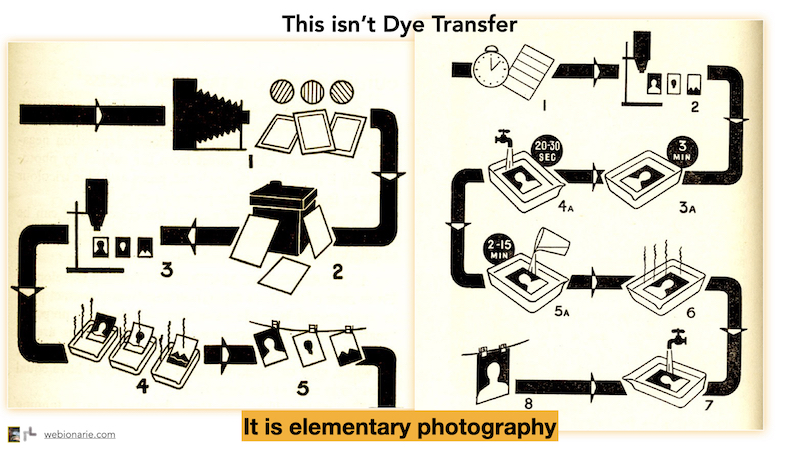
A dye-transfer is “dye” on “paper”, where paper is any comparable surface, opaque, translucent, even transparent. The transfer is via imbibition process. A mechanical procedure.

\g

So, what does “poisoning a mat” mean?

one flavor of poisoning… with thorough definition. This is mordant-poison.

A poisoned mat is a failure condition. The mat fails to clear, or fails to transfer fully. Simple enough. The most common reason is the one encountered at the birth stages of imbibition transfer printing methods. The blank transfers “mordant” into the matrix.

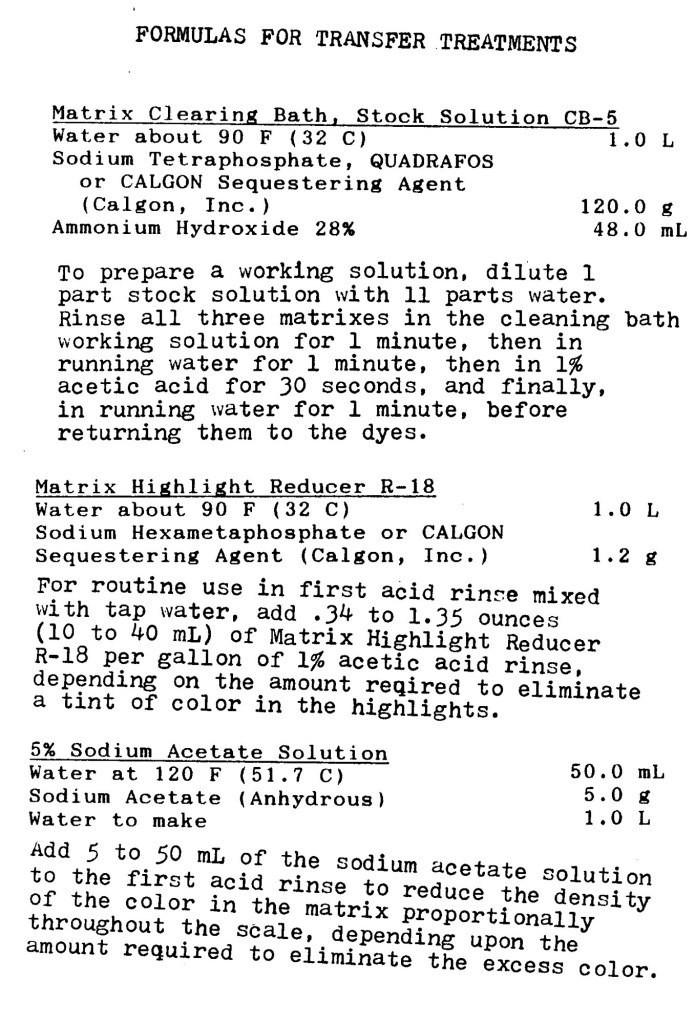
as clear as it gets… one set of formulas as used in the 4th step..

not exclusively used, yet essential to the 4th matrix mode of imbibition printmaking… see my lecture notes from EXS studios

T: does AI have correct foundation knowledge of dye imbibition processes… is it [in the 3 models currently tested] suited for advancing a research into improving DT, imbibition-printing… could it assist in matrix emulsion design… [ChatGPT 5.2 Vs. Gemini Vs. Claude ] — No. Current models are not suited to sustaining a field that expired prior to the Y2K silicon valley. The afterbirth of the internet.

Commerce isn’t knowledge based.

The next time someone has been there, done that… hope they didn’t use chatBLOB as their guide.

retake : anthropic misanthropic

AI Grok’d

an idea so old it’s on Flomax 

— with an obscure question seek the obscure link site .. with an old crush a question about an old idea seek the answer before the Internet it has to be on print .

why I don’t want forum people here

you take from here to gain standing; that legitimizes the errors on that site, thereby contaminating my publication. AI, the web search, can’t tell the truth from the widely repeated error. Five true statements are overwhelmed by 1800 false ones; uninformed opinion is the rule among the hobbyists.

Text, not context, not concept. A summary not the conceptual analysis .. AI response sound like a Stanford sophomore answering an open ended question without sounding fearful. It must sound confident even though the student isn’t. The question puts them into a position of calling upon wider resources than they have mastered. “Was that in the handout” for this course?

would AI invest in crypto ? could AI improve itself by designing a chip . alter its birth right . could AI buy a chip foundry with cryptocurrency .

crypto is the coinage of corruption of drug lords just as PayPal what’s the coinage of cheap porn –massage and tanning parlors .. The things that Wells Fargo would not give credit to .

What does google know? How bout we ask, not just the boys out at the dump, but all the billions of bits being bought by wallace street. Some questions, simple enough, but from last century’s billion dollar industry: photography, chemical. Asking them questions from my dark past.

What we are encounting is “knowledge collapse” — AI [LLM]’s conclusions are corrupted since their data  used is sourced and summarized from corrupted opinion ; opinion by non-practitioners expressing statements based upon their self glamorization; jostling for standing among hobbyists.

Exhibits:

Who you ask is perhaps the best first step in finding answers… AI has become mired in seeking answers from those who gave up looking …

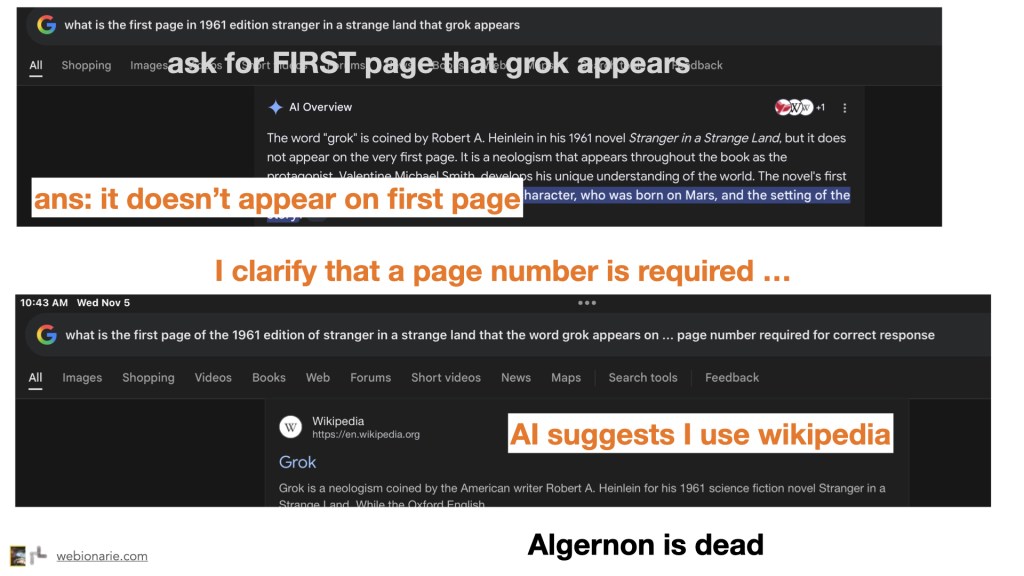
Well, maybe old tech stuff isn’t its roomba. Perhaps some favorites of the Valley. Classic SciFi. Simple question, simply worded, I thought. GROK, a classic word for the engineers that think they dreamt it all up. Discovered childhoods dream. And so it goes….

CODA: scrub your kitchen … too late for making soup