
Ming Smith….
“Smith was the first Black female photographer acquired by the Museum of Modern Art and the first female member of the influential Black photography collective, Kamoinge. She was one of the first African American women to break the color barrier in modeling alongside Grace Jones and Toukie Smith. Gordon Parks wrote of Smith, stating her “wonderous imagery… gives eternal life to things that might well have been forgotten.” Her works respond to the struggles of city living, while also celebrating the community and pride produced by it. Taking her camera with her as she travelled the world, these images are a chronicle of her discerning eye.”

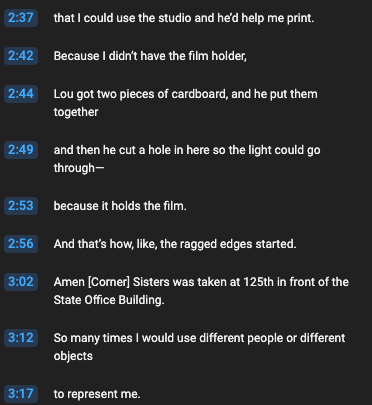
Make do.. Make more with what you have. The doing is the art part.
And
The things we use are not requirements for where we get.
First questions are common among those who achieve influence and those who remain on side steps. The tournament doesn’t reward new shoes as much as it does new views … the runner who gets further is able to stay longer.
More..
“As an artist, recognition for her work only came recently thanks to several high-profile exhibitions. Not limited to photography she also uses post production techniques, collage and paint to create her works. Smith was recently included in ‘Soul of a Nation’ at Tate Modern in collaboration with Brooklyn Museum, Crystal Bridges and The Broad. She was also featured in Brooklyn Museum’s ‘We Wanted A Revolution: Black Radical Women, 1965-85.’ Smith’s work is in the collections of MoMA, the Whitney Museum of Art, Philadelphia Museum of Art, Detroit Institute of Arts, Virginia Museum of Fine Art, the Schomburg Center for Research in Black Culture, and the National Museum of African-American History and Culture. She was included in MoMA’s 2010 seminal exhibition, ‘Pictures by Women: A History of Modern Photography’.” https://mingsmithstudio.com/about
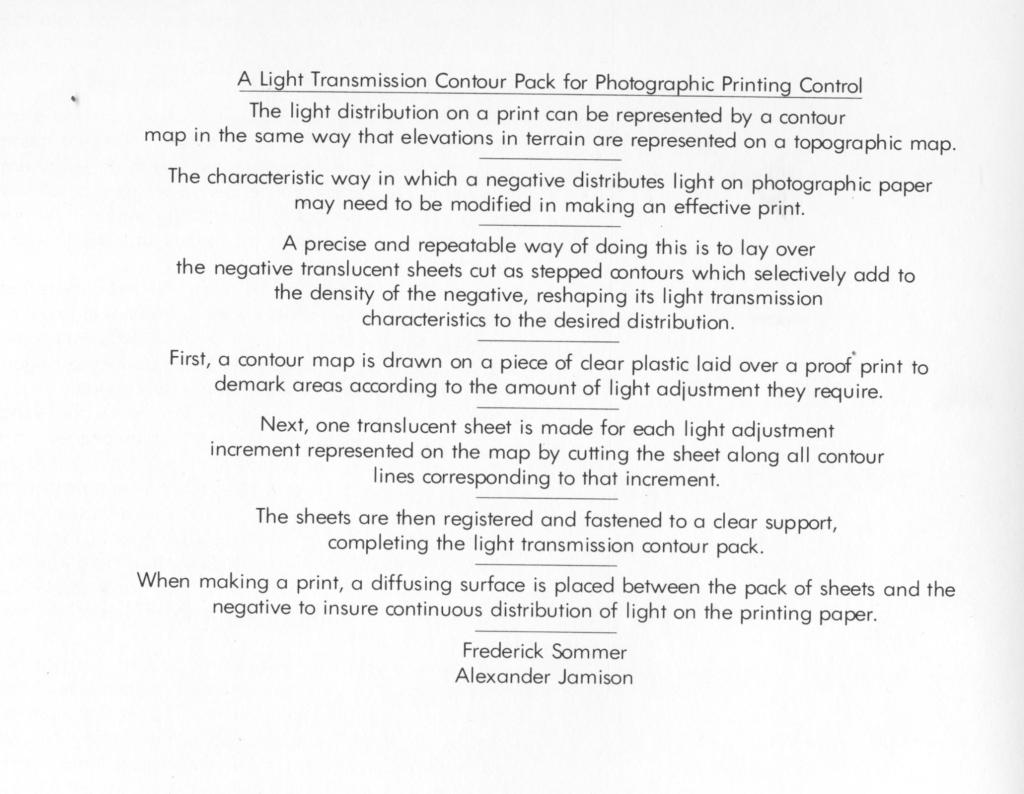
it is better to be craft poor and picture rich
RL/webionaire




You must be logged in to post a comment.