
op money ideas ... warehouse for the internet
payment processor for the internet

those ideas gave us the world's richest two men.
oh, build it upon government ground, using open source, donated tools.
---
redistribute wealth by remaking work relationships.
wealth / work. internet workshop.
--
republicans are primarily concerned with money
go to texas. thinking work is community. maybe he can finally get a smart carlane.
--
money power
life death
--
mask free in the cough and die state
texas unmasked
--
lonely or one fine dancer: he took himself to the prom
-
post depression ....

trump train: short for bad sex
=--==
sneeze machine gun bullets.Bacterial Warfare would draw more support.


Texas community cottage culture:
gun fun. guilt & God.
---
trump trained: pain and punishment. you're fired. you're fried.

but my 401k is growing?  so you've been bought. you got bot. BUT do you know who feeds the 401k; how it started?
----
texas calls it the panhandle; idaho it's called the scaffold.
--
lonely or one fine dancer — took himself to the prom
==
workshops segregate .. in protected photographers only lounge
Techday: developing roll film
The hard part is starting from nowhere. Not knowing what comes first is more than a riddle.
Photography is a mechanical process; we use machines to make pictures. Shared by chemical or electronic; actual or synthetic imaging manners — we use something to do something else.
In the days of darkrooms, students had more problems getting their film loaded than almost any other part of craft. Students would ruin film loading it onto reels; even those who were skilled with hand and eye. Loading film is simple, repetitive, and really ‘auditory’ … I listen to the film going onto the reel. Of course, practicing with a ‘dead’ roll is most starting points. Doing this in the light seems to prep you for working in the dark, but when the lights go out, you will falter, at least once or twice.
Make certain you lay out your work space/surface with the items in reach and ready for lights out.
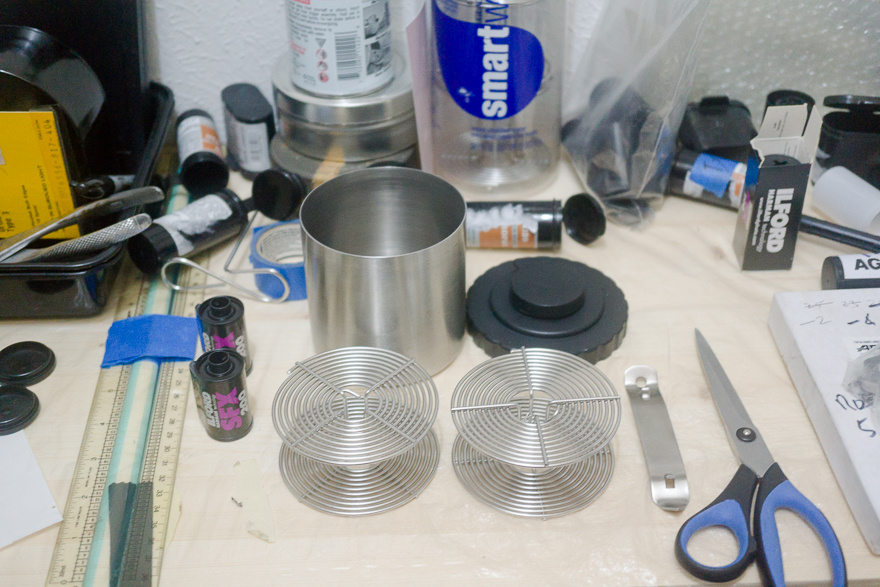
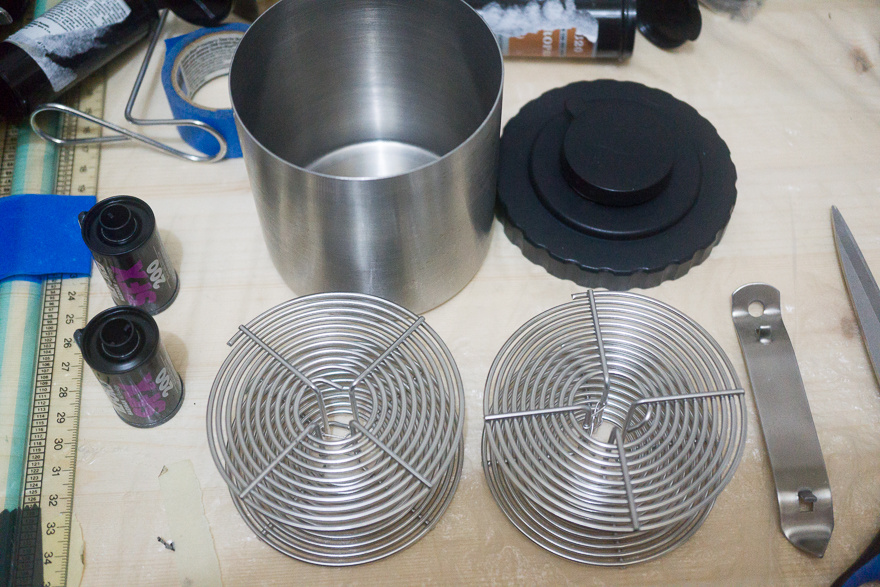
I’ve always preferred metal reels and tanks. Just my first ways. They also work well for color; how I started souping so long ago.
There are other tanks, systems…

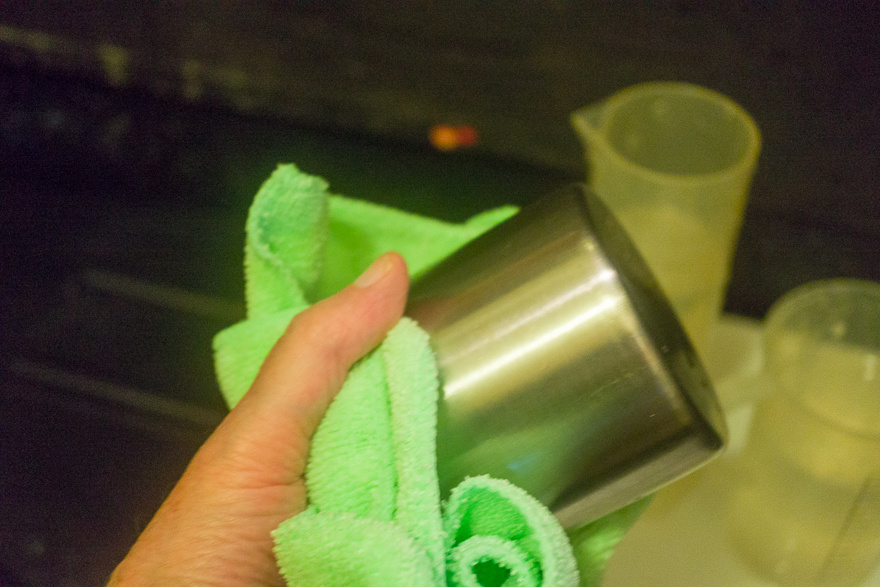
over the years, they’ve come and gone. Daylight processing has always been popular among the smaller labs, and infrequent users. The solo practitioners. Souping more than a dozen rolls a day is impractical using this method. It remains an accurate, functional system for processing film.
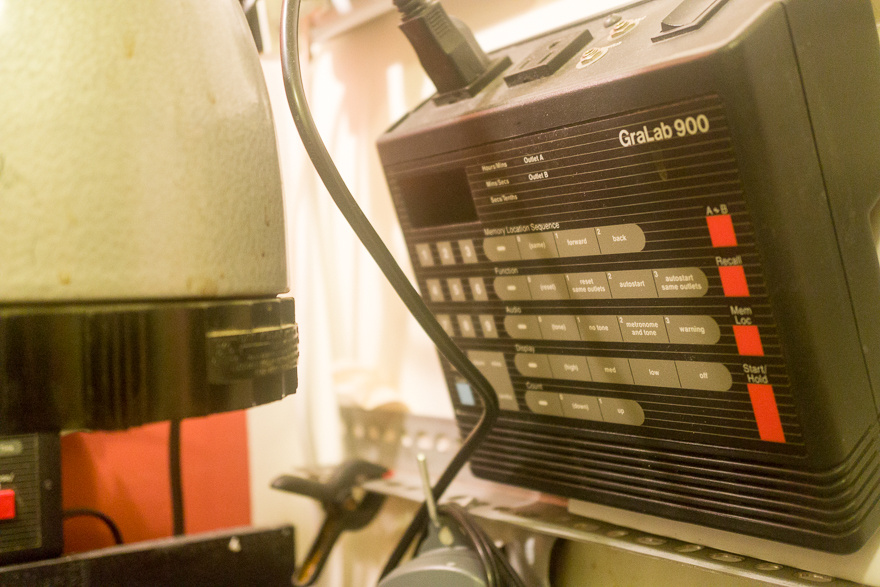
Timers: come in many flavors. My setup has changed over the years. With all sincerity, if I did this occasionally, I’
d probably use a smartphone app. I’d also not buy used that didn’t come with a money back, free return policy.
A simple coincidence, and why Ilford DDX with 400 speed films is convenient as a learning place. Ilford’s Delta 400, Kodak’s T-MAX 400, and Kodak Tri-X 400 all develop at for the same time: 8 minutes @ 68F (20C). Aside from being able to try different emulsions without altering your processing routine, you can put these films through at the same time.
Read the sheet, Luke. I never use the massive dev chart; nor do I ask the online lobby. Get the datasheet for the film, and one for the developer. Read these until they make sense.
If you fear the pencil, you will never learn to draw.
Processing film is a mechanical skill; you will use touch and sound of loading film onto the reels. The feedback of the hand head loop. This sightless task seems to frustrate, even detour some. Some of my best students, even though they could draw, could not load film onto reels. They could load sheet film into holders and hangers, so they loved the view camera, but that didn’t get them far enough into their image goals, their aspirations for adding to the conversation. For a few of them, I’d soup their film. Maybe not a great idea; the better two went on to be writers. One has a couple books, the other worked for TV shows.
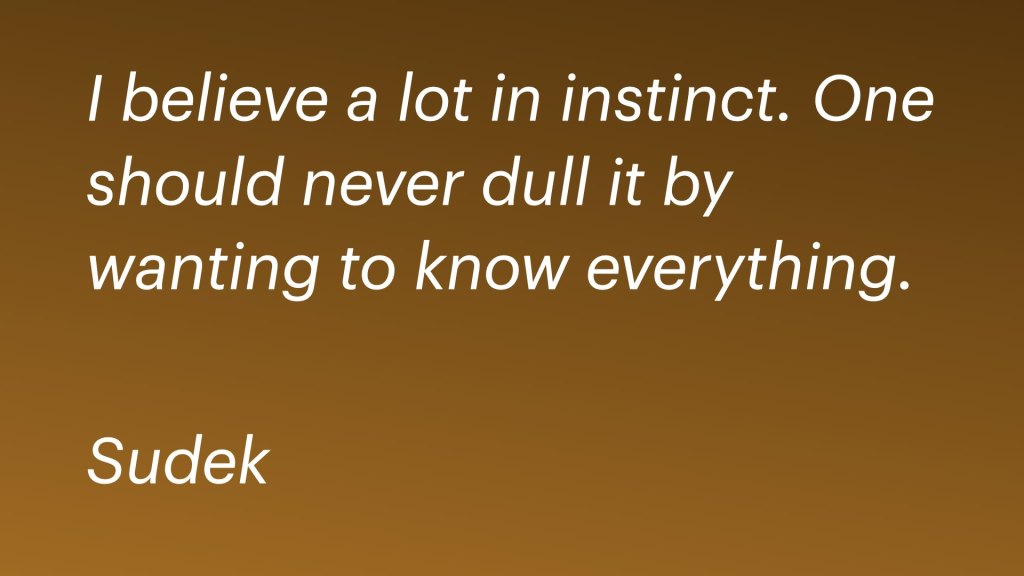
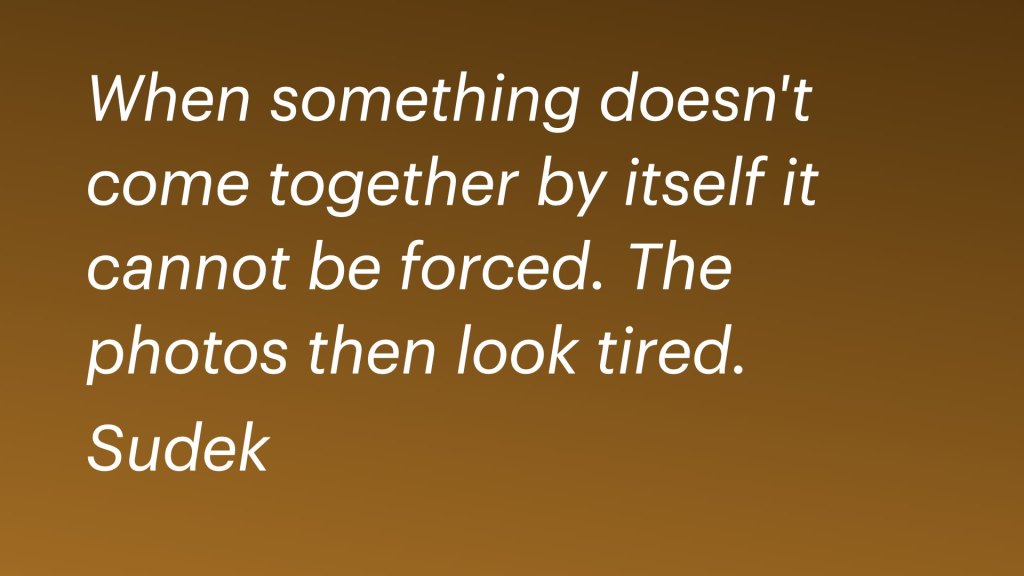
Josef Sudek
Josef Sudek (March 17, 1896 – September 15, 1976) was a renowned Czech photographer, dubbed the “Poet of Prague.”

Sudek in dates
1896—born in Kolin.
1908—begins studies at the Royal Bohemian Trade School in Kutna Hora.
1911—moves to Prague to work as a bookbinder’s apprentice. Begins taking photos.
1915-1916—fights in and takes photographs on the Italian front of WWI. Loses his right arm.
1917—unable to continue bookbinding, he concentrates on photography.
1920-1921—becomes member of the Prague Society of Amateur Photographers.
1922-1924—studies photography at Prague Graphic Arts School.
1922-1927—takes photographs of veterans at Prague’s Invalidovna hospital.
1924—co-founds the Prague Photographic Society.
1926—travels to Italy.
1928—documents the reconstruction of St. Vitus Cathedral and publishes his first album of ten photographs for the 10th anniversary of the founding of Czechoslovakia.
1927-1936—Works for Druzstevni prace, specializing in portraits, ads, and documentaries.
1932—first exhibition in Prague.
1940—stops enlarging negatives and focuses on contact prints.
1958—moves to a new studio in Uvoz near Prague.
1961—receives the Artist of Merit award by the Czech government as the first photographer ever.
1966—awarded the Order of Labor by the Czech government.
1976—dies in Prague.
Josef Sudek: Biography
| 1896 | Born March 17, Kolín, Bohemia, the second child of Václav and Johanna Sudek; his elder sister Josefín died April 12, 1895, the day after she was born. |
| 1897 | His sister Božena was born October 16 in the historic little town of Nové Dvory, where the Sudek family had settled. In 1914 she apprenticed in the Kolín studio of her cousin Bohumila Bloudilová, a photographer and retoucher; in spring 1930, Božena became an assistant to Josef in his Prague studio. |
| 1898 | January 1, Josef’s and Božena’s father died of pneumonia. |
| 1902–08 | Attended primary school in the Baroque manor at Nové Dvory. |
| 1908 | Accepted for a two-year course at the Royal Bohemian Trades School in the town of Kutná Hora. |
| 1910 | July 15, registered for a three-year apprenticeship with the Prague bookbinder František Jermann, and began to take photographs there in 1911. |
| 1913 | August 12, received his journeyman’s certificate from the Guild of Bookbinders, Box-makers, and Case-makers in Prague. His first job was as a bookbinder’s assistant in the town of Nymburk. |
| 1915 | December 15, a few months after what would become known as the First World War, Sudek enlisted in the Bohemian town of Žatec (Saaz); later, January 21, 1916, was transferred to Kadaň, where he eventually met other soldiers who were amateur photographers. |
| 1916 | Put together a small album of 156 original 3.5 x 5 cm photos of Prague and the Bohemian countryside, which he had taken over the last two years. Continued photography as a reservist in a jäger regiment, after leaving for the Italian front in July. |
| 1917 | In late May, was hit in the shoulder by friendly fire (Austrian shrapnel); as a result, his right arm was amputated in Graz about one month later. Three albums containing a total of 154 small original photographs of military life have been preserved from the war years. |
| 1918 | In the early part of the year, went from hospitals in Kolín, Kutná Hora, and Prague to veterans’ hospitals and homes in Prague – Letenská pláň, Pohořelec, and eventually Karlín, where he made the The War Veterans’ Hospital and Home series (1922–27). In the post-war years he often returned to visit his native Kolín, where he came to know the photographer Jaromír Funke, and from there he used to go and photograph the countryside along the River Elbe. |
| 1919 | February 28, the Czechoslovak Republic (which had been declared only a few months before) awarded him a full pension for employment disability. The deputy director of the Bohemian Office for War Invalids, Václav Nedoma, became his patron, introducing Sudek to the Czech Amateur Photographic Association, Prague, from which he received a scholarship (1920–22) and access to a darkroom. |
| 1920 | Refused an offer of a white-collar job, preferring the career of a photographer despite the uncertainty: for the professional operation of a studio he still lacked an apprenticeship certificate, the prerequisite for a trade license. |
| 1921 | February 10, deregistered himself from the Roman Catholic Church, though he had not lost his faith in God. During a members’ exhibition at the Czech Amateur Photographic Association on Národní třída, Prague, received First Prize in the landscape category. The Czech-American Drahomír Josef Růžička introduced him to the purist pictorialism practiced in America, which then had an influence on Sudek’s photographs. Sudek’s work in the 1920s comprised portraits, genre photographs, Prague architecture, and the play of light on the landscape. At Nedoma’s urging, he applied to the College of Graphic Arts to train in photography with Karel Novák, and was accepted the following year. |
| 1922 | June 26, quit the Czech Amateur Photographic Association owing to a clash between the old and young generations, and, on July 3, helped to found his next place of refuge – the Prague Photography Club. |
| 1923 | Traveled to Ghent for a reunion of war veterans, and also visited Paris. |
| 1924 | Sent examples of his work to leading exhibition organizers all over the world. On June 27, graduated from the College of Graphic Arts. The extent of his disability pension was officially reduced by 20 percent. In summer, began to photograph the completion of St. Vitus’s Cathedral, Prague. “That’s where it began,” Sudek said. “That’s where I experienced an epiphany.” July 9, was excluded from the Czech amateur photographic movement for criticizing the work of an insignificant amateur photography club. Together with two other expellees – Funke and Adolf Schneeberger –, made preparations for the founding of the Czech Photographic Society (Ceská fotografická společnost). |
| 1926 | Began to work with the up-and-coming publishing house Družstevní práce (Co-op Work), for which, in collaboration with the industrial designer Ladislav Sutnar, he made a number of advertisements in a Functionalist spirit. Participated in the first Members’ Exhibition of the Czech Photographic Society. Left for a two-month trip, by way of Austria, to Slovenia and, ultimately, Italy, where he visited the place he had received the wound that cost him his arm. |
| 1927 | June 1, signed a lease for a garden studio in the courtyard at Újezd No. 432, the Lesser Town, Prague. Made the acquaintance of the painter František Tichý, whom he would provide, as he did other artists, with financial and moral support. |
| 1928 | January 30, became a member of the Society of Photographers of the Prague Chamber of Trade and Commerce. Established his own company, and was soon receiving a wide range of orders; increasingly publishing his photos in magazines. Became much sought-after as an expert in advertising, portraiture, architecture, and photography of paintings and sculpture. Became a collector of fine art; in 1930–45, his collection grew to contain more than 1,000 paintings, drawings, sculptures, and prints, focusing on the work of František Tichý, Jan Benda, and Andrej Bělocvětov. In Družstevní práce, of which he became a member on July 6, Sudek published, at the instigation of the painter and graphic artist Emanuel Frinta, Svatý Vít (St. Vitus’s Cathedral), a limited-edition portfolio of 15 original photographs with a text by the outspokenly Roman Catholic writer Jaroslav Durych, to mark the tenth anniversary of the Czechoslovak Republic. |
| 1929 | Published his first album of photographs concerning Czech life and institutions. |
| 1930–31 | Was invited by the photographer Alexandr Hackenschmied to take part in the New Photography Exhibition, the first group show of avant-garde photographers in Prague. The 1931 calendar of the Orbis publishing house used some of his photographs. |
| 1932 | His first solo exhibition, comprising 64 works, was held in the Krásná jizba, the commercial gallery of the Družstevní práce co-op, Prague. The head of the publishing house commissioned Sudek to select 26 of his own photographs to be used in a calendar for the coming year. November 1, became a member of the Umělecká beseda (Art Society). |
| 1933 | Participated in the Social-documentary Photography Exhibition, which was organized by Lubomír Linhart as part of the Cinema and Photography Group of the Left Front. |
| 1936 | Did organizational work and showed photographs in the International Photography Exhibition at the Mánes Artists’ Association, Prague. As a result, the Association founded a photography section. As a member, Sudek came to know another circle of artists. |
| 1938 | An exhibition was held of the work of six members of the Mánes Artists’ Association photography section, including 86 works by Sudek from 1918–37. |
| 1939 | His work was included in the important retrospective A Hundred Years of Czech Photography at the Museum of Decorative Arts, Prague. During the war he provided asylum in the form of an apprenticeship to the medical student Jaroslav Kysela and also to the artists Vladimír Fuka and Václav Sivko. Beginning in November 1945, Sonja Bullaty took their place. During the German Occupation, from March 15, 1939, to May 9, 1945, friends regularly gathered in Sudek’s studio on Tuesdays to listen to recordings of classical music, and this continued till Sudek moved to a house near Prague Castle in the late 1950s. |
| 1940 | Switched from modern photography done on commission to photography done strictly for himself with his own choice of subject matter and interpretation. Began working with large-format cameras (as big as 30 x 40 cm). Began his key series The Window of My Studio (1940–54), which he added to later. This gradually developed into intimate still lifes with sometimes bizarre arrangements. |
| 1941 | January 18, offered Sfinx publishers a hundred photographs for the album Pražský hrad (Prague Castle), which, because of the German Occupation (ending in early May 1945), could not be published till autumn 1945. (In 1947, it was republished in Czech, and came out in English as well.) |
| 1943 | Contributed to a portfolio of original photographs called Moderní česká fotografie (Modern Czech Photography), which has an introduction by the avant-garde theorist Karel Teige, and also contributed to Pražske zahrady (Prague Gardens), which is published by Václav Poláček. |
| 1944 | March 27, Emanuel Poche, an expert on Prague architecture, invited Sudek to work with him on a book about Charles Bridge. |
| 1945 | March 22, Funke died. By the end of the 1940s, Sudek gradually published, in albums of solo and multi-authored work, many of his earlier and current photographs with Prague subject matter. Jiří Toman joined Sudek in photographic work, eventually assisting him in about a quarter of the photographs for Praha panoramatická (1959) (published in English as Prague Panoramic, 1992). |
| 1947 | Regardless of current trends, Sudek returned to the carbon process, which enabled him to “defamiliarize” the print. Began also to contribute to the group publication Pražské ateliéry (Prague Studios) (1947–53). December 18, the Mánes Artists’ Association re-established its photography section, which, after the Communist takeover in February 1948, had become a platform to legalize free-lance status. |
| 1948 | January 15, his membership in the Mánes Artists’ Association was confirmed; February 12 the Chamber of Trade and Commerce in Prague made a note of the twenty-year existence of his photography business. In the editorial offices of Svoboda publishers, met Jan Řezáč, who later became editor of many his books, curator of his exhibitions, and promoter of his work. They began their collaboration with the coffee-table book Praha (Prague), which included a selection of verse by the leading contemporary Czech poet Vítězslav Nezval. The home of Otto Rothmayer, a modern architect of Prague Castle, inspired Sudek to develop the series A Walk in the Magical Garden (1948–64) and many other photos from the contemporaneous set Memories. Made the first photographs for the Labyrinths series (which was given its name only in 1963), and continued to develop this idea for the next ten years. |
| 1949 | January 7, his membership in the Union of Czechoslovak Fine Artists was confirmed, enabling him, as an artist rather than as a businessman, to prevent the nationalization of his studio. |
| 1950 | Began work on the book Janáček–Hukvaldy,comprising photographs of Hukvaldy, Moravia, the birthplace of the composer Leoš Janáček. |
| 1951 | Presented photographs for the album Chrám svatého Víta (St. Vitus’s Cathedral), to be published by Orbis, but, as he remarked in a letter to Sonja Bullaty three years later, Orbis decided “not to publish it, because it’s a church.” |
| 1952 | Visited the Mionší primeval forest at Jablunkov, in the Beskid Mountains. This led to the collection Zmizelé sochy (Vanished Statues) (1952–70) and his largest-ever expression of love for a single region. |
| 1953 | His mother, Johanna Sudková, died at the age of 84. The death of his friend, the painter Emil Filla (b. 1882), the same year, hit Sudek equally hard. After the currency reform, Sudek said that his standard of living had declined to what it had been when he was just starting out in business a quarter of century before. Božena Sudková moved into his studio on Újezd street. |
| 1955 | The March issue of Československá fotografie, which includes a short article about Sudek by Jiří Jeníček, brought Sudek to the attention of readers of this periodical, which was published by the Ministry of Culture “for the ideological and professional training of people working in photography.” Received the 1954 Prize of the Central National Committee of Prague. |
| 1956 | February 26, jokingly remarked about his Praha panoramatická (Prague Panoramic), which was about to go to press: “Made 242 ‘sausages’ of Prague so far; at least 60 more left to make.” To mark his sixtieth birthday his first monograph was published, containing 232 photogravure plates of photographs from 1915 to 1955; it had a print-run of 30,000 and was extensively reviewed. The preface, written in a Socialist Realist spirit, is by the Marxist critic Lubomír Linhart. |
| 1957 | Began a six-year period of taking photographs near the town of Most, northern Bohemia, an area devastated by war, coal-mining, and heavy industry. The book was posthumously published as Smutná krajina (Sad Landscape, 1999); the editors had originally chosen the title Severní krajina (Northern Landscape). The publication of Karlův most (Charles Bridge), which had been ready since the early 1950s, was also postponed till 1961, and publication of the collection of photographs of Janáček’s native Hukvaldy was postponed till 1971. The two series St. Vitus’s Cathedral and The Bohemian Central Massif (České středohoří) have still not been published as independent sets. |
| 1958 | In the Aleš Hall of the Umělecká beseda, Prague, an exhibition was held comprising 82 works that Sudek had made strictly for himself over the last four years; the exhibition then moved to the Brno Art Centre. 176 photographs were published in the catalogue Lapidarium Národního musea (The Sculpture Gallery of the National Museum). Sudek was appointed to the editorial board of the art-photography department of SNKLHU (Státní nakladatelství krásné literatury, hudby a umění – State Publishers of Belles-lettres, Music, and Art). It was founded by Jan Řezáč, the editor-in-chief, after the success of Sudek’s monograph, with a layout by František Tichý. Praha panoramatická (Prague Panoramic), was published in January of the following year, again thanks to Řezáč, with 284 plates of works by Sudek, a jacket, binding, and layout by Rothmayer, and poems by another friend of Sudek’s, Jaroslav Seifert. |
| 1959 | April 20, was assigned a flat at Úvoz No. 160, near Prague Castle; his sister remained in the studio where Sudek had his darkroom. |
| 1960 | Sivko organized the exhibition Josef Sudek in Fine Art at the Fronta Gallery, Prague, comprising 114 portraits of Sudek by 22 artists. |
| 1961 | March 18, on the occasion of his 65th birthday, became the first photographer to be awarded the Czechoslovak government distinction “Artist of Merit” for his life-long work. SNKLHU published the album Karlův most (Charles Bridge). |
| 1963 | The imaginative side of Sudek’s work was exhibited in the gallery of the Czechoslovak Writers’ Union, Prague. The framing and mats by Rothmayer emphasized the unreal quality of the portrayal of the subject matter. Most of the public, however, did not understand what Sudek was aiming at here. |
| 1964 | Artia published Sudek, a monograph for export with a foreword by Řezáč and 96 plates of works Sudek had made strictly for himself; it helped to establish his international renown. |
| 1966 | The February issue of Československá fotografie contained a special section to mark Sudek’s 70th birthday. The Czechoslovak government conferred on Sudek the Order of Labor; October 31, was awarded the Czechoslovak Artists’ Union prize for applied art and industrial design. |
| 1967 | Invited by Anna Fárová to take part in 7 + 7, a contemporary comparative exhibition that she mountedin the Václav Špála Gallery, Prague. Americans began to take serious notice of Sudek’s work: Michael McLoughlin, at the University of Nebraska, invited him to take part in the Five Photographers exhibition, to be held in May 1968, together with Eikoh Hosoe of Tokyo, Bill Brandt of London, Ray K. Metzker of Philadelphia, and John Wood of New York. |
| 1970 | Was conferred the title “Excellence” by the Fédération Internationale de ľArt Photographique. The amateur photographic movement, which had since the early 1920s systematically excluded him, came out now in his support. |
| 1971 | March 17, Bullaty mounted an invitation-only exhibition of Sudek’s work in the Bullaty-Lomeo Studio. |
| 1972 | March 17, Marjorie Neikrug, in her New York Gallery, made Sudek’s work accessible to the general public in the first solo exhibition of his work to be mounted in the USA. |
| 1974 | His career was slowly coming to a close; he took stock of his life’s work and made new contact prints from earlier negatives. |
| 1976 | In March, Československá fotografie ran a profile of Sudek by Fárová entitled “Z tvůrčí dílny Josefa Sudka osmdesátiletého” (From the workshop of the 80-year-old Josef Sudek), and the April special issue of Camera, published by C. J. Bucher, included an interview and articles by Fárová and Camera Editor-in-Chief Allan Porter (who had worked with Sudek for ten years). Three retrospectives were held to mark Sudek’s 80th birthday: in Prague, organized with Fárová, in Brno, organized with Antonín Dufek, and abroad, organized by Petr Tausk for the Ministry of Culture, which began in Aix-La-Chapelle, September 11. Sudek died in Prague, September 15; his obituary was written by Seifert; September 23, his funeral was held at the Strašnice Crematorium, Prague; the urn with his ashes is buried in the family grave in Kolín. His estate, comprising 21,660 prints, 54,519 negatives, and 618 other works of art (pictures, drawings, sculptures, and prints), was catalogued by Fárová from 1976 to 1985, who then, as the executor of his will, gradually distributed it in compliance with the wishes of Sudek and his sister Božena among the following institutions: the National Gallery, Prague, the Museum of Decorative Arts, Prague, the Institute of Art History at the Academy of Sciences, Prague, the Moravian Gallery, Brno, the Regional Gallery of Fine Art, Roudnice nad Labem, the Regional Museum, Kolín, and the Bibliothèque nationale de France, Paris. |

You must be logged in to post a comment.