Getting Wratten Filters

ask the source. always check the manufacturer before you ask the fans of the forum.

Within the Kodak Motion Picture Catalog you find a world of products. This has become the major reference of what Kodak provides for photography. It is at: https://www.kodak.com/content/products-brochures/Film/Kodak-Motion-Picture-Products-Price-Catalog-US.pdf

A pdf that has been saved to archive.org so even if the above url goes inactive try the wayback machine for their copy. I always make copies of useful finds to my own reference wiki/cloud store.

I was looking for filters to make pan film into ortho. I have old filters but wanted to check for upgraded versions. Yep, available. For about the price of 6 rolls of Ilford Ortho+ which I don’t expect to be a regular catalog item for many more years.

Spend time getting data, technical pdfs from Kodak’s motion picture section. It is the last repository of Kodak’s once grand marketing information service.


the dead cat bounce is small (in a few millions):

Selling film to Hollywood is only a small fraction of Kodak’s business — and not about to restore the company’s former fortunes — but it’s bringing back a bit of glamour to the photographic icon.

The company sold more 65-millimeter film, its largest format, last year than ever before, Bellamy said. That size is used on productions such as large-screen Imax Corp. films, as well as the newest James Bond movie. Film proponents say the medium offers a softer, warmer, grainier look that makes outdoor scenes brighter and can be more flattering to actors. — bloomberg

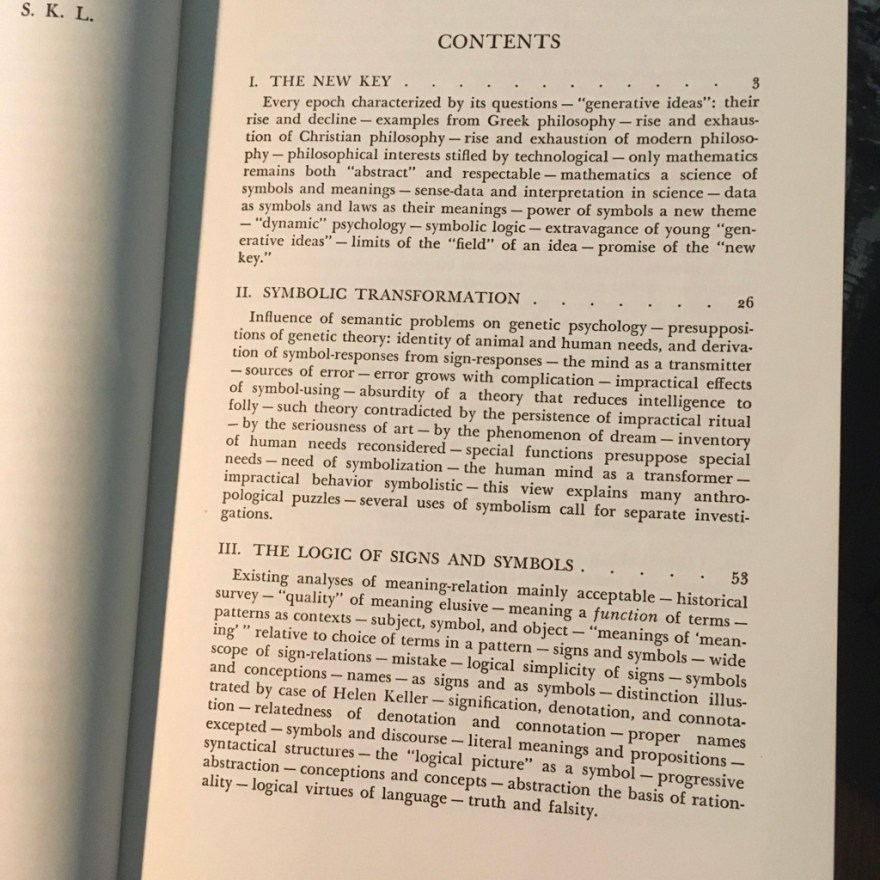
Reminder: “In a New Key”

early form of finding meanings … sharing with students still finding their way across the quad.

in mind of the philosopher Susanne K. Langer and her book Problems of Art, published in 1957. In a chapter titled “Expressiveness,” Langer differentiates between “the expression of feeling in a work of art” and self-expression. For Langer, expressiveness is experience given shape and vitality through the artist’s realization of form. “What [the artist] expresses,” she writes, “is … not his own actual feelings, but what he knows about human feeling.” The jumble of life, then, is not explicated but made recognizable and whole. Langer adds that this “knowledge may actually exceed his entire personal experience.” In contrast, she brusquely likens self-expression to a crying baby. Giving precedence to the artist’s psychological disposition, self-expression surrenders the artwork’s structural logic. That such logic reinforces the aesthetic—and, yes, emotive— capabilities of a work of art is lost on those who make self-expression their métier. Cézanne, for example, may have been a cold fish, but could anyone dispute the “expressiveness” of his paintings?

Moving through the bookshelf … one book often leads to another. Too often, during lectures, I’d jump without proper attribution; without enough time between quotes, images, anything .. moving too fast for most students to move at. That was always okay to me. I slowed during techtalk, not during the important things; ideas move at the speed of art … trying for sideways meaning.

it is a peculiar fact that every major advance in thinking every epic making me new insight springs from a new type of symbolic transformation higher level of thought is primarily a new activity its course
...

Every mode of thought is bestowed on us like a gift with some new principal of symbolic expression .. Langer

EXS Bibliography:

  • Empson: ambiguity and the New Criticism.
  • Richards: rhetoric and the scientific study of literary meaning
  • Goodman
  • Langer: her exploration of symbolic logic and aesthetics in  Philosophy in a New Key [and others]

Adams, Hazard, “Langer’s New Key.” Philosophy of the Literary Symbolic. Tallahassee: UP of Florida, 1983. 221-232.Schultz, William, Cassirer and Langer on Myth, 2000.