“I want to make contrast masks from 6×7 [120 film] color. What film and developer should I use. I can’t afford 4×5 Tmax100”
First: don’t use 4×5 size film. Use 120 film, cut into 3 inch length.
Next: it must be panchromatic film to collect (mask) all the colors on your original without being a separated mask.
Do this:
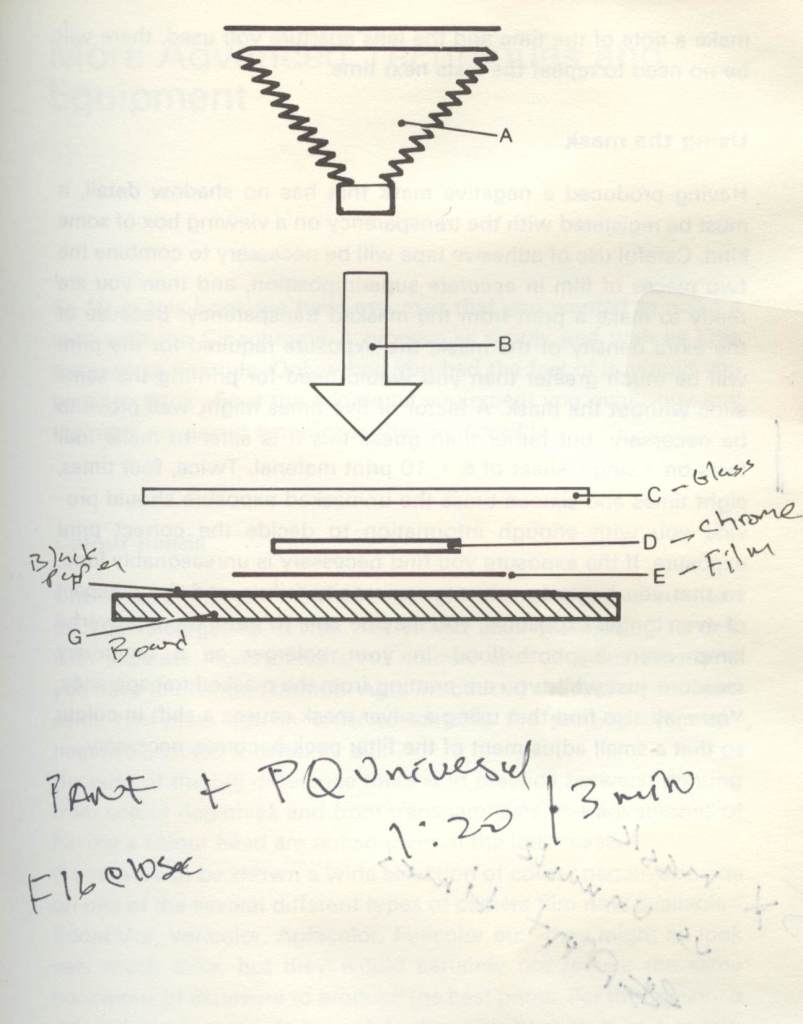
Use Ilford PanF film. Ilford PQ Universal developer. Arrange the stack as illustrated. Set the enlarger as if you were making an 11×14 print using your suggested lens. Follow the start points indicted in the drawing.
The black paper underneath is more important than you may think. It controls reflected light and flare back toward the cover glass and lens.
PQ developer 1:20 for 3minutes continuous agitation 68degrees F.
A pdf that has been saved to archive.org so even if the above url goes inactive try the wayback machine for their copy. I always make copies of useful finds to my own reference wiki/cloud store.
I was looking for filters to make pan film into ortho. I have old filters but wanted to check for upgraded versions. Yep, available. For about the price of 6 rolls of Ilford Ortho+ which I don’t expect to be a regular catalog item for many more years.
Spend time getting data, technical pdfs from Kodak’s motion picture section. It is the last repository of Kodak’s once grand marketing information service.
the dead cat bounce is small (in a few millions):
Selling film to Hollywood is only a small fraction of Kodak’s business — and not about to restore the company’s former fortunes — but it’s bringing back a bit of glamour to the photographic icon.
The company sold more 65-millimeter film, its largest format, last year than ever before, Bellamy said. That size is used on productions such as large-screen ImaxCorp. films, as well as the newest James Bond movie. Film proponents say the medium offers a softer, warmer, grainier look that makes outdoor scenes brighter and can be more flattering to actors. — bloomberg



You must be logged in to post a comment.