
My first dye was made in 1960. It was on Pan Matrix from a color negative. Probably of my dogs. All these are lost to landfill on a farmside hill in Ohio.
A mask is a cover; it holds back light. At first, it was done fully by hand. Masking and retouching have always seemed like two parts of the same concept to me. Dodging is masking that disappears. Retouching a negative holds back something, which is what a mask does. I learned negative retouching from a Paul Outerbridge book. With an endless need for these skills, automatic masking methods found researchers. The “exposure method” of mask making took hold. That is likely the only method you consider.
The first films are long gone. No lab I ever knew kept originals; the client always wanted them returned. Photographers had files of film originals, but they didn’t get the seps; none of the intermediates were maintained more than a year. Perhaps government agencies could manage the volume of film use, but not the commercial, custom labs. Our volumes were too high. We could barely keep supplies in store. What I do have are notebooks; some quite full, and likely complete. Film, processing, curves, all these are what I call upon as reminder of what things were like.
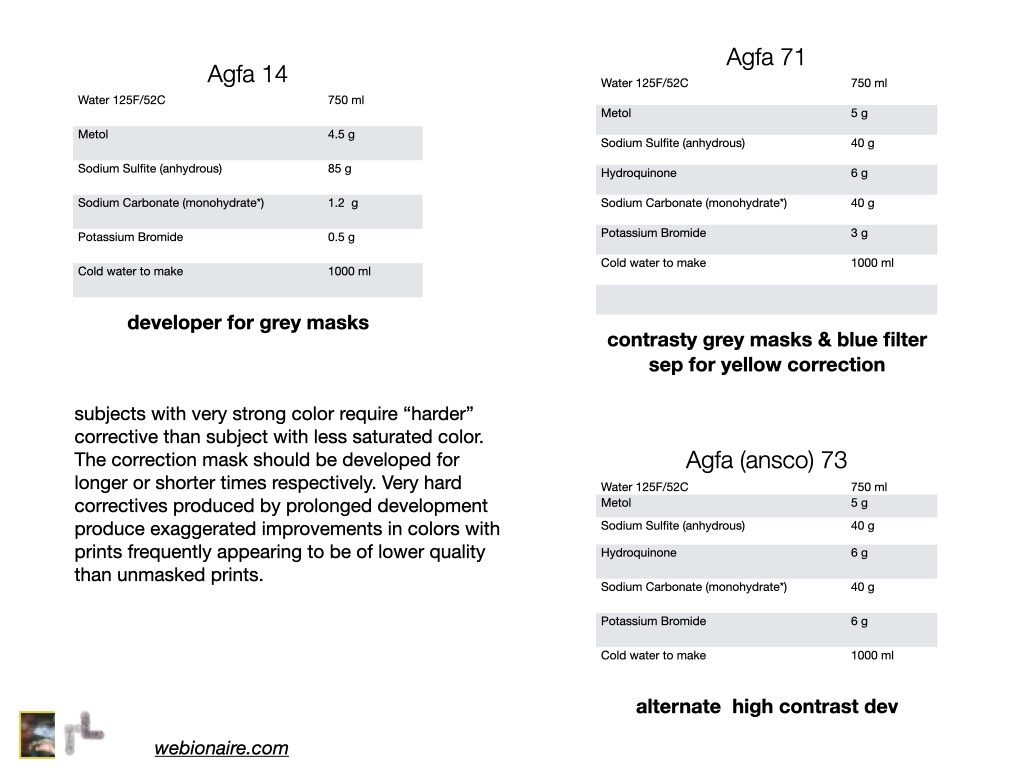


poor Milpool… don’t take his word.
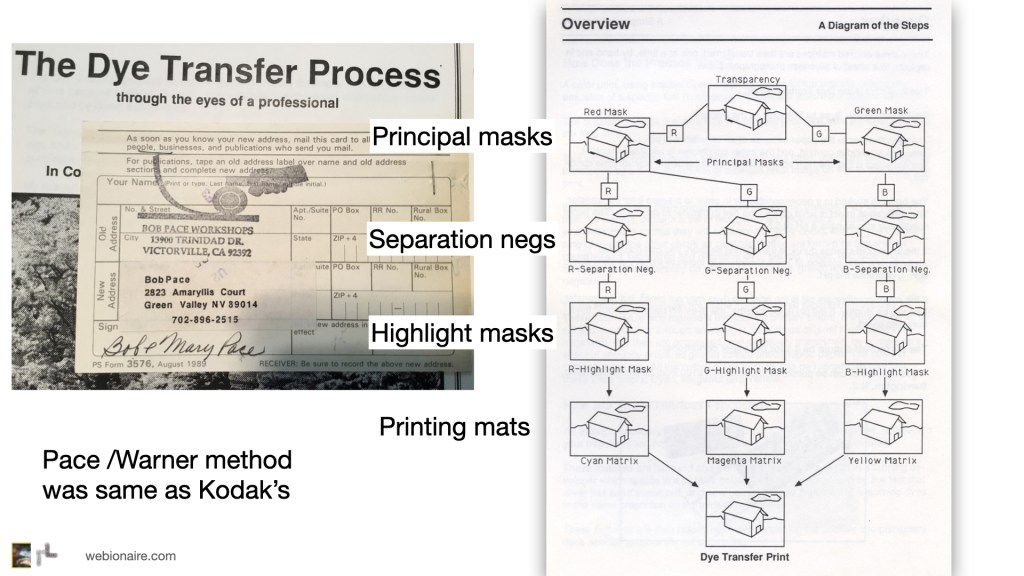
You can count the sheets of film. 2 principal masks — shortened version was a single mask using a magenta filter. I accidentally discovered, using a blank Color Negative ‘base’ acted as a correction mask. I misunderstood readings on what a color negative ‘orange’ mask achieved, thinking it solved problems for all film — believing it a universal filter, I used it on my early Transparency printing. I began making dyes with the Pan Matrix method. I shot color negative, then made mats with PM. These were my early, teenage years. Explaining my shortcut to an accomplished printer, he patiently explained my error, then suggested I substitute a Magenta Mask, as he handed me a Wratten filter, and pamphlet on the procedure.
There were always good people. Maybe because they made a living doing the work. They had little fear of being knocked from their hobby horse.
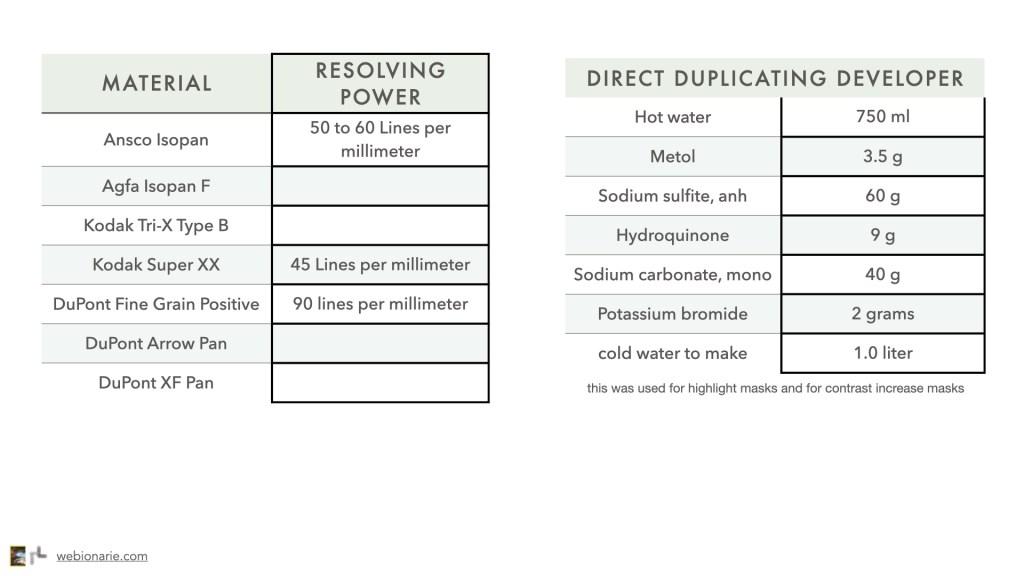
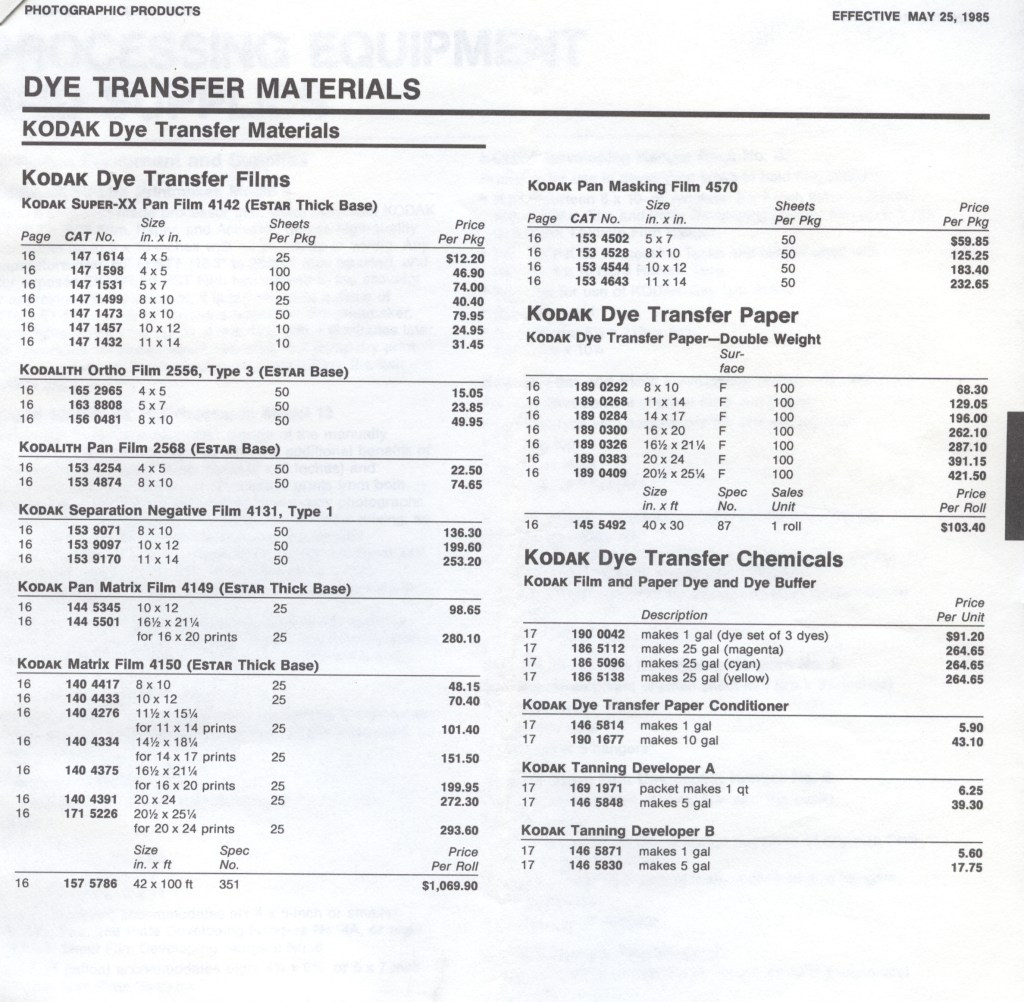
Super-XX was used by generalists, not by specialists. My initial films were many, including Super-XX. Even early in my transparency sep skill, I was disappointed with it. Isopan was superior, as was XF Pan. An early reference took me to Tri-X Type B, a very good separation film; it was also used by Eliot Porter, although he was a Super-XX user. After finding Kodak Separation Film types 1 & 2, my separation methods matured.
With color negatives of the late 50s, early 60s, contrast and exposure latitude was poor; matching the Matrices was challenging, requiring manipulation of dyes and matrix developer, even beyond what the instruction sheets told. And, after a few years, since I was printing for others, I had masked the negatives. Often for contrast increase, which meant using direct-dupe material. That could also be used for making distinct tone separation masks– all these things, along with having figured out ‘color coupled’ masking, meant I was getting work from labs. None of them realizing they were working with a teen skipping school.




You must be logged in to post a comment.