
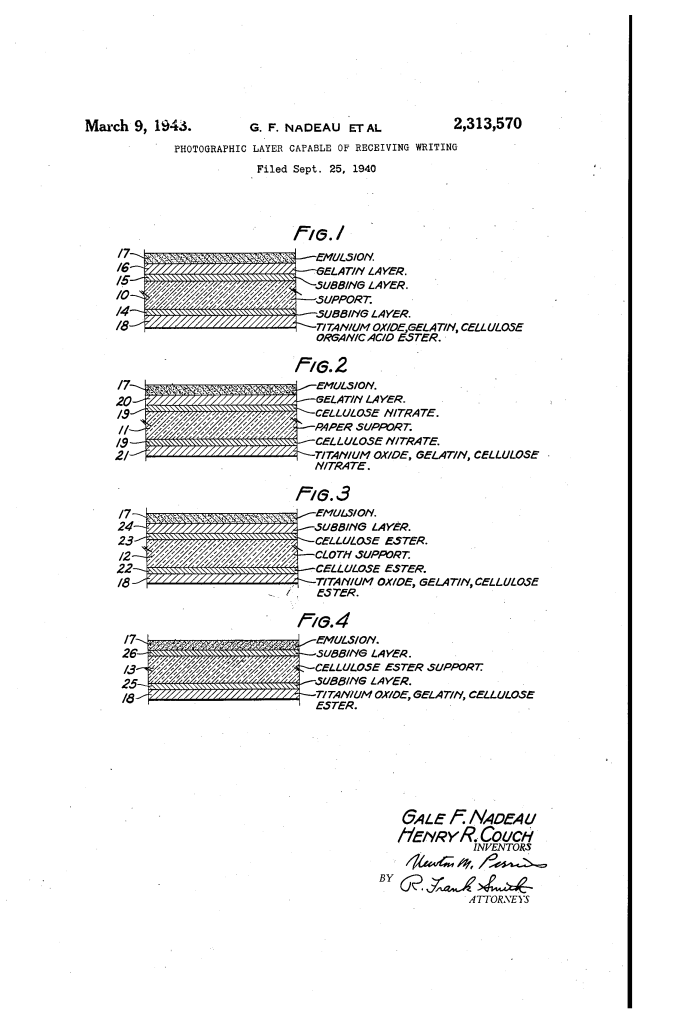
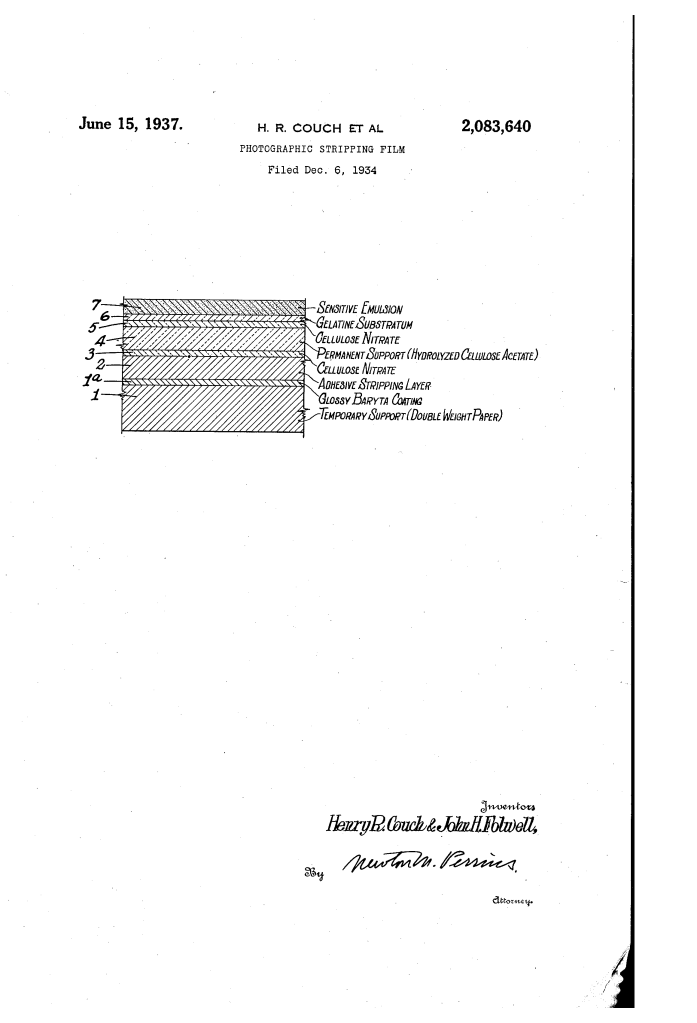
machines change as their maker learns. Registration holes in film came after registration of masks and mats. At first film was on glass, then on thick flexible plastic (celluloid). Until DuPont invented strong thing film-base, first used in lithography, lab films couldn’t withstand much punch, pull, position, alignment. Besides, the emulsion has always ‘shifted’ size more than the film base. Most professionals watched their relative-humidity and drying angles of critical film.
The following two punches are from the most known lab equipment maker. Most known among those talking today. Note how the change in punch systems. The first, very simple — a bar acts as leaver. Over time the leavering matured — becoming smoother. The positioning guides didn’t change. Not even in size of hold-down. And the badging became a glued on plate with serial number.


1963. Condit Register Strips for Kodak and Condit punch systems.
Business Registered Date Jan 05, 1962
These were standard items in student kits at schools.
Warren L. Condit, 83, husband of Elizabeth (Myott) Condit of New Lebbon Road, Newtown, died March 2002 in Mediplex in Southbury. Warren was born in Staten Island, N.Y., July 1919. He was a US Navy veteran of World War II, serving from 1940 to 1945 as a radioman, first class, and photographer.
From 1947 to 2000, Warren operated Condit Manufacturing in Sandy Hook, a company specializing in equipment used in the development of color films, the manufacturing of the teleprompter, and violin making tools.

In its first decade, imbibition printing at Eastman Kodak changed, in means and manners, not only in name.
At first, it was the Eastman Wash-Off Relief process. When it became Kodak Dye Transfer, brochures were updated several times.
Note the cover photos showing the transfer operation: the early one shows the Blanket method; the later, color, one shows the transfer table with Kodak Pins.
Even earlier the “slip sheet” was used. This was the way with Eastman Wash-Off Relief (WOR).
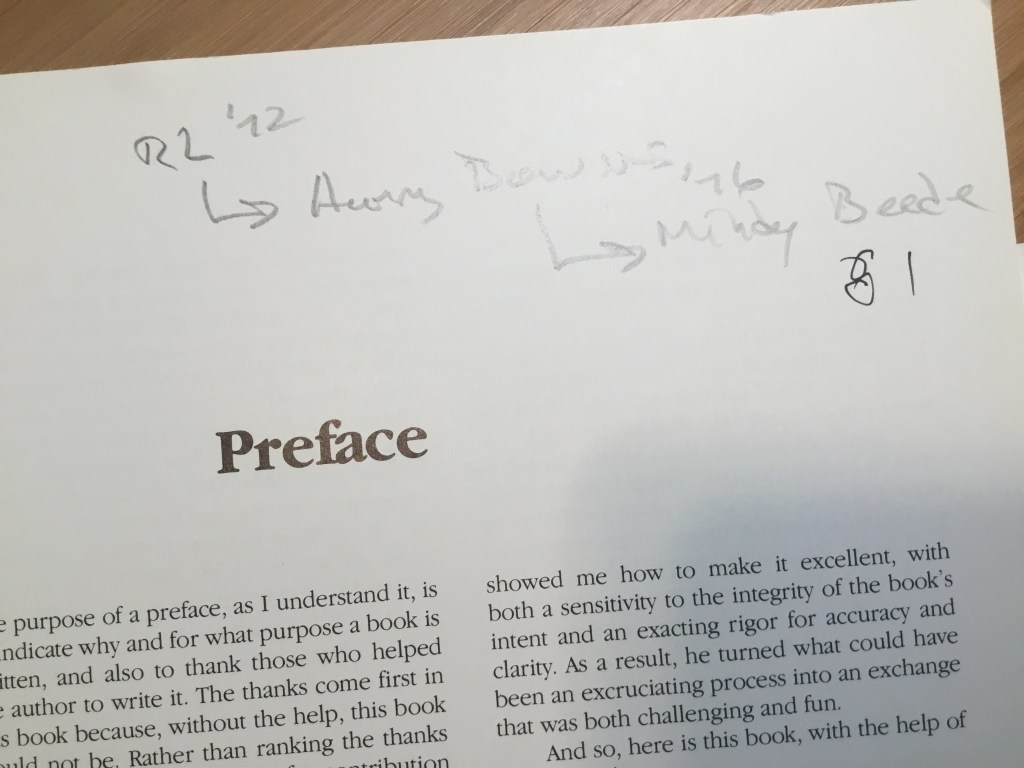
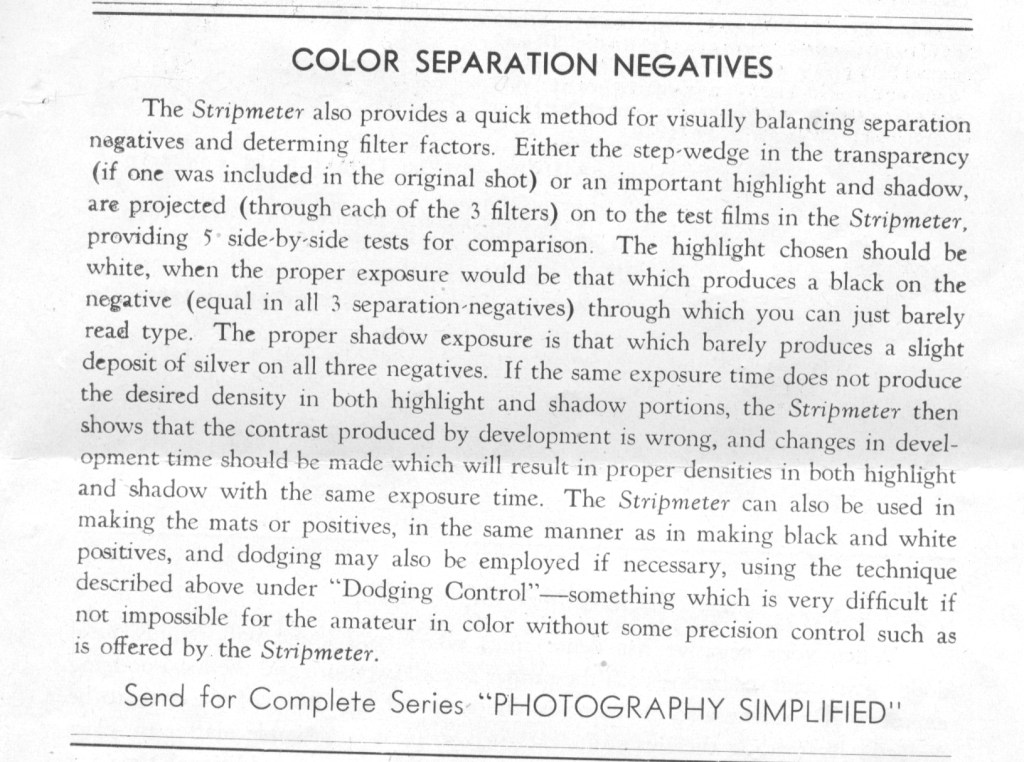
information passes, even through unsigned handouts. My Cooking Color set of notes on setting up dye transfer/wash-off processing for the small, independent worker.
… but then, I gathered them from Henry Smith and several dozen forgotten cohorts… it is only when publishing that we need the name on the spine.
punch links
NB: I have written a pamphlet specifying the steps to making an adaptable punch+pin system using mostly off the shelf items. members of OIC maintain it, as well as having several sets ready for new members.




You must be logged in to post a comment.